Over the past six months, Target has been a great trade, beating the S&P 500 by 22.7%. Its stock price has climbed to $163.73, representing a healthy 36.3% increase. This was partly due to its solid quarterly results, and the run-up might have investors contemplating their next move.
Is there a buying opportunity in Target, or does it present a risk to your portfolio? Get the full breakdown from our expert analysts, it’s free.
Why Is Target Not Exciting?
We’re happy investors have made money, but we’re sitting this one out for now. Here are three reasons we avoid TGT, plus one stock we’d rather own.
1. Long-Term Revenue Growth Flatter Than a Pancake
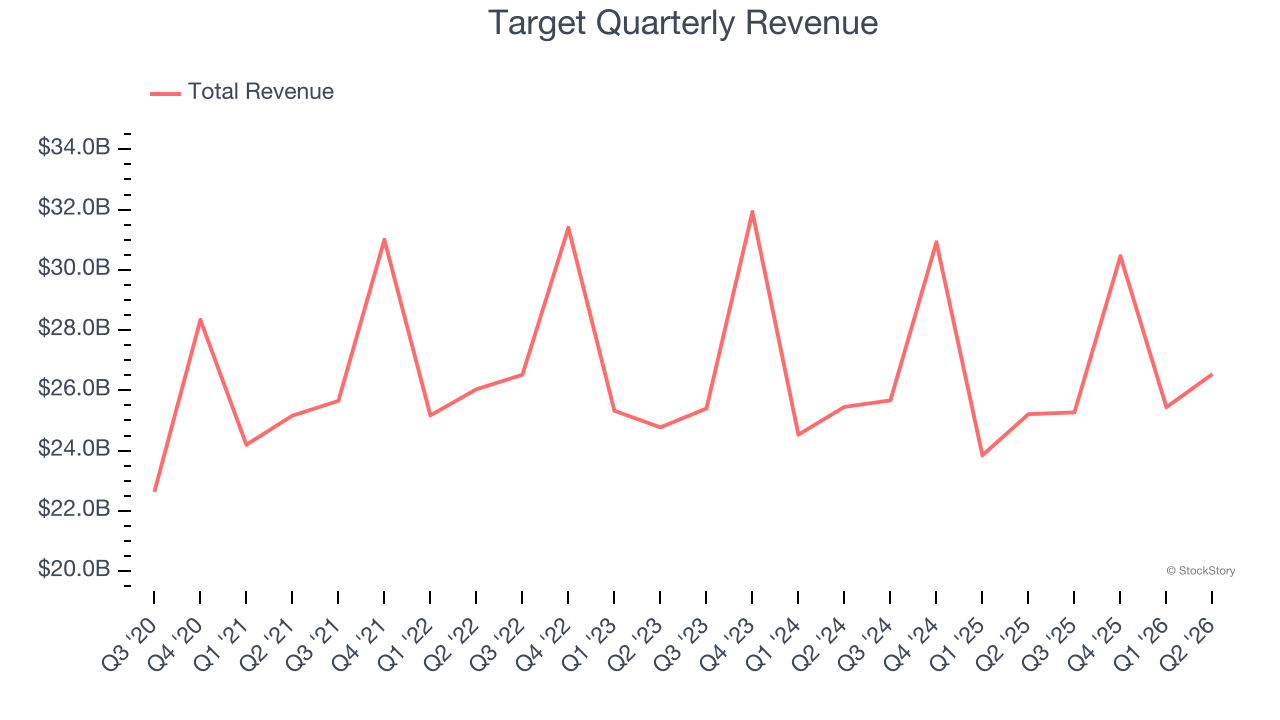
A company’s long-term performance is an indicator of its overall quality. Any business can put up a good quarter or two, but the best consistently grow over the long haul. Unfortunately, Target struggled to consistently increase demand as its $107.7 billion of sales for the trailing 12 months was close to its revenue three years ago. This wasn’t a great result and signals it’s a lower quality business.
2. Flat Same-Store Sales Indicate Weak Demand
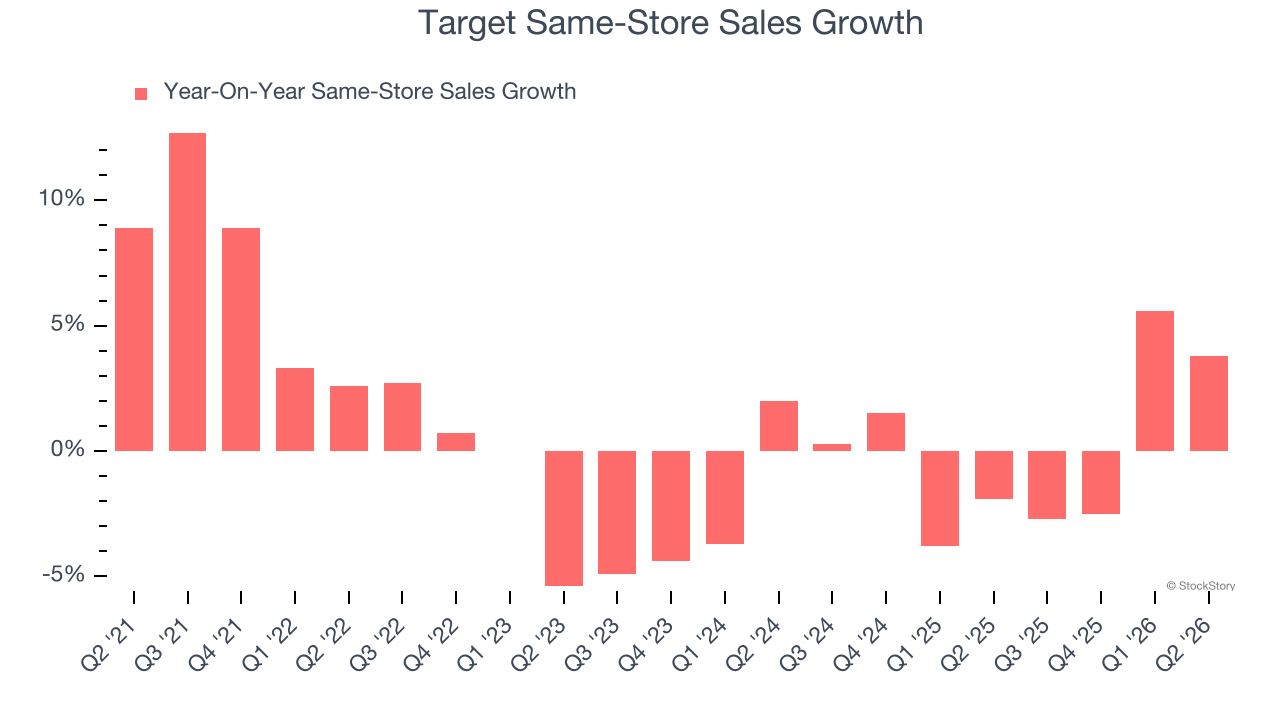
Same-store sales is a key performance indicator used to measure organic growth at brick-and-mortar shops for at least a year.
Target’s demand within its existing locations has barely increased over the last two years as its same-store sales were flat.
3. Low Gross Margin Reveals Weak Structural Profitability
At StockStory, we prefer high gross margin businesses because they indicate pricing power or differentiated products, giving the company a chance to generate higher operating profits.
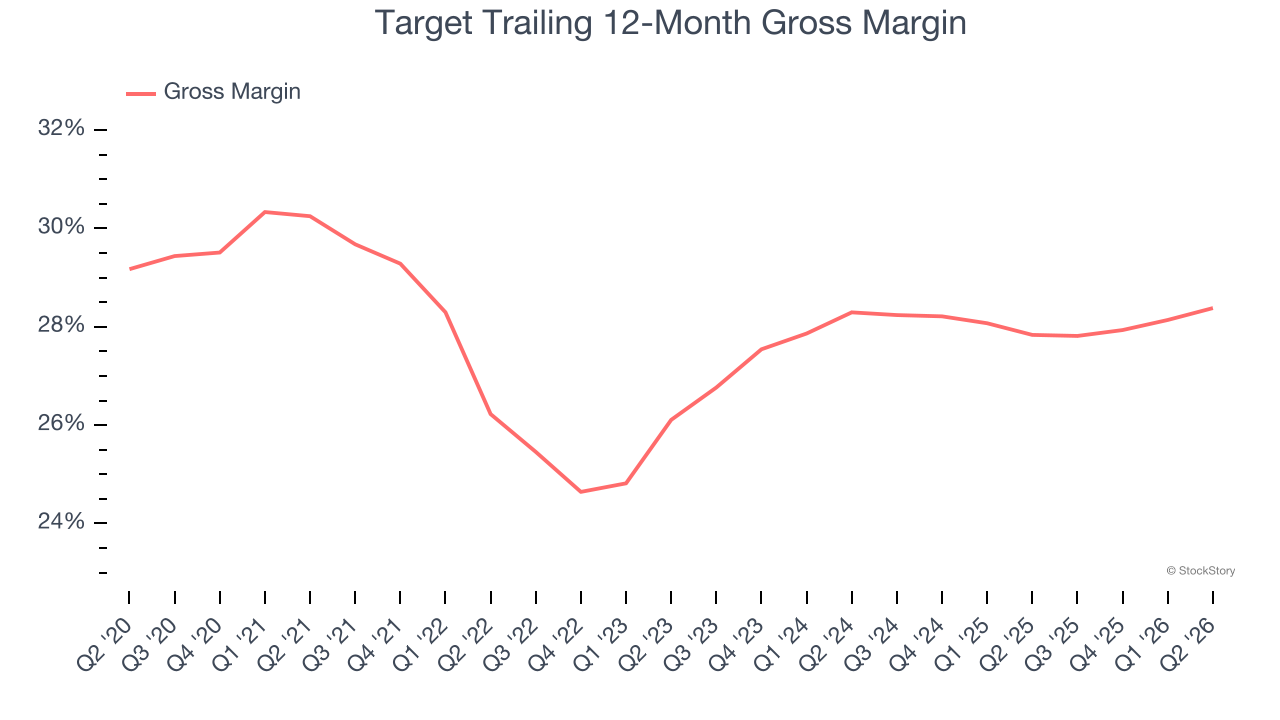
Target has bad unit economics for a retailer, signaling it operates in a competitive market and lacks pricing power because its inventory is sold in many places. As you can see below, it averaged a 28.1% gross margin over the last two years. That means Target paid its suppliers a lot of money ($71.89 for every $100 in revenue) to run its business.
Final Judgment
Target’s business quality ultimately falls short of our standards. With its shares outperforming the market lately, the stock trades at 17.7× forward P/E (or $163.73 per share). Beauty is in the eye of the beholder, but we don’t really see a big opportunity at the moment. We’re fairly confident there are better investments elsewhere. We’d recommend looking at a top digital advertising platform riding the creator economy.
Stocks We Would Buy Instead of Target
WHILE YOU’RE HERE: Top 9 Market-Beating Stocks. The best stocks don’t just beat the market once. They do it again. And again. Robust revenue growth, rising free cash flow, returns on capital that leave their competition in the dust. The market has already rewarded these businesses.
But our AI platform says the party isn’t over. Find out which 9 stocks made the cut this week — FREE. Get Our Top 9 Market-Beating Stocks for Free HERE.
Stocks that have made our list include now familiar names such as Nvidia (+1,460% between June 2020 and June 2025) as well as under-the-radar businesses like the once-micro-cap company Tecnoglass (+1,552% between June 2020 and June 2025). Find your next big winner with StockStory today.