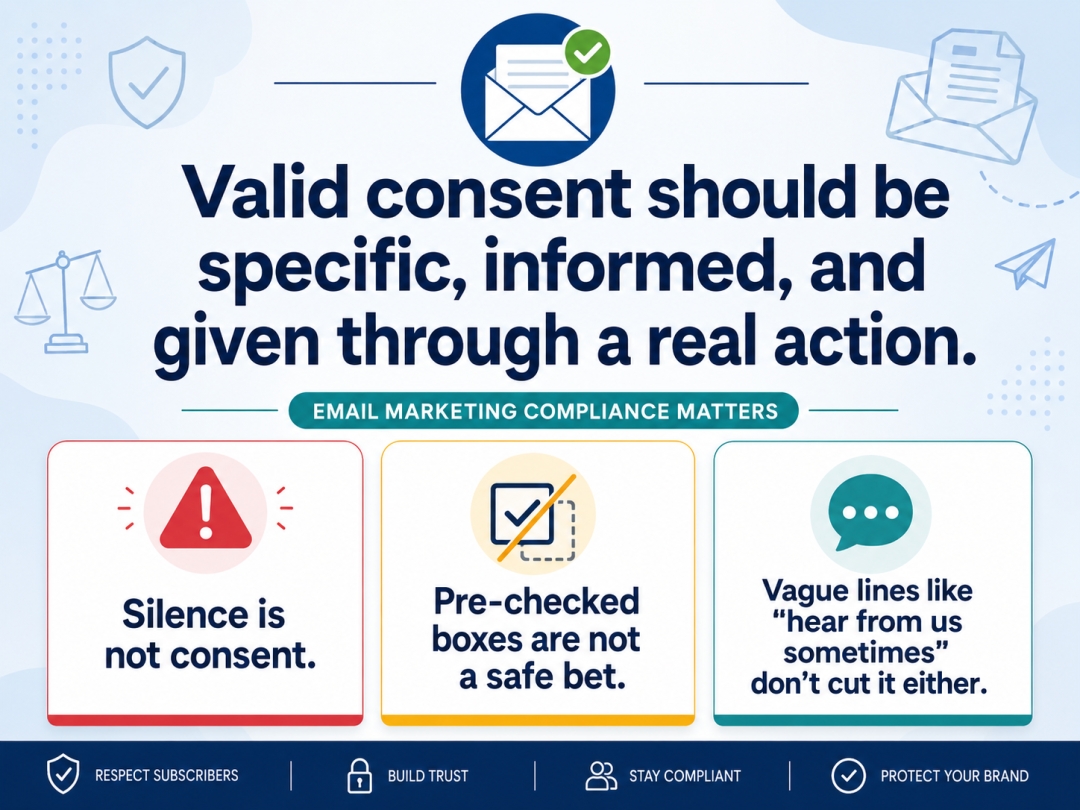
A bigger list doesn't help if your emails land in spam, trigger complaints, or break privacy rules. In 2026, email marketing compliance is not only about opens and clicks. It's about staying legal, protecting customer data, and getting messages into the inbox.
That pressure comes from both sides. GDPR, CAN-SPAM, CASL, and state privacy laws still shape how brands collect consent, store records, and handle opt-outs. If you want email to keep working, three things matter most: consent, data handling, and deliverability.
What email marketing compliance really means now
Compliance sounds like a legal department problem, but it shows up in everyday marketing work. It starts with how you collect an email address. It keeps going with what you promised, what you stored, how often you send, and how easy it is for someone to leave.
It also covers the boring but important details, like keeping records, using truthful sender information, and setting up authentication correctly. Different regions have different rules, but the safest approach is simple: build an email program that is clear, honest, and easy for people to control.
For teams that outsource strategy, audits, or campaign setup, reviews of DesignRush and similar agency directories can also help compare partners that understand email marketing compliance before subscriber data changes hands.
Why compliance and deliverability now go hand in hand
Mailbox providers don't separate legal risk from sender quality. They look at complaints, engagement, bounce rates, and authentication. If your list came from weak consent or murky sign-ups, people are more likely to ignore you or mark you as spam.
How to collect consent the right way
https://www.youtube.com/watch?v=2epqV8-LVlA
There are 4.48 billion email users worldwide, and good consent in 2026 is active, clear, and tied to the kind of email you plan to send. If someone signs up for shipping updates, that doesn't mean they agreed to weekly promotions. If they downloaded one guide, that doesn't automatically open the door to every campaign on your calendar.
The safest habit is to ask plainly, at the moment of sign-up, and let people choose. You can still use tactics like preference centers, progress prompts, or light gamification, but the consent choice itself should stay clear, voluntary, and easy to understand.
What counts as valid opt-in consent
Use unchecked boxes. Use plain language. Tell people what they'll get, how often you'll send, and who is sending it. Keep marketing consent separate from transactional email consent when both exist.
If a person can't tell what they're agreeing to in five seconds, the consent is too weak.
How to store proof of consent without making it hard
You don't need a fancy system to keep proof of consent, but you do need a reliable one. Save the time and date, the source form or landing page, the IP address if your setup records it, and the exact wording shown at sign-up.
That record matters when a complaint shows up months later. Without it, you're stuck arguing from memory. With it, you can show what happened and when.
Keeping customer data safe and useful
The cleanest data strategy is also the safest one: collect less. Every extra field adds friction at sign-up and adds risk later. If you don't need a phone number, birthday, company size, and favorite product category on day one, don't ask for them.
A smaller, cleaner database is easier to protect, easier to manage, and easier to trust.
What data you should collect, and what you should skip
Start with what you truly need to send and improve email. For most programs, that's an email address, basic consent details, and maybe one or two fields for segmentation, such as location or product interest.
Skip anything that doesn't have a clear purpose. Data minimization isn't only a legal idea. It's practical. The more you collect, the more you have to secure, explain, export, delete, and defend. Long forms also scare people off. Most subscribers will trade an email address for value. They won't hand over a life story.
Why privacy requests must be easy to handle
People expect control now. They want to unsubscribe fast, ask what data you hold, or request deletion without a maze of forms and follow-up emails. Your process needs to work even when the request is inconvenient.
Deliverability in 2026 starts with trust
Inbox placement isn't a mystery box. Trust drives it. The senders who reach the inbox most often are usually the ones with clean lists, clear consent, low complaint rates, and solid technical setup.
Inbox providers have tightened enforcement over the last few years, and that pressure hasn't gone away in 2026. Easy unsubscribe options, especially one-click unsubscribe for bulk mail, are now part of the baseline.
Why SPF, DKIM, and DMARC matter more than ever
These three standards help prove your email is real. SPF says which servers can send mail for your domain. DKIM adds a digital signature so receiving servers can verify the message wasn't altered. DMARC tells providers what to do if a message fails those checks.
You don't need to become an email engineer to care about this. Without authentication, your campaigns look less trustworthy. With it, you reduce spoofing risk and give mailbox providers stronger reasons to accept your mail.
Media Contact
Company Name: DesignRush
Contact Person: Mr.David
Email: Send Email
Address:18117 Biscayne Blvd
City: Miami
State: FL 33160
Country: United States
Website: https://www.designrush.com/