Today’s Date: December 26, 2025
The semiconductor landscape of 2025 has been defined by a single, inescapable reality: artificial intelligence (AI) is only as powerful as the memory that feeds it. At the epicenter of this technological shift is Micron Technology, Inc. (NASDAQ: MU), a company that has spent the last year transforming from a cyclical commodity manufacturer into an indispensable pillar of the global AI infrastructure. As the only major U.S.-based DRAM manufacturer, Micron’s strategic pivot has not only rewarded shareholders but has also positioned the company as a critical asset in the West’s pursuit of semiconductor sovereignty. This research feature examines how Micron navigated the "AI Supercycle" of 2025 to reach record-shattering heights.
Historical Background
Founded in 1978 in the unlikely setting of a dentist’s office basement in Boise, Idaho, Micron Technology began as a semiconductor design firm. By 1981, the company had pivoted to manufacturing, producing its first 64K DRAM chips. Throughout the 1990s and 2000s, Micron became a survivor of the "memory wars," a period of brutal price competition and consolidation that saw many of its American peers exit the industry.
Strategic acquisitions—most notably the purchase of Texas Instruments’ memory business in 1998 and Elpida Memory in 2013—allowed Micron to scale and compete globally. Over the last decade, under the leadership of CEO Sanjay Mehrotra, the company moved away from its reputation as a "low-cost follower." Instead, it emerged as a leader in process technology, often beating its South Korean rivals to market with the latest manufacturing nodes. By late 2025, Micron is no longer just a "memory company"; it is a high-bandwidth powerhouse.
Business Model
Micron’s business model revolves around the design and fabrication of two primary categories of volatile and non-volatile memory:
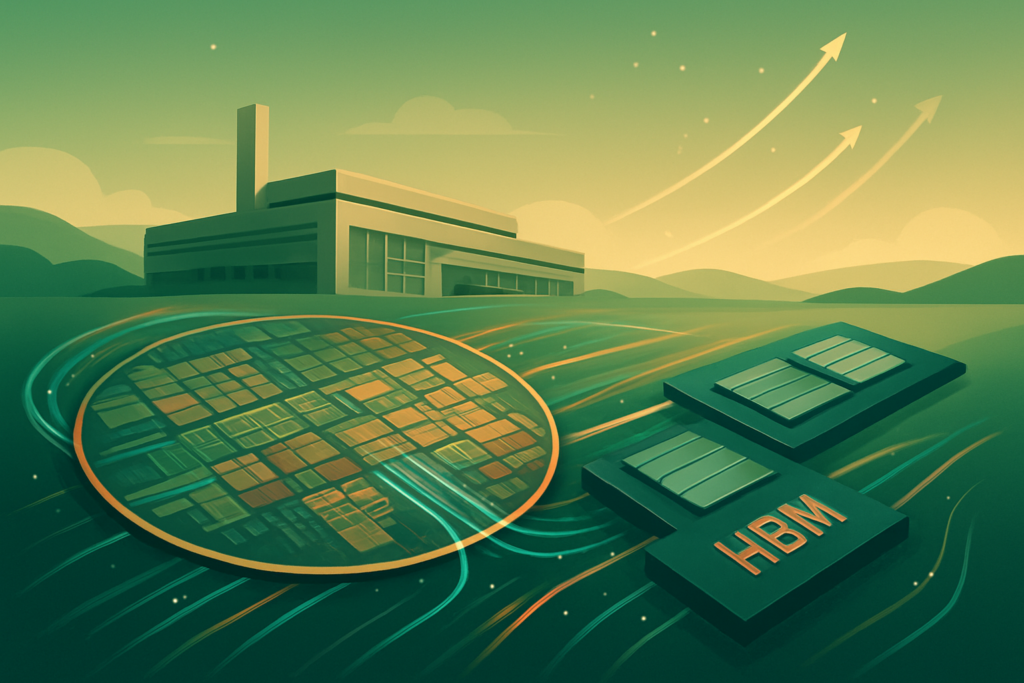
- DRAM (Dynamic Random Access Memory): Accounted for approximately 78% of fiscal 2025 revenue. DRAM is the "working memory" of a computer. In 2025, the focus shifted heavily toward High-Bandwidth Memory (HBM), which is stacked vertically to provide the massive data speeds required by AI processors.
- NAND (Flash Memory): Comprises roughly 21% of revenue. Used for long-term storage in Solid State Drives (SSDs). While traditionally a lower-margin business, the rise of enterprise SSDs for AI "data lakes" has improved profitability in this segment.
- NOR and Specialized Memory: A smaller portion of the business focused on automotive and industrial applications where reliability is paramount.
In 2025, Micron reorganized its reporting to highlight its Cloud Memory Business Unit (CMBU), reflecting a strategic decision to prioritize data center clients over the volatile consumer PC and smartphone markets.
Stock Performance Overview
The performance of MU shares over the last decade has been a study in cyclical volatility followed by exponential growth.
- 1-Year Performance: As of late December 2025, MU has been the "NVIDIA of the memory space," returning roughly 220% year-to-date. The stock surged from approximately $83 in late 2024 to an all-time high of $294.50.
- 5-Year Performance: With a 280% return, the stock has significantly outperformed the S&P 500 and the Philadelphia Semiconductor Index (SOX). The recovery from the 2022 inventory correction served as the launchpad for the current AI-driven rally.
- 10-Year Performance: Long-term investors have seen a nearly 1,800% return. A stock that traded in the mid-teens in 2015 is now a large-cap heavyweight with a market capitalization reflecting its systemic importance.
Financial Performance
Micron’s fiscal year 2025 was a record-breaking triumph. The company reported total revenue of $37.38 billion, a 50% increase year-over-year. The primary driver was the pricing power afforded by the global shortage of HBM.
Profitability metrics reached historic highs. Non-GAAP gross margins expanded to 41% for the full year, peaking at 45.7% in the final quarter. This margin expansion was fueled by a favorable product mix, as HBM3E (high-bandwidth memory) carries significantly higher ASPs (Average Selling Prices) than traditional DDR4 or DDR5. Non-GAAP EPS (Earnings Per Share) came in at $8.29, a staggering 538% increase over the previous year. While capital expenditures remained high at $13.80 billion, the company’s strong cash flow from operations has allowed it to maintain a healthy balance sheet while funding massive domestic expansion.
Leadership and Management
Sanjay Mehrotra, who took over as CEO in 2017, has been the primary architect of Micron's technical leadership. In January 2025, Mehrotra further solidified his influence by assuming the role of Chairman of the Board. Under his tenure, Micron has consistently achieved "first-to-market" status on critical memory nodes, a feat that was once thought impossible against the giants of Seoul.
The board of directors saw a major addition in March 2025 with the appointment of Mark Liu, the former Executive Chairman of TSMC. Liu’s expertise in advanced packaging has been invaluable as Micron ramps up its HBM production, which requires sophisticated 3D-stacking techniques similar to those used in logic foundries. The management team is widely regarded for its disciplined approach to supply management, helping to mitigate the "boom-bust" cycles that historically plagued the sector.
Products, Services, and Innovations
Micron’s competitive edge in 2025 is built on its 1-gamma (1γ) DRAM node and its HBM3E technology.
- HBM3E (12-High Stacks): Micron’s 36GB 12-high HBM3E modules have become the industry standard for NVIDIA’s Blackwell Ultra and AMD’s Instinct GPU architectures. These modules offer 30% better power efficiency than rival products, a critical factor for data centers struggling with energy costs.
- 1-Gamma (1γ) Node: Micron is the first to achieve mature yields on this node using EUV (Extreme Ultraviolet) lithography. This provides a 40% improvement in bit density, allowing for more memory to be produced on a single wafer.
- LP5X and DDR5: In the mobile and client space, Micron continues to lead in low-power DDR5 (LPDDR5X), which is essential for "AI PCs" and "AI Smartphones" that require high-speed local processing.
Competitive Landscape
The memory market is an oligopoly dominated by three players: Samsung Electronics, SK Hynix, and Micron.
- SK Hynix: Traditionally the leader in HBM, SK Hynix maintained its #1 market share in 2025 (~60%), but its lead has narrowed.
- Samsung: Samsung faced a difficult 2025, struggling with yield issues on its 12-high HBM3E stacks. This allowed Micron to leapfrog Samsung to become the #2 provider of HBM by volume and revenue.
- Competitive Dynamics: The "3-to-1" wafer capacity squeeze—where HBM requires three times the wafer capacity of standard DRAM—has effectively removed significant supply from the commodity market. This has benefited all three players by driving up prices for standard memory, though Micron’s superior execution in 2025 has given it the strongest margin profile of the trio.
Industry and Market Trends
The most significant trend of 2025 is the "Decoupling of Memory." Historically, memory prices were tied to PC and smartphone demand. However, the AI server market has become such a massive consumer of high-value bits that it now dictates the market cycle.
Furthermore, we are witnessing a structural supply constraint. Because HBM is physically larger and more complex to manufacture, it consumes a disproportionate amount of factory capacity. As long as AI demand remains robust, the industry is likely to face a chronic shortage of standard DRAM, a phenomenon that has sustained high prices throughout 2025 and into the 2026 forecast.
Risks and Challenges
Despite the stellar performance, Micron faces distinct risks:
- China Trade Decoupling: Following the 2023 CAC (Cyberspace Administration of China) ban, Micron effectively exited the Chinese server market by late 2025. While this reduces its vulnerability to future Chinese regulatory action, it removes a once-significant growth engine.
- Cyclicality: The memory industry remains capital-intensive. If AI investment were to cool—or if hyperscalers like Amazon or Google significantly delayed their chip orders—Micron could be left with billions in high fixed costs.
- Execution Risk: The transition to 1-gamma nodes and 12-high stacks is technically difficult. Any yield regressions could allow Samsung or SK Hynix to reclaim lost ground.
Opportunities and Catalysts
The primary catalyst for 2026 is the full ramp of Micron’s domestic manufacturing. Supported by the U.S. CHIPS Act, Micron’s new fab in Boise, Idaho, is expected to begin DRAM production in late 2026, followed by a "mega-fab" in Clay, New York. These facilities will allow Micron to offer "Made in America" memory, a significant selling point for U.S. government and defense contractors.
Additionally, the rollout of "AI-enabled" edge devices—laptops and phones with dedicated NPUs (Neural Processing Units)—is expected to double the memory requirements per device, providing a second growth engine beyond the data center.
Investor Sentiment and Analyst Coverage
Wall Street remains overwhelmingly bullish on Micron. The consensus rating is a "Strong Buy," with top analysts from HSBC and Piper Sandler raising price targets to the $330–$500 range toward the end of 2025. Institutional ownership has climbed as the stock transitioned from a value play to a core growth holding. Many investors now view Micron as a "toll booth" on the AI highway; regardless of which company wins the AI software race, they will all need Micron’s memory.
Regulatory, Policy, and Geopolitical Factors
Micron is the "star pupil" of the U.S. CHIPS and Science Act. The company secured between $6.1 and $6.4 billion in direct grants to repatriate advanced memory manufacturing. While the U.S. political transition in early 2025 led to increased scrutiny over the terms of these grants—including discussions on "upside sharing" with the government—Micron’s importance to national security has ensured that its funding and political support remain rock-solid. Geopolitically, the company remains a central figure in the tech-trade war, acting as a barometer for U.S.-China semiconductor tensions.
Conclusion
As we look toward 2026, Micron Technology stands at the pinnacle of its 47-year history. By successfully executing its transition into the high-bandwidth memory market, the company has shed its "commodity" label and embraced its role as an AI enabler. While the cyclical nature of the semiconductor industry will always loom, the current AI supercycle—combined with historic domestic investment—has provided Micron with a tailwind unlike any it has experienced before. For investors, the focus remains on whether Micron can maintain its yield advantages and successfully navigate the massive capital requirements of its New York expansion. In the high-stakes game of AI dominance, Micron has proved that memory is no longer an afterthought—it is the mission-critical foundation.
This content is intended for informational purposes only and is not financial advice.