London - January 29, 2026 - The landscape of startup leadership is undergoing a fundamental transformation, according to one winner of the DOHE Global Startup Coaching Award, Anna Sexton. In a significant departure from traditional industry accolades that prioritize product metrics or funding rounds, this global competition has placed high-stakes coaching, rather than a founder's charisma, at the absolute center of venture success.
The top three honors in the 2024 competition were swept by female practitioners, with first prize awarded to Anna Sexton.
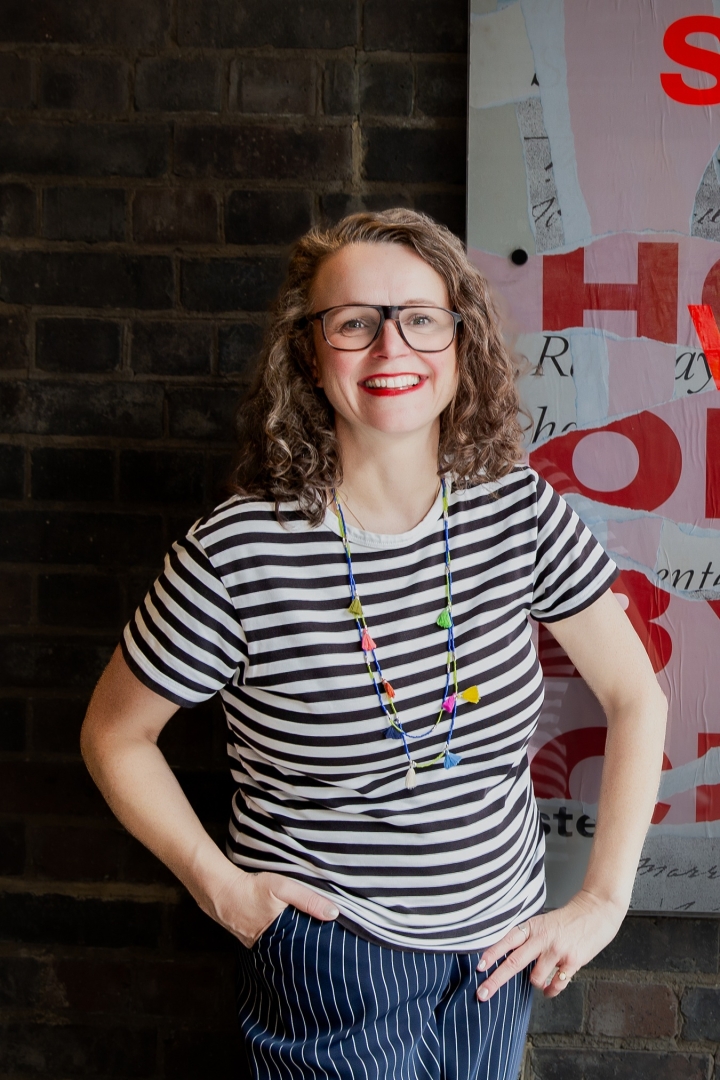
Anna is an award-winning leadership coach with over thirty years of experience supporting founders, creatives, and executive leaders through the volatile cycles of business growth and reinvention. Long before "founder wellbeing" became a corporate buzzword, Sexton was pioneering human-centered coaching approaches designed to foster operational resilience and psychological safety in high-pressure environments. Her work sits at the intersection of neuroscience and creative thinking, moving leaders away from reactive mindsets and toward sustainable, proactive leadership. As the first-prize winner of the inaugural DOHE Global Startup Coaching Award, she continues to advocate for "regenerative" leadership language and the accessibility of high-level, ethical coaching for every founder.
Further awards followed with Tina Neve in second and Veronika Sucha in third place. This sweep marks a powerful statement in an industry that has historically struggled to validate "embodied" or creative leadership. Sexton suggests that this outcome is no coincidence, noting that many of the most cutting-edge, human-centered, and regenerative coaching approaches are currently being pioneered by women. The results signal a definitive move away from the "hero founder" era and toward a "sustainable leader" era.
“For too long, the business world has used a vocabulary of war: ‘crushing it,’ ‘capturing markets,’ and ‘boots on the ground,’” Sexton observed. “The female sweep at the awards shows a shift toward a more sophisticated, ‘regenerative’ language of leadership. This isn’t about being ‘nice’; it is about understanding the human nervous system, building psychological safety, and creating cultures that can survive a decade of growth rather than burning out in eighteen months”.
Sexton’s winning work focused on Tech Balance, an EdTech mental health startup led by Ryan Bell that was struggling with stalled momentum and the looming specter of founder burnout within the complex Higher Education sector.
Reflecting on the methodology used to stabilize the venture, Sexton explained that effective coaching is not about dictating a founder's every move, but about refining their internal compass. “Effective coaching isn't about telling a founder what to do; it’s about helping them become a better decision-maker within high-stakes complexity,” Sexton said. “We moved Ryan away from ‘either-or’ binary thinking—where every obstacle felt like a potential dead end—into a solution-focused mindset. We utilized evidence-based methods from creative thinking and neuroscience to help him balance high-level ambition with the granular realism required to close sales”.
The intervention also focused on rebuilding a leaner, more aligned team by embedding self-coaching tools within the company’s culture, which allowed progress to be driven by collective autonomy rather than constant founder oversight. Furthermore, Sexton worked on what she calls the "Founder’s Moat," helping Bell relax into his own skin and regain the confidence to trust his instincts over industry expectations.
The results were tangible: by the end of the process, Tech Balance had secured live sales in both the UK and US and established a repeatable sales funnel. Just as importantly, the founder realized his goal of working as a digital nomad, proving that business growth does not require an 80-hour, desk-bound work week.
As the tech industry grapples with AI acceleration and economic volatility, the winners argue that these "soft" skills provide the hardest competitive advantage in the modern market. Sexton maintains that businesses don't usually fail because an idea is weak, but because the human nervous system cannot maintain the level of pressure required by toxic corporate tropes.
“We are living through a period of unprecedented pressure. AI acceleration, economic volatility, and climate disruption are reshaping what we demand of leaders,” Sexton concluded. “The ‘grind’ is wearing some of our brightest minds into metaphorical dust. Coaching is no longer a ‘nice-to-have.’ In an era of constant disruption, it is an essential insurance policy for a company’s most valuable asset: its human leadership”.
This month, DOHE announced its 2025 competition winners. Ahmed Adal Saad, Philip Marais, Adrijana Daragon and Antonio Ricciardi came out on top. The winners were announced at BETT in London - the British Educational Training and Technology Show.
Find out more information at https://www.doheglobal.com/.
Media Contact
Company Name: Open to Create
Contact Person: Anna Sexton
Email: Send Email
Country: United Kingdom
Website: www.annabsexton.com