As of February 17, 2026, Intel Corporation (Nasdaq: INTC) finds itself at the most critical juncture in its 58-year history. After a tumultuous 2024 that saw the company removed from the Dow Jones Industrial Average and report a staggering $18.7 billion net loss, the "Silicon Giant" is currently in the throes of a high-stakes transformation. Under the leadership of CEO Lip-Bu Tan, who took the helm in early 2025, Intel is attempting to execute a "double pivot": reclaiming its throne as the world’s leading semiconductor manufacturer through its "Intel Foundry" business while simultaneously defending its core processor dominance against an onslaught of AI-native competitors.
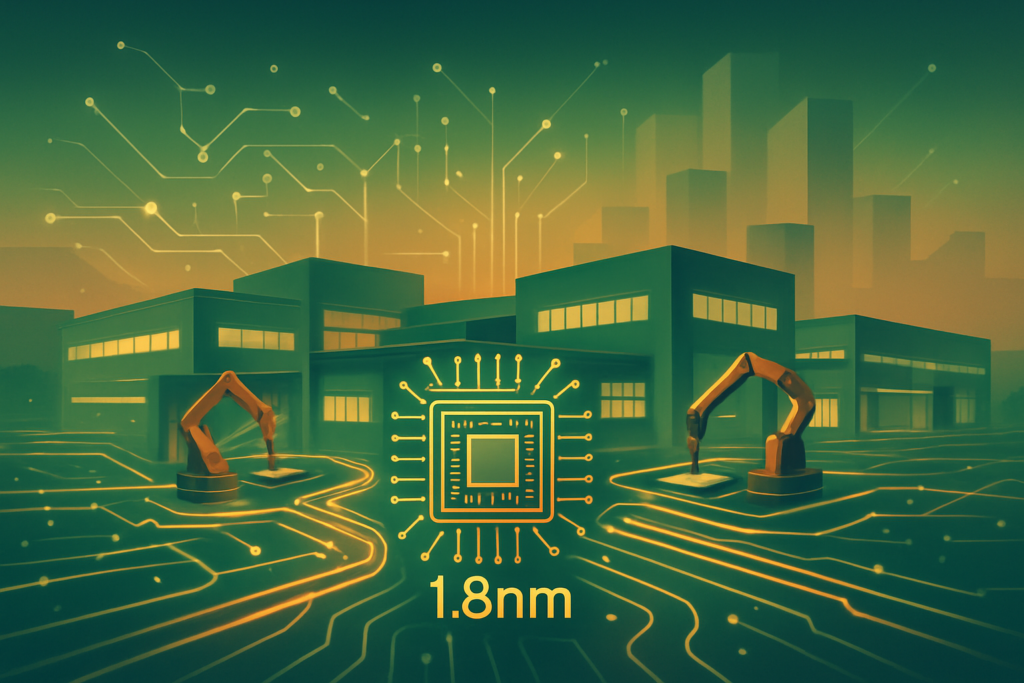
While the stock experienced a "Guidance Shock" in late January 2026—plummeting 17% after conservative Q1 forecasts—investor interest remains at a fever pitch. The narrative has shifted from whether Intel can survive to how quickly it can scale its revolutionary 18A (1.8nm) process node. With landmark manufacturing deals from the likes of Apple and Microsoft now on the books, Intel is no longer just a chipmaker; it is positioning itself as the Western hemisphere’s primary alternative to TSMC.
Historical Background
Founded in 1968 by semiconductor pioneers Robert Noyce and Gordon Moore, Intel was the architect of the digital age. Moving from its early days in memory chips to the invention of the microprocessor, the company established a decades-long hegemony with the x86 architecture. The "Intel Inside" campaign of the 1990s made it a household name, and for nearly 30 years, it was the undisputed leader in both design and manufacturing.
However, the 2010s marked a period of stagnation. Missteps in the mobile market and chronic delays in transitioning to 10nm and 7nm processes allowed rivals like Advanced Micro Devices (Nasdaq: AMD) and Taiwan Semiconductor Manufacturing Co. (NYSE: TSM) to erode its lead. By the time Pat Gelsinger returned as CEO in 2021, Intel had lost its manufacturing "crown." Gelsinger’s "Five Nodes in Four Years" (5N4Y) strategy was a desperate sprint to catch up—a sprint that laid the groundwork for the 18A node that dominates today’s headlines.
Business Model
Intel’s business model has been fundamentally restructured into two distinct, yet symbiotic, entities: Intel Products and Intel Foundry.
- Intel Products: This remains the primary revenue driver, consisting of the Client Computing Group (CCG), Data Center and AI (DCAI), and Network and Edge (NEX). It focuses on designing CPUs for PCs and servers, as well as AI accelerators like the Gaudi series and the newly launched Falcon Shores GPUs.
- Intel Foundry: This is the capital-intensive arm of the company, operating as a standalone business. It offers manufacturing, advanced packaging, and "system-on-chip" services to external customers. By opening its fabs to rivals and third parties, Intel aims to utilize its massive capacity to generate high-margin recurring revenue, similar to the TSMC model.
Stock Performance Overview
Intel's stock performance has been a saga of volatility and underperformance relative to the broader semiconductor sector (SOXX).
- 1-Year Performance: After a modest recovery throughout 2025, the stock has faced a 12% decline year-to-date in 2026, largely due to the January "Guidance Shock."
- 5-Year Performance: The stock remains significantly below its 2021 highs, trailing the S&P 500 and drastically underperforming Nvidia (Nasdaq: NVDA), which has benefited more directly from the generative AI boom.
- 10-Year Performance: Long-term shareholders have seen nearly flat capital appreciation, though the company’s recent restructuring and "18A" progress have led some analysts to suggest that the stock has finally found a structural bottom.
Financial Performance
The fiscal year 2025 marked a return to non-GAAP profitability for Intel, with an EPS of $0.42 on revenue of $52.9 billion. This was a welcome relief after the disastrous 2024, but the balance sheet remains a concern.
- Margins: Gross margins have stabilized in the 35-38% range, still far below the 60%+ levels seen in Intel's "Golden Age."
- Debt and Capex: To fund its "Fab 52" and "Fab 62" expansions in Arizona, Intel has maintained high capital expenditure, supported by over $8.5 billion in U.S. CHIPS Act grants and $11 billion in loans.
- Valuation: Currently trading at a price-to-earnings (P/E) ratio that reflects a "turnaround discount," many value investors see Intel as a massive contrarian play on domestic manufacturing.
Leadership and Management
The departure of Pat Gelsinger in December 2024 signaled the Board's demand for faster operational efficiency. The appointment of Lip-Bu Tan as CEO in March 2025 brought a "ruthless restructuring" mindset to the company. Tan, a semiconductor legend who previously transformed Cadence Design Systems, has focused on:
- Slashing non-core R&D.
- Prioritizing "Engineering over Marketing."
- Securing major foundry contracts (notably the Apple 18A-P deal in late 2025).
Tan is credited with stabilizing the "Intel Foundry" brand, though he faces immense pressure to improve the yield rates of the new 18A node throughout 2026.
Products, Services, and Innovations
Intel's 2026 product roadmap is built around the 18A process node, which utilizes two "world-first" technologies: RibbonFET (a new transistor architecture) and PowerVia (backside power delivery).
- Panther Lake (Core Ultra Series 3): Launched in early 2026, these chips are the backbone of the "AI PC" era, featuring an NPU (Neural Processing Unit) that delivers twice the performance of the previous generation.
- Falcon Shores: Intel’s unified GPU architecture designed to compete directly with Nvidia's Blackwell and Rubin architectures in the data center.
- Advanced Packaging: Intel’s Foveros technology remains a competitive edge, allowing the company to stack chiplets from different manufacturers into a single package—a service increasingly in demand for custom AI chips.
Competitive Landscape
Intel faces a "war on two fronts":
- Foundry Rivalry: It is chasing TSMC and Samsung. While Intel has a lead in backside power delivery (PowerVia), TSMC’s 2nm node (N2) remains the industry benchmark for yield and efficiency.
- Design Rivalry: In the data center, Nvidia remains the "800-pound gorilla" of AI. In the PC market, AMD continues to gain share in the enthusiast and server (EPYC) segments, while Qualcomm (Nasdaq: QCOM) is making inroads into the Windows-on-Arm laptop market.
Industry and Market Trends
Three macro trends are currently driving Intel's narrative:
- The AI PC Cycle: The industry expects a massive PC refresh in 2026 as businesses and consumers upgrade to hardware capable of running local LLMs (Large Language Models).
- Sovereign AI: Governments globally are subsidizing domestic chip production to ensure supply chain security, a trend that directly benefits Intel’s U.S. and European fab projects.
- High-NA EUV Lithography: Intel is the first company to deploy ASML’s (Nasdaq: ASML) High-NA EUV machines in high-volume manufacturing, a technological gamble that could pay off in 2027.
Risks and Challenges
- Yield Rates: The 18A node is complex. If yields do not reach the 80%+ range by mid-2026, the Foundry business will struggle to be profitable.
- China Exposure: As a significant portion of Intel’s revenue still comes from China, ongoing trade restrictions and "de-risking" policies pose a constant threat to its top line.
- Execution Risk: Intel has a history of over-promising and under-delivering on manufacturing timelines. Any delay in the "Clearwater Forest" Xeon ramp-up would be devastating.
Opportunities and Catalysts
- Apple Foundry Deal: The late-2025 announcement that Apple will use Intel Foundry for future silicon is the ultimate "seal of approval" that could bring other major tech giants (Meta, Alphabet) into the fold.
- CHIPS Act Milestones: Finalizing the disbursement of billions in government funds provides a non-dilutive capital cushion.
- Jaguar Shores: The upcoming 2026/2027 AI accelerator could prove to be a viable, low-cost alternative for inference-heavy AI workloads.
Investor Sentiment and Analyst Coverage
Wall Street is currently "cautiously optimistic" but remains in a "show me" mode.
- Institutional Sentiment: Hedge funds have been increasing "bottom-fishing" positions in INTC, betting on the foundry spin-off potential.
- Retail Sentiment: Retail chatter on platforms like Reddit and X is divided, with many praising the "patriotic" investment in U.S. manufacturing while others remain scarred by the 2024 crash.
- Analyst Ratings: The consensus remains a "Hold," with price targets widely dispersed between $30 and $55, depending on 18A yield projections.
Regulatory, Policy, and Geopolitical Factors
Intel is perhaps the most "geopolitically sensitive" stock in the world today. It is the primary beneficiary of the U.S. CHIPS and Science Act, making it a "National Champion" for the United States. However, this status comes with strings attached, including restrictions on expanding capacity in "countries of concern" like China. The outcome of ongoing trade negotiations and the stability of the Taiwan Strait remain the biggest external wildcards for Intel’s valuation.
Conclusion
The Intel of February 2026 is a company caught between a storied past and a potentially dominant future. The "Guidance Shock" of early 2026 serves as a reminder that the road to redemption is paved with high costs and execution hurdles. However, with the 18A node now in high-volume manufacturing and the world’s most valuable company, Apple, listed as a future foundry customer, the structural foundations for a comeback are in place.
Investors should watch two things above all: 18A yield reports and the progress of the Falcon Shores GPU ramp. If Lip-Bu Tan can prove that Intel can manufacture chips as reliably as TSMC while maintaining its x86 market share, Intel will not just be a turnaround story—it will be the definitive comeback of the decade.
This content is intended for informational purposes only and is not financial advice.