Trinity’s 22.9% return over the past six months has outpaced the S&P 500 by 11.9%, and its stock price has climbed to $32.41 per share. This performance may have investors wondering how to approach the situation.
Is now the time to buy Trinity, or should you be careful about including it in your portfolio? Dive into our full research report to see our analyst team’s opinion, it’s free.
Why Is Trinity Not Exciting?
We’re happy investors have made money, but we’re cautious about Trinity. Here are three reasons why there are better opportunities than TRN, plus one stock we’d rather own.
1. Backlog Declines as Orders Drop
In addition to reported revenue, backlog is a useful data point for analyzing Heavy Transportation Equipment companies. This metric shows the value of outstanding orders that have not yet been executed or delivered, giving visibility into Trinity’s future revenue streams.
Trinity’s backlog came in at $1.6 billion in the latest quarter, and it averaged 25.8% year-on-year declines over the last two years. This performance was underwhelming and shows the company is not winning new orders. It also suggests there may be increasing competition or market saturation. 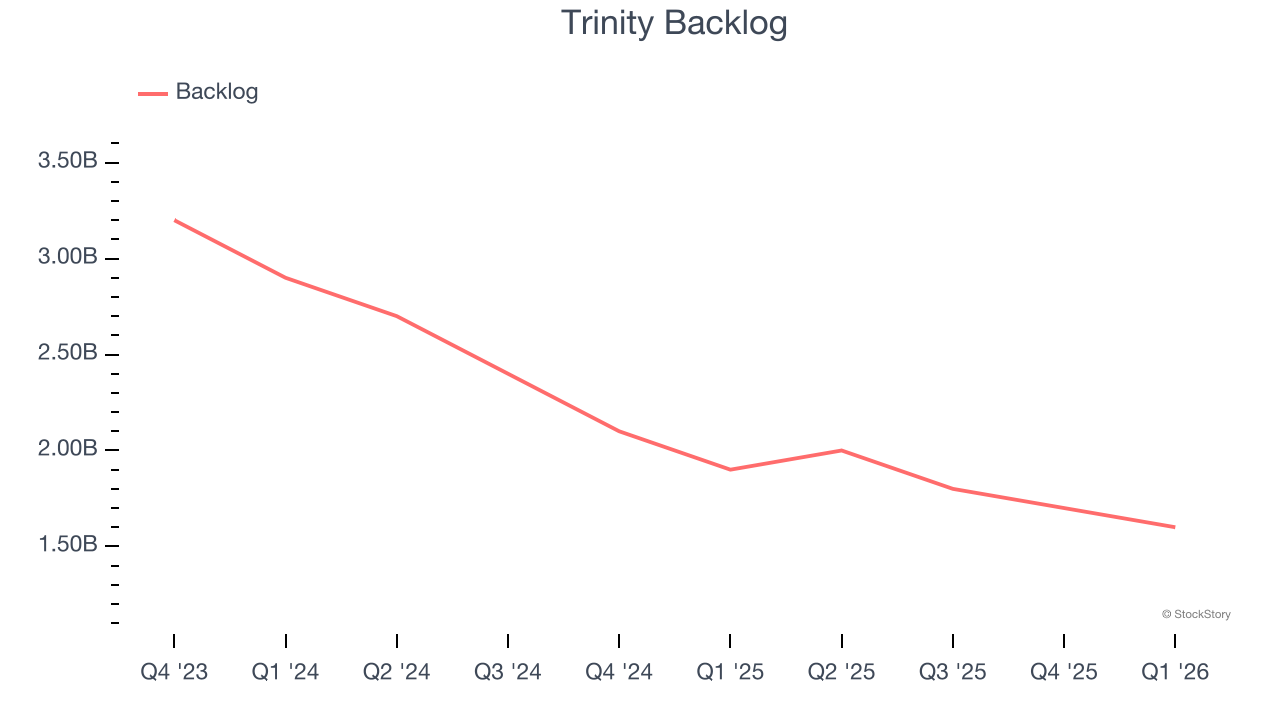
2. Low Gross Margin Reveals Weak Structural Profitability
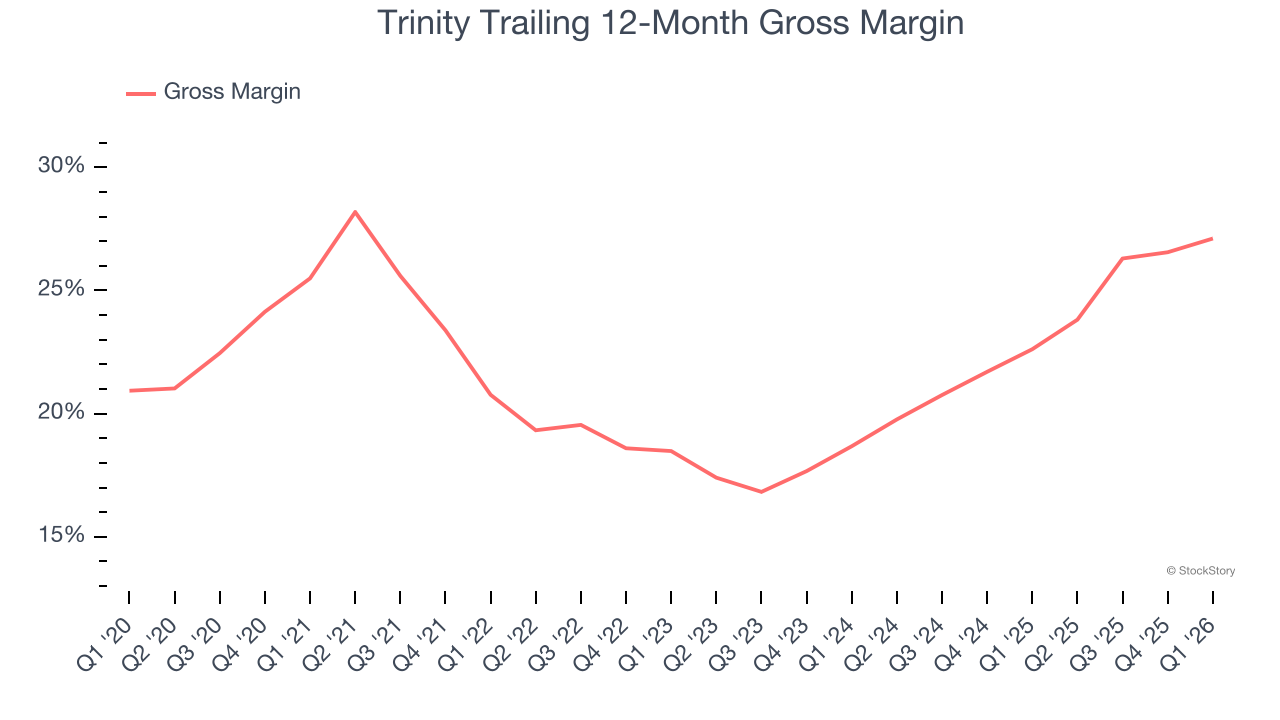
All else equal, we prefer higher gross margins because they usually indicate that a company sells more differentiated products and commands stronger pricing power.
Trinity has bad unit economics for an industrials business, signaling it operates in a competitive market. As you can see below, it averaged a 21.3% gross margin over the last five years. That means Trinity paid its suppliers a lot of money ($78.65 for every $100 in revenue) to run its business.
3. Free Cash Flow Margin Dropping
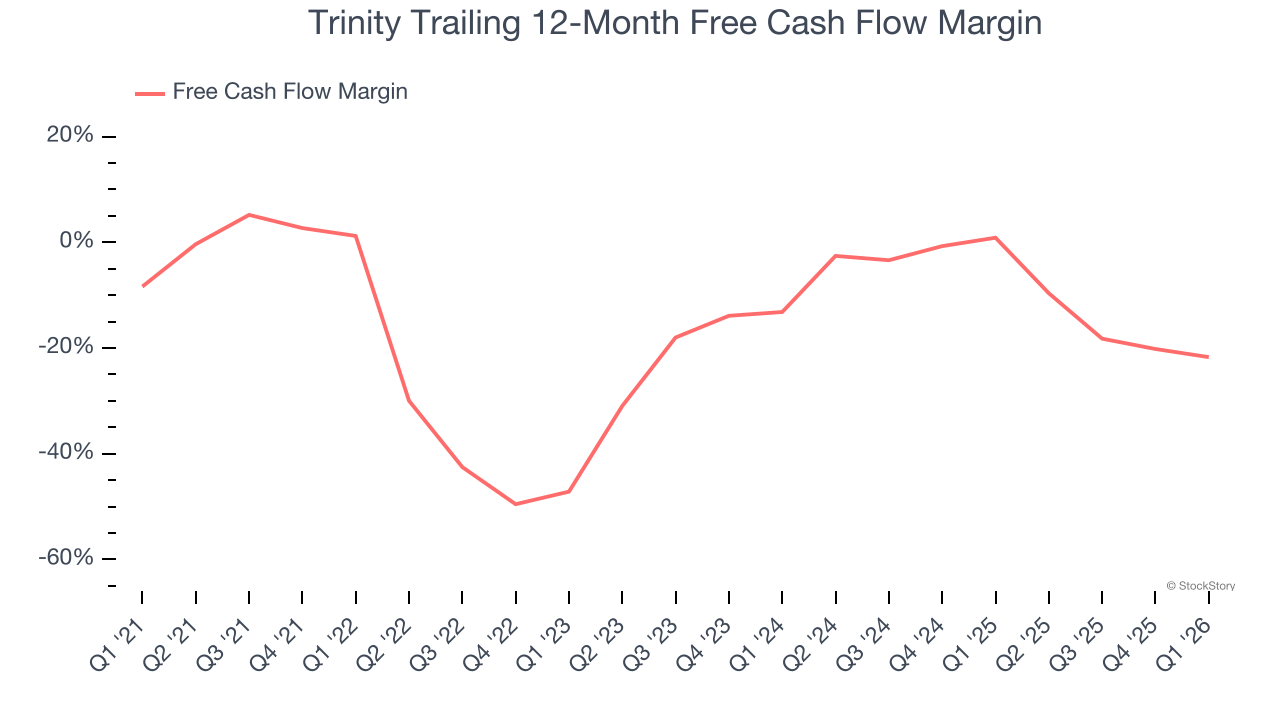
If you’ve followed StockStory for a while, you know we emphasize free cash flow. Why, you ask? We believe that in the end, cash is king, and you can’t use accounting profits to pay the bills.
As you can see below, Trinity’s margin dropped by 22.9 percentage points over the last five years. Almost any movement in the wrong direction is undesirable because it is already burning cash. If the trend continues, it could signal it’s becoming a more capital-intensive business. Trinity’s free cash flow margin for the trailing 12 months was negative 21.7%.
Final Judgment
Trinity isn’t a terrible business, but it doesn’t pass our bar. With its shares outperforming the market lately, the stock trades at $32.41 per share (or a trailing 12-month price-to-sales ratio of 1.3×). The market typically values companies like Trinity based on their anticipated profits for the next 12 months, but there aren’t enough published estimates to arrive at a reliable number. You should avoid this stock for now - better opportunities lie elsewhere. Let us point you toward one of Charlie Munger’s all-time favorite businesses.
Stocks We Would Buy Instead of Trinity
ONE MORE THING: Top 5 Growth Stocks. The biggest stock winners almost always had one thing in common before they ran. Revenue growing like crazy. Meta. CrowdStrike. Broadcom. Our AI flagged all three. They returned 315%, 314%, and 455%, respectively.
Find out which 5 stocks it’s flagging this month — FREE. Get Our Top 5 Growth Stocks for Free HERE.
Stocks that have made our list include now familiar names such as Nvidia (+1,326% between June 2020 and June 2025) as well as under-the-radar businesses like the once-micro-cap company Tecnoglass (+1,754% five-year return). Find your next big winner with StockStory today.