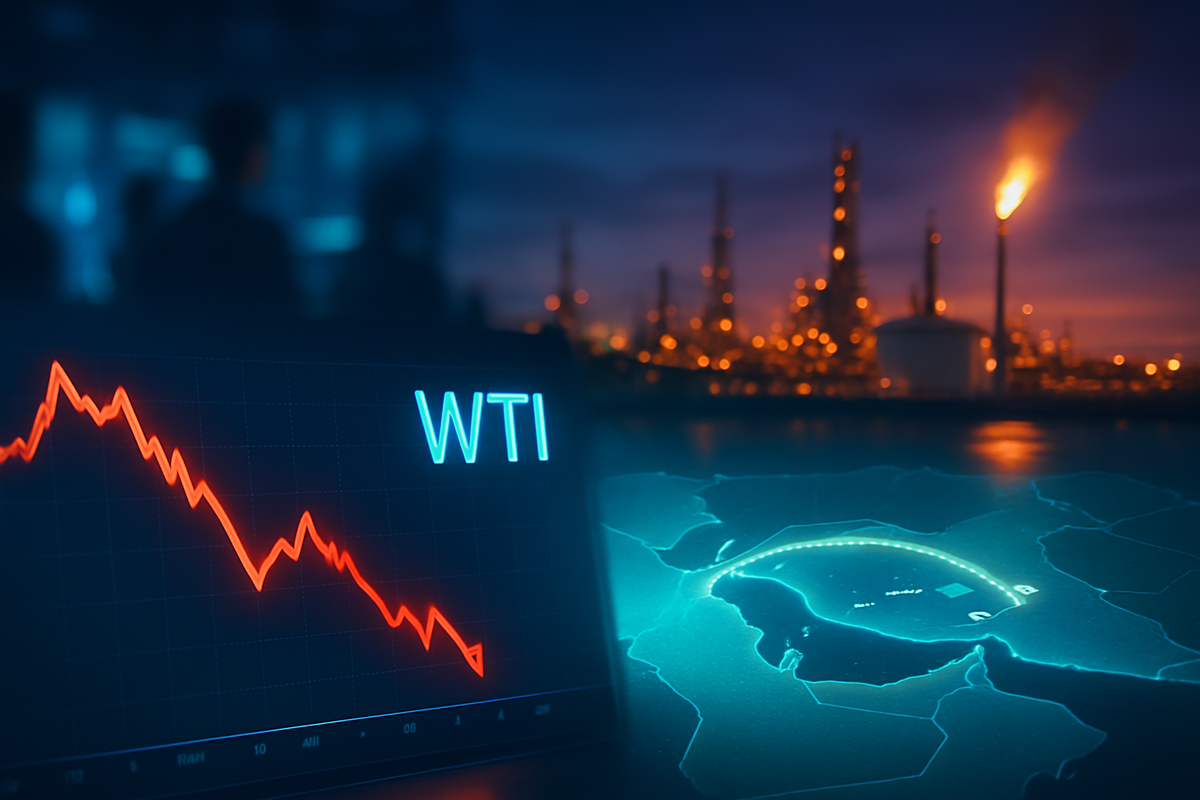
HOUSTON – Global energy markets witnessed a dramatic correction on Tuesday as West Texas Intermediate (WTI) crude futures plummeted by 8%, marking the sharpest single-session decline of the 2026 calendar year. The sudden reversal comes on the heels of a fresh diplomatic initiative from the White House, which signaled a potential "second round" of high-stakes negotiations between Washington and Tehran. For a global economy that has spent much of the spring bracing for a total energy decoupling, the news offered a momentary, albeit volatile, sigh of relief.
The price action effectively erased the "war premium" that had pushed WTI above the psychological $100 barrier just 24 hours earlier. After hitting a peak following the implementation of a U.S. naval blockade of Iranian ports, WTI crude fell approximately $7.80 to settle near $91.28 per barrel. Traders, who had been pricing in a worst-case scenario involving the total closure of the Strait of Hormuz, are now recalibrating as the possibility of a renewed ceasefire agreement before the looming April 21 deadline appears more viable than it did just days ago.
A Whiplash Week: From Naval Blockades to Negotiating Tables
The volatility of the past week underscores the fragile state of global energy security in 2026. The crisis reached a fever pitch over the weekend of April 11–12, when peace talks in Islamabad, Pakistan, collapsed. Iranian officials reportedly rejected a U.S.-led proposal for a 20-year suspension of nuclear activity, while the U.S. remained firm on the unconditional reopening of the Strait of Hormuz—a waterway that handles 20% of the world's oil and liquefied natural gas.
In response to the diplomatic impasse, the U.S. military initiated a full naval blockade of all Iranian oil hubs on Monday, April 13. This move was intended to squeeze Tehran’s remaining exports, particularly those destined for Asian markets, and force a return to the table. However, the market’s reaction was one of panic, sending WTI up nearly 9% in a single day. The tide turned on Tuesday, April 14, when White House officials hinted that "the right people" had reached out to initiate a fresh round of talks. This "peace initiative" was enough to spark a massive sell-off as speculative long positions were liquidated in favor of a "wait-and-see" approach.
Market Winners and Losers: A Tale of Two Sectors
The 8% drop in crude has created a stark divergence in the equity markets, with energy producers taking a hit while fuel-heavy transportation sectors surged. Major oil producers like ExxonMobil (NYSE: XOM) and Chevron (NYSE: CVX) saw their stocks slide by 3.24% and 3.15% respectively, as investors moved to lock in profits from the recent price spike. Oil service giants were not spared; Halliburton (NYSE: HAL) fell 2.85%, while SLB (NYSE: SLB) warned that continued disruptions in the Middle East would likely weigh on their first-quarter earnings, despite the temporary price relief.
Conversely, the airline industry, which has been battered by soaring fuel surcharges and reduced travel demand, saw a massive relief rally. United Airlines (NASDAQ: UAL) shares soared 7.9% on the news, as the company had previously estimated that sustained high oil prices could add up to $11 billion in annual operating expenses. Delta Air Lines (NYSE: DAL) also saw a gain of 3.8%, though executives remained cautious, noting that it will take more than one day of price drops to reverse the inflationary pressures built up over the last two months. Meanwhile, cruise operator Carnival (NYSE: CCL) enjoyed its best day in over a year, jumping 11.2% as marine fuel futures followed the downward trend of WTI.
Broad Significance: Energy Security in a Post-Crisis World
The tumble in oil prices fits into a broader narrative of 2026 being a year of "energy anxiety." While the 8% drop provides temporary cover for the Federal Reserve—which has been grappling with a "cold" March Producer Price Index (PPI) report that showed wholesale inflation remaining stubbornly high—the underlying supply issues remain unresolved. The International Energy Agency (IEA) continues to warn that global supply has plummeted by over 10 million barrels per day due to the conflict, and even a successful peace initiative will not immediately restore the intricate logistics of Persian Gulf transit.
Historically, this event mirrors the volatility seen during the 1970s oil shocks, but with a modern twist: the rise of the renewable sector as a strategic hedge. Throughout this crisis, the "security case" for wind and solar has strengthened. The IEA projects that renewable capacity will rise by 11% in 2026, as nations look to decouple their economies from the geopolitical risks of the Strait of Hormuz. Furthermore, the high fuel prices earlier this spring have pushed the U.S. electric vehicle market toward a tipping point, benefiting foreign manufacturers like BYD (OTC:BYDDY) which are leveraging their battery dominance to gain market share while domestic automakers struggle with high interest rates.
What Comes Next: The April 21 Deadline
The immediate future of the oil market hinges on the scheduled talks leading up to the April 21 ceasefire expiration. Should the "fresh peace initiative" yield a tangible roadmap for de-escalation, market analysts suggest WTI could retreat into the $80 range. However, any sign of backsliding in the negotiations will almost certainly trigger another spike, potentially testing the $120 mark if the U.S. naval blockade remains in place without a diplomatic breakthrough.
Investors should prepare for a period of extreme "headline risk." Strategic pivots are already underway; companies like SLB are shifting their focus toward long-cycle offshore projects in Brazil to mitigate the volatility of Middle Eastern production. Furthermore, the International Monetary Fund (IMF) has already downgraded its 2026 global GDP forecast to 3.1%, warning that the world remains in a "close call" for a global recession if energy prices do not stabilize permanently by the third quarter.
Conclusion: A Fragile Peace for a Volatile Market
The 8% drop in crude oil prices serves as a potent reminder of how quickly geopolitical sentiment can override physical supply constraints. While the White House's peace initiative has provided a necessary cooling-off period for the global economy, the fundamental risk factors—the blockade of the Strait of Hormuz and the fragility of U.S.-Iran relations—remain fully in play.
Moving forward, the market will likely remain in a high-volatility "holding pattern" until the April 21 deadline. For investors, the key takeaways are clear: the "war premium" is highly sensitive to diplomatic signaling, and the divide between the energy sector and consumer discretionary stocks will only widen. As we move into the summer months, watch for the results of the second round of talks and the subsequent impact on the "sticky" inflation data that continues to haunt the Federal Reserve’s policy decisions.
This content is intended for informational purposes only and is not financial advice.