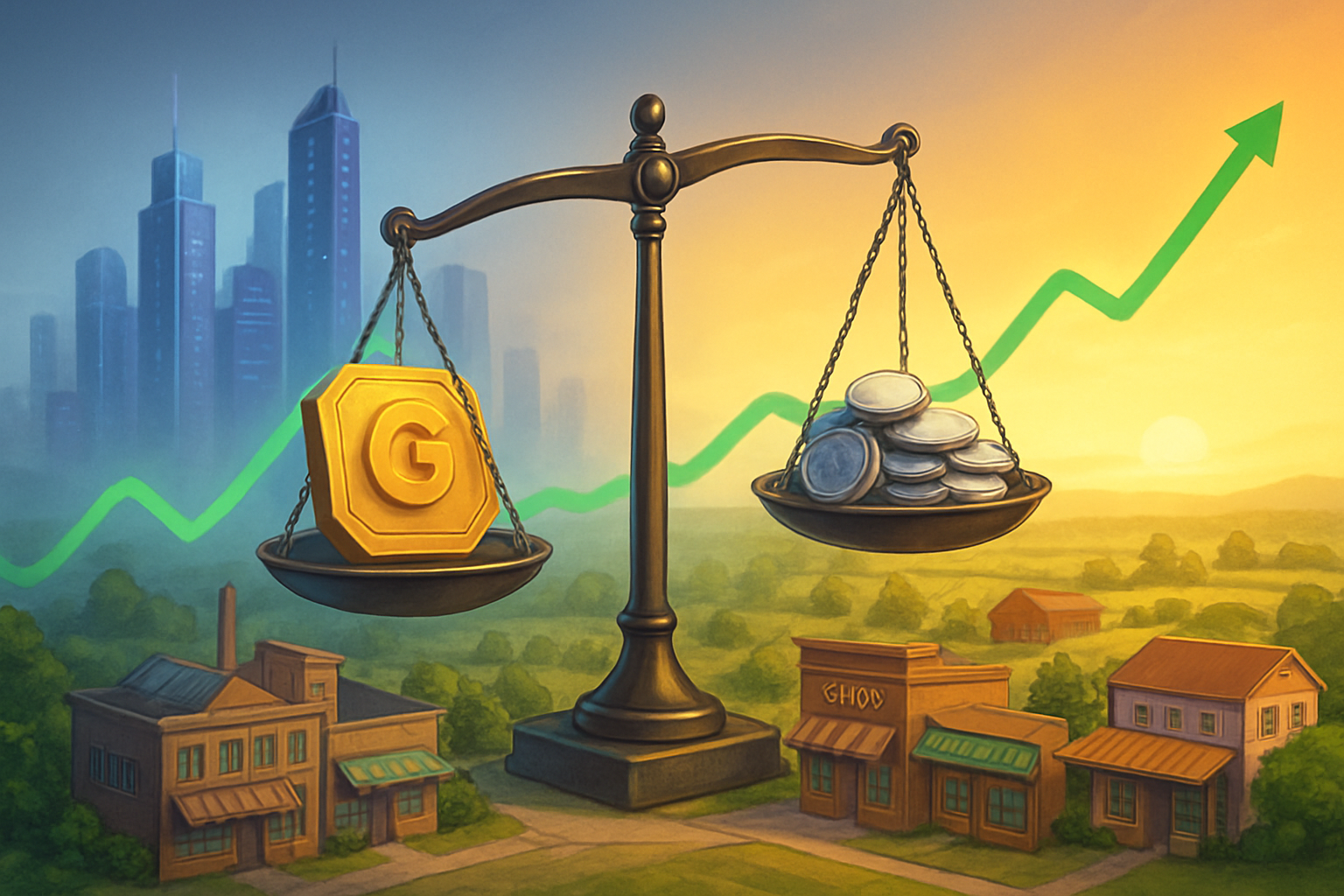
The long-awaited market "rotation" has finally moved from a trader's theory to a structural reality. As of mid-March 2026, the dominance of mega-cap technology stocks is being replaced by a more egalitarian rally, characterized by the dramatic outperformance of the Russell 2000 and the S&P 500 Equal Weight Index hitting fresh all-time highs. This shift marks a significant departure from the "AI-at-all-costs" sentiment that defined the previous two years, as investors seek value in the domestic resilience of smaller firms.
The immediate implications are profound: market concentration risk, which reached historic levels in 2024, is rapidly unwinding. While the tech-heavy Nasdaq 100 (NASDAQ: QQQ) has remained largely flat since the start of 2026, the small-cap Russell 2000 (NYSEARCA: IWM) has surged over 7% year-to-date, extending a winning streak that has left many institutional investors scrambling to rebalance their portfolios toward neglected sectors like regional banking, industrials, and energy.
The Spark and the Sustained Shift: A Timeline of the Rotation
The roots of this transition trace back to July 11, 2024, a day now cited by market historians as the "Seismic Shift." On that afternoon, a cooler-than-expected Consumer Price Index (CPI) report showed headline inflation falling 0.1% month-over-month. This data point triggered an immediate and violent decoupling: the Russell 2000 jumped 3.57% in a single session, while the Nasdaq 100 plummeted 1.95%. This nearly 5.5% performance gap was one of the largest in the history of the two indices, signaling that the Federal Reserve’s pivot toward rate cuts would benefit the "bottom 2000" more than the "top 7."
Since that pivotal moment, the narrative of a "two-speed market" has inverted. Throughout 2025, the Federal Reserve systematically lowered interest rates from their 23-year highs to a "Goldilocks" range of 3.50%–3.75% by early 2026. This easing of financial conditions has been a lifeline for small-cap companies, many of which carry higher proportions of floating-rate debt compared to their cash-rich mega-cap peers. By February 26, 2026, the S&P 500 Equal Weight Index (NYSEARCA: RSP) hit a record high, officially signaling that the average stock in the index was now participating in the bull market with more vigor than the tech giants.
Market participants have watched as the "Magnificent 7"—consisting of Nvidia (NASDAQ: NVDA), Microsoft (NASDAQ: MSFT), Apple (NASDAQ: AAPL), Alphabet (NASDAQ: GOOGL), Amazon (NASDAQ: AMZN), Meta Platforms (NASDAQ: META), and Tesla (NASDAQ: TSLA)—slowly ceded their crown. While these companies remain profitable, the sheer weight of their valuations and "AI capex fatigue" among investors has led to a stagnation in their stock prices. In contrast, the Russell 2000 recently embarked on a 15-session winning streak against the S&P 500 in early 2026, its longest such run since 1996.
Winners and Losers: From Silicon Valley to the Heartland
The primary winners in this new regime are the "S&P 493"—the companies that were largely ignored during the 2023-2024 AI craze. Specifically, small-cap industrial firms and regional financial institutions have seen a resurgence. For instance, companies like Western Alliance Bancorporation (NYSE: WAL) and other regional lenders have benefitted from a steepening yield curve and stabilized deposit costs. Industrials, bolstered by domestic manufacturing incentives and lower borrowing costs for equipment, have also seen their earnings multiples expand for the first time in years.
On the losing side, the "Magnificent 7" are facing a reality check. Nvidia (NASDAQ: NVDA), once the unstoppable engine of the S&P 500, has faced headwinds as hyperscale cloud providers began to scrutinize the return on investment for massive AI infrastructure spend. Similarly, Apple (NASDAQ: AAPL) and Microsoft (NASDAQ: MSFT) have struggled to find the next catalyst to justify their multi-trillion-dollar valuations in a higher-for-longer (but lower than 2024) interest rate environment. The valuation gap, which saw small-caps trading at a 31% discount to large-caps entering 2026, has begun to close, as capital flows out of over-crowded tech trades and into the Russell 2000.
Exchange-traded funds (ETFs) have reflected this churn. The RSP, which weights every S&P 500 constituent equally, has seen over $15 billion in net inflows since the 2024 pivot. Conversely, tech-heavy ETFs have experienced their first sustained period of net outflows in three years. For investors, the "safety" of mega-cap tech has been replaced by the "opportunity" of small-cap value.
Wider Significance: A Healthier, More Balanced Market
This rotation is not merely a short-term correction; it is a sign of a maturing and healthier economic cycle. Analysts argue that the extreme concentration of 2023, where a handful of stocks accounted for nearly all of the market’s gains, was a systemic risk. If any one of the "Magnificent 7" stumbled, the entire index followed. Today’s broader participation, led by the S&P 500 Equal Weight Index, suggests that the U.S. economy is resilient across multiple sectors, not just in semiconductor manufacturing or cloud computing.
Historically, such rotations have followed periods of extreme valuation dispersion. The current environment draws parallels to the post-dot-com era and the mid-2016 market shift, where leadership broadened after a period of intense narrowness. This broadening is also a reflection of a shift in earnings growth. By the third quarter of 2025, the "S&P 493" contributed 9.4% to year-over-year earnings growth, more than double the 4.1% contributed by the "Magnificent 7." This "earnings catch-up" has provided the fundamental justification for the stock price movements we are seeing in 2026.
Furthermore, the regulatory environment has played a subtle role. Increased antitrust scrutiny on big tech has made it more difficult for the giants to grow through acquisition, whereas smaller companies have found a more favorable environment for organic growth and niche consolidation. The "Great Rotation" is, in many ways, the market’s way of correcting the imbalances created by a decade of near-zero interest rates followed by a sudden AI-driven speculative bubble.
What Comes Next: The Roadmap for 2026 and Beyond
In the short term, the momentum behind the Russell 2000 and Equal Weight strategies appears sustainable as long as the Federal Reserve maintains its path of moderate rate cuts without a recession. The "coiled spring" of small-cap valuations still has room to expand, especially as domestic consumer spending remains robust. However, a potential risk remains: if inflation were to re-accelerate, the very stocks that led the rotation could face a sharp reversal as interest rate expectations shift once again.
Strategic pivots will be required for institutional managers who have been "overweight" tech for the better part of a decade. We are likely to see a continued "hunt for yield" in the small-cap space, with a focus on companies with strong free cash flow and low leverage. For the "Magnificent 7," the challenge will be to prove that their AI investments are generating tangible revenue growth rather than just increasing capital expenditures.
Looking toward the latter half of 2026, the market may enter a period of "sector churn," where leadership rotates between financials, energy, and healthcare. The era of a single sector driving the entire market appears to be in the rearview mirror. Investors should prepare for a more volatile, but ultimately more diversified, equity landscape.
Summary and Investor Takeaways
The ascent of the Russell 2000 and the S&P 500 Equal Weight Index to record highs marks the definitive end of the "Mag 7" era of market dominance. The pivot, which began with a single CPI report in July 2024, has blossomed into a full-scale market rebalancing driven by falling interest rates and broadening earnings growth. While the "Magnificent 7" remain fundamental pillars of the global economy, they are no longer the sole engines of investor returns.
Moving forward, the health of the market will be measured by the breadth of participation rather than the height of a few select tech peaks. This is a positive development for long-term investors, as it reduces concentration risk and provides a more accurate reflection of the broader U.S. economy. In the coming months, investors should keep a close watch on the Fed’s terminal rate and the quarterly earnings of mid-sized industrial and financial firms. The "Great Rotation" has arrived, and for the first time in years, the "average" stock is having its day in the sun.
This content is intended for informational purposes only and is not financial advice