Collective Relaxation releases safety guide for cold plunge beginners, outlining optimal temperature ranges of 55°F to 60°F for starting, progression protocols, breathing techniques, and medical warnings to prevent common mistakes and build sustainable routines.
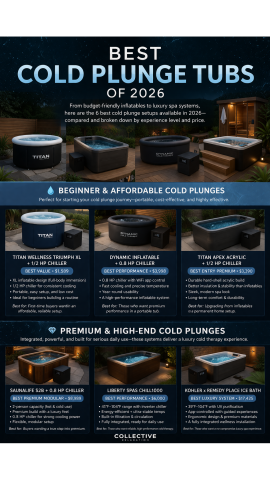
-- Collective Relaxation has released a safety guide addressing the most common mistake beginners make when starting cold water immersion: choosing temperatures that are too cold. Many newcomers either set their plunge too warm and experience minimal benefit or too cold and abandon the practice after overwhelming initial sessions. The new guide solves this problem by providing specific, research-backed temperature ranges and progression protocols designed to build sustainable routines. Research findings indicate that gradual temperature progression increases adherence to cold plunging routines by 40-60%. A common progression protocol involves gradually lowering water temperature, for example, by a few degrees Fahrenheit per week, after an initial adaptation period.
More information is available at https://collectiverelaxation.com/blogs/wellness-insights/cold-plunge-temperature-guide
Cold plunging has grown rapidly in popularity, yet beginners often struggle because general advice fails to address their unique adaptation needs. The guide emphasizes that the recommended starting range of 55°F to 60°F allows most people to maintain controlled breathing and stay immersed for 3 to 5 minutes, which represents the optimal window for habit formation. Proper guidance prevents two common scenarios: setting the temperature too high, which delivers no therapeutic response, or too low, which triggers immediate dropout. Without structured progression, many individuals quit after negative early experiences rather than building the neurological and cardiovascular foundation necessary for long-term practice.
The guide from Collective Relaxation outlines three core temperature ranges, each triggering distinct physiological responses. The beginner range of 55°F to 60°F initiates circulatory activation and mild hormonal shifts without overwhelming the nervous system. The therapeutic sweet spot of 45°F to 55°F produces significant norepinephrine release—up to 300% increases according to expert consensus—along with vasoconstriction that reduces inflammation. Advanced territory below 45°F delivers deep muscle tissue cooling but carries heightened risks that outweigh benefits for most users. These ranges reflect research on how different temperatures trigger adaptive responses in the cardiovascular, hormonal, and nervous systems.
Individuals with heart conditions, high blood pressure, or other pre-existing health issues must consult a doctor before beginning cold plunge therapy, particularly at temperatures below 55°F. The cold shock response—an immediate spike in heart rate and blood pressure—occurs within the first 30 seconds of immersion and can pose serious risks for vulnerable populations. Medical guidelines emphasize that this acute cardiovascular demand, while manageable for healthy individuals, may be dangerous for those with underlying conditions such as arrhythmia, coronary artery disease, or congestive heart failure. Collective Relaxation positions the guide as responsible wellness guidance that prioritizes user safety over intensity.
Controlled breathing represents the fundamental skill that determines whether beginners succeed or quit. The guide teaches specific techniques, including box breathing and slow nasal exhales, which manage the initial cold shock reflex and prevent the overwhelming sensation that causes most dropouts. Mastering this skill during the first 15 to 30 seconds of immersion increases both safety and effectiveness while transforming cold exposure from a survival challenge into a learnable practice. The guide presents this as a teachable competency rather than an innate tolerance, making the practice accessible to a broader range of users regardless of prior experience.
The complete guide covers the full beginner journey: starting temperature recommendations, weekly temperature decreases, duration guidelines based on water temperature, breathing techniques for managing cold shock, and safety warnings for at-risk populations. The resource addresses the fragmented and contradictory advice beginners encounter online by consolidating evidence-based practices into a single resource. The guide supports building sustainable cold plunge routines through structured progression rather than intensity-focused approaches that lead to early abandonment.
For more details, visit https://CollectiveRelaxation.com
Contact Info:
Name: Jerry D Vaiana
Email: Send Email
Organization: Collective Relaxation
Address: 194 Woehrle Avenue , STATEN ISLAND, NY 10312, United States
Website: https://CollectiveRelaxation.com
Source: NewsNetwork
Release ID: 89187336
In case of encountering any inaccuracies, problems, or queries arising from the content shared in this press release that necessitate action, or if you require assistance with a press release takedown, we urge you to notify us at error@releasecontact.com (it is important to note that this email is the authorized channel for such matters, sending multiple emails to multiple addresses does not necessarily help expedite your request). Our responsive team will be readily available to promptly address your concerns within 8 hours, resolving any identified issues diligently or guiding you through the necessary steps for removal. The provision of accurate and dependable information is our primary focus.