
New York - Recently announced, Pandada, an AI-powered tool that turns plain language into instant charts and insights, is spotlighting a more efficient approach to variance analysis for finance teams. Designed to help finance organizations move faster from raw Budget vs. Actual differences to clear, management-ready summaries, the workflow aims to reduce repetitive manual work across recurring processes such as month-end reviews, forecast checks, and financial reporting.
The real bottleneck isn’t calculating the variance
Most finance teams do not struggle to calculate variances. The real challenge is explaining them clearly and quickly. That is what makes variance analysis so time-consuming in practice.
On paper, the workflow sounds simple: compare budget vs. actuals, identify the gaps, and summarize what changed. In reality, however, the work usually starts much earlier. Teams often need to pull numbers from multiple files, check versions, align categories, review supporting details, and determine which changes actually matter before they can even begin writing a summary.
The most repetitive part often comes next: turning those differences into something leadership can quickly understand.
Common FP&A questions include:
- Why did the team miss plan?
- What is driving the biggest gap?
- Which team or region needs attention first?
- What should management focus on in the next review?
These are common finance questions, but the process of answering them is still often manual.
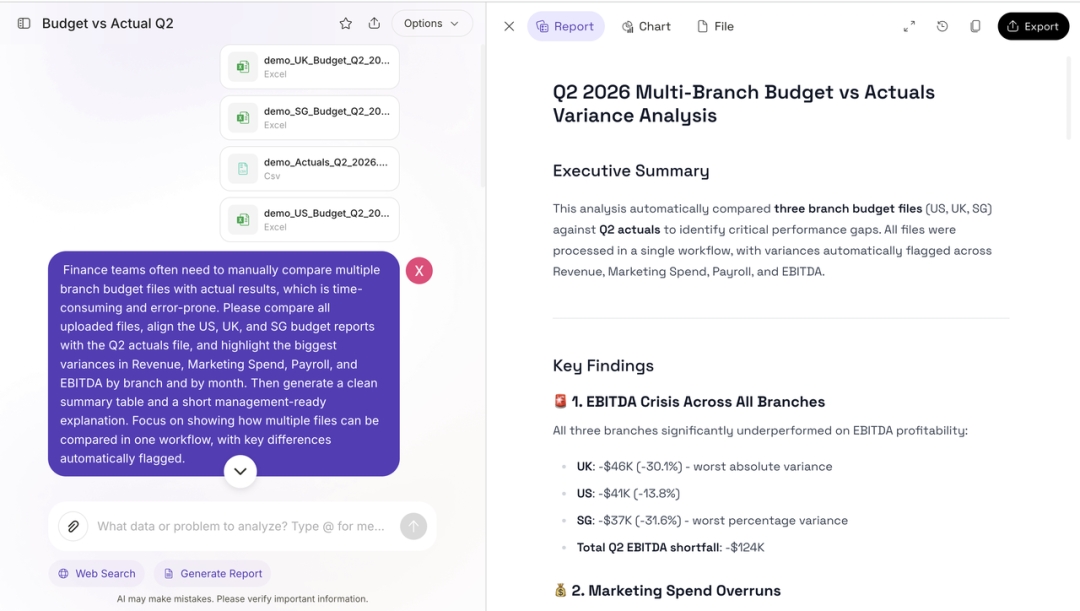
Pandada is designed to support one of the most practical AI use cases in finance: automatically generating variance summaries. The goal is not to replace the analyst or remove human review, but to help finance teams move faster from raw differences to a structured, readable explanation.
What a good variance summary should actually do
A good variance summary should do more than restate numbers from a spreadsheet. It should highlight the biggest changes, group them in a useful way, and bring the team closer to the real question: what changed, why does it matter, and what deserves follow-up?
This is where a more effective workflow can make a meaningful difference.
Instead of spending hours comparing files and rewriting the same types of summaries every month, finance teams should be able to:
- identify the biggest variances automatically
- organize them by category, team, or region
- generate a concise written summary
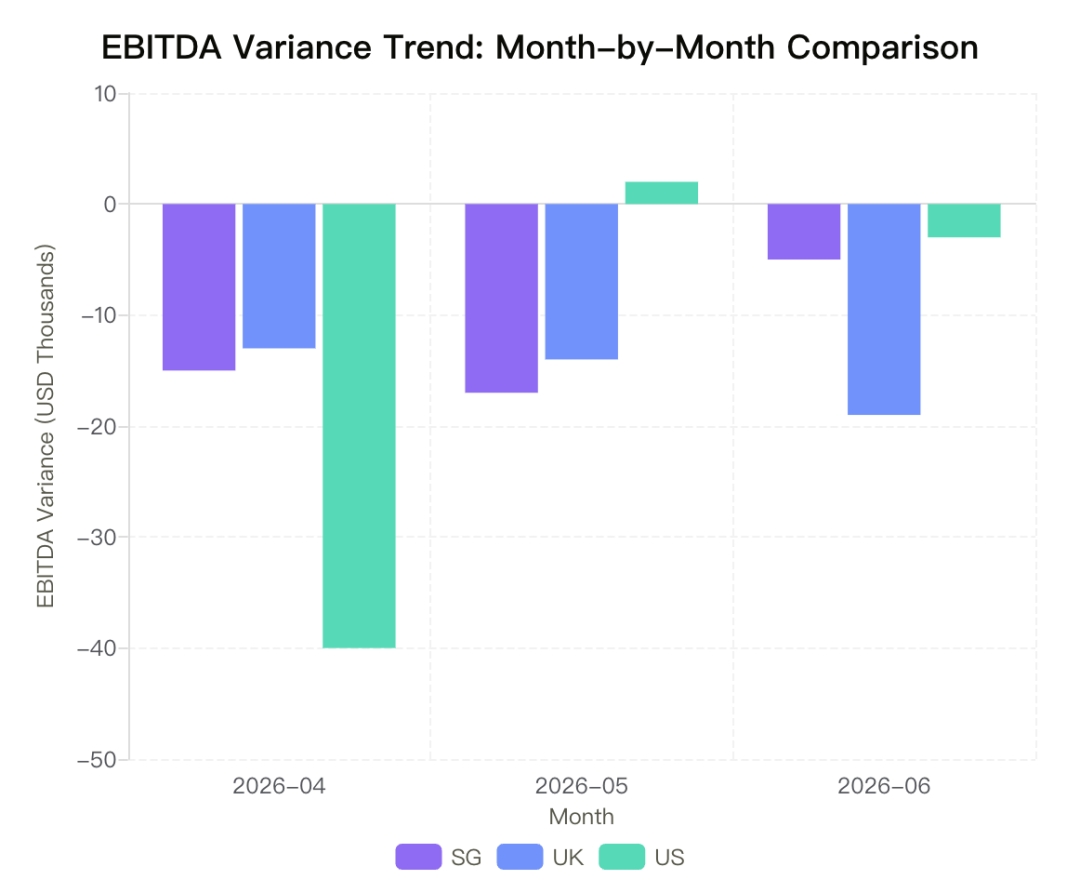
- create outputs that are easier to review and share
Why this matters for recurring finance workflows
This is especially valuable in recurring finance workflows. Month-end reviews, budget checks, forecast updates, and management reporting all tend to follow similar patterns. When the workflow repeats every month, the team should not have to rebuild it from scratch each time.
The same mindset also applies beyond internal reporting
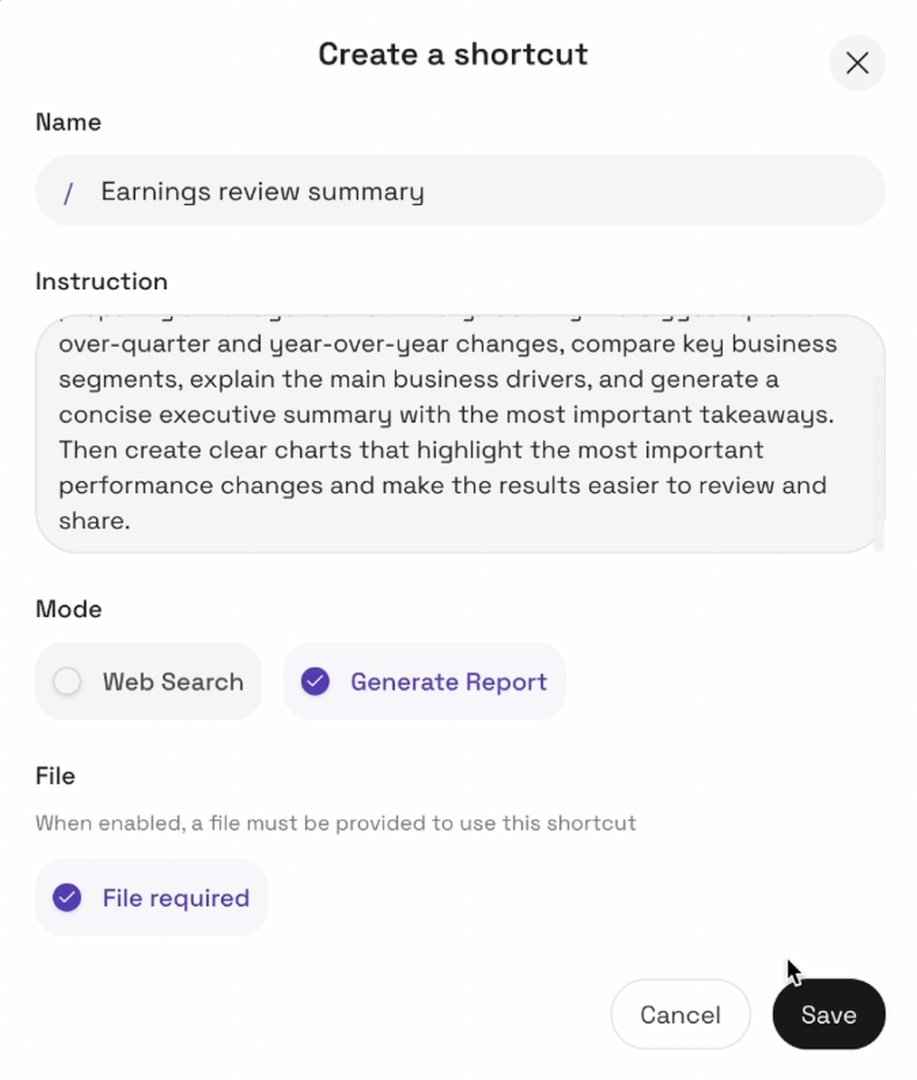
The same logic also extends beyond internal budget reporting. In public earnings materials, finance teams and leadership still need to explain quarter-over-quarter, year-over-year, and segment-level changes in a clear way. The format may be different from a classic budget vs. actual review, but the underlying need is similar: identify what changed, explain why it changed, and turn the numbers into a management-ready narrative.
A more repeatable workflow for finance teams
Repeatable workflows also matter because they make variance analysis faster, more consistent, and easier to scale across recurring reporting cycles. When teams can save and reuse the same process, they can spend less time rebuilding reports and more time focusing on decision-making.
Pandada supports this approach by helping finance teams move from messy finance files to clearer variance summaries, more structured analysis, and more repeatable monthly workflows. The same analysis mindset can also support the way teams review and interpret real-world earnings materials.
Finance teams should still own the judgment. But they should not have to spend so much time manually rebuilding the first draft of the story every month.
For teams still spending too much time manually turning Budget vs. Actual gaps into explanations and summaries, Pandada offers a way to streamline the workflow with AI. More information is available for organizations looking to explore how this approach could support finance reporting processes.
#VarianceAnalysis #FinancialReporting #FPandA
Media Contact
Company Name: PULSE INTERACTIVE PTE. LTD.
Contact Person: Candice Pan
Email: Send Email
Country: Singapore
Website: https://pandada.ai