
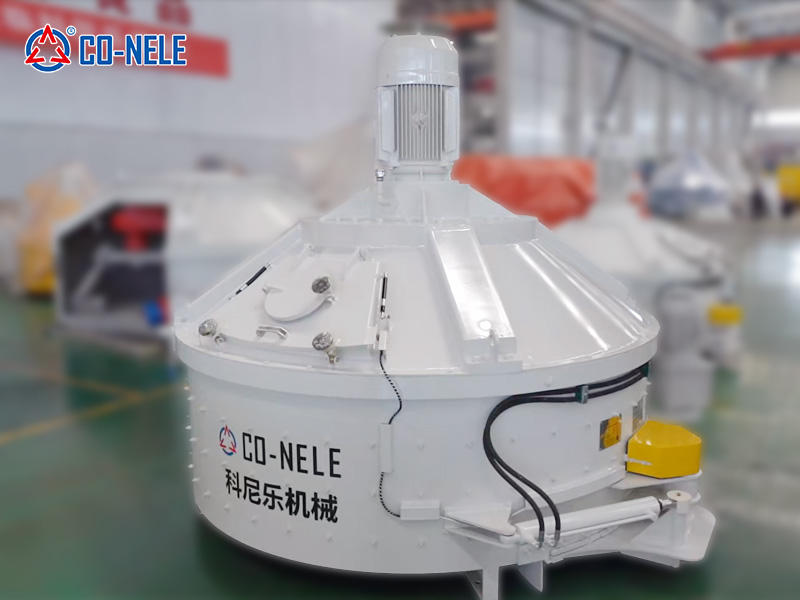
Choosing the right planetary concrete mixer requires aligning production needs, material characteristics, site conditions, and long-term operational costs with the mixer’s specifications, configuration, and manufacturer support. Below is a structured, actionable guide to help you select the optimal unit for sale.
1. Clarify Core Production Requirements 1.1 Mixing Capacity (Output/Input Volume)
Determine based on daily output, batch size, and cycle time:
- Small-scale (precast components, small construction sites): 500–1500L output (e.g., CMP1500, CMP500)
- Medium-scale (precast factories, general construction): 1500–3000L output (e.g., CMP1500–CMP3000)
- Large-scale (high-performance concrete, industrial production): 3000L+ output (e.g., CMP4000–CMP6000)
Note: Input capacity is typically 1.2–1.5x the output capacity (avoid overfilling to ensure mixing uniformity).
1.2 Mixing Material & Application
Planetary mixers excel at high-uniformity, high-performance concrete (HPC/UHPC, steel fiber-reinforced concrete, colored concrete, refractory materials, dry mortar). Avoid them for large-scale ready-mix concrete (twin-shaft mixers are more efficient here).
Key material considerations: Steel fiber dispersion, silica fume dispersion, dry/hard concrete, lightweight concrete, refractory aggregates.
1.3 Production Cycle & Efficiency
- Target mixing time: 20–40 seconds for most concrete types (planetary mixers reduce cycle time by 15–20% vs. traditional mixers).
- Discharge speed: Hydraulic discharge (≥1m³) is faster and more reliable than pneumatic discharge (≤0.75m³) for large batches.
2. Evaluate Technical Specifications & Configuration2.1 Power & Drive System
- Main motor power: Matches capacity (e.g., 55kW for 1500L output, 75kW+ for 3000L+).
- Transmission: 6-stage hard-tooth surface planetary gearbox (low noise, high torque, low maintenance).
- Protection: Overload protection, emergency stop, and hydraulic coupling (prevents transmission damage).
2.2 Discharge System
- Discharge method: Pneumatic (small capacity) vs. hydraulic (large capacity, emergency manual override).
- Discharge doors: Single door (standard) or multi-door (for high-efficiency discharge of self-compacting concrete/SCC).
- Sealing: High-reliability seals to prevent concrete leakage.
2.3 Mixing Mechanism
- Blade design: Counter-current planetary blades (2–4 mixing stars) for no-dead-zone mixing.
- Scrapers: Side scrapers + discharge scrapers to eliminate material buildup.
- Wear resistance: High-chromium alloy liners/blades (critical for abrasive materials like silica fume, steel fiber).
2.4 Control System
Manual control (basic) vs. PLC automatic control (integrated with batching systems, real-time monitoring).
User-friendly interface, fault alarm, and remote operation (optional).
3. Assess Durability & Maintenance
- Materials: Stainless steel mixing drum, high-hardness wear parts (reduces replacement frequency).
- Cleaning: High-pressure automatic washing system (reduces manual labor, prevents concrete hardening).
- Maintenance access: Removable maintenance doors, easy access to gears and blades.
- Spare parts: Local availability of wear parts (liners, blades, seals) and manufacturer support.
4. Site & Operational Compatibility
- Power supply: Electric (380V/415V) for fixed plants; diesel/hydraulic for remote sites.
- Space & installation: Floor-mounted (standard) vs. mobile (portable for small projects).
- Integration: Compatibility with batching hoppers, conveying systems, and precast production lines.
5. Safety & Compliance
- Safety features: Emergency stop, overload protection, safety interlocks, and dust-proof design.
- Certifications: CE, ISO, or local industry standards (ensures quality and compliance).
- Warranty: 1-year warranty (standard) + extended warranty options (critical for long-term use).
6. Manufacturer & After-Sales Support
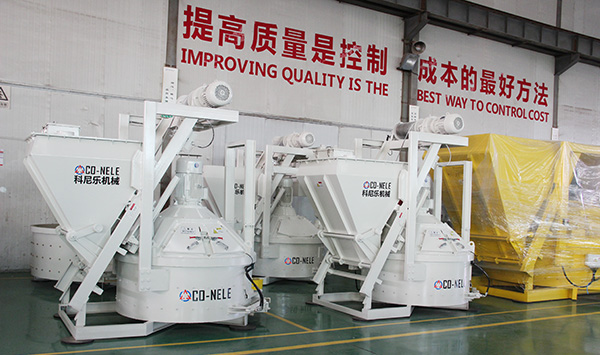
- Reputation: Choose established brands with global service networks (e.g., CO-NELE,).
- After-sales: On-site installation, training, and technical support.
- Customization: Ability to modify discharge doors, control systems, or wear parts for specific materials.
Quick Selection Checklist
| Factor | Key Questions |
|---|---|
| Capacity | What’s my daily output and batch size? |
| Material | Will I mix steel fiber/UHPC or standard concrete? |
| Discharge | Do I need hydraulic discharge for large batches? |
| Power | Is the power supply compatible with the motor? |
| Maintenance | Are spare parts easily available locally? |
| Safety | Does it meet local safety standards? |
Final Tips
- Test before buying: Request a demo or trial run to verify mixing uniformity and discharge efficiency.
- Total cost of ownership (TCO): Prioritize low maintenance and energy consumption over upfront cost.
- Future scalability: Choose a model that can adapt to increased production needs (e.g., upgradeable control systems).
Media Contact
Company Name: CO-NELE Machinery Co.,Ltd
Email: Send Email
Phone: +86 15253277366
Country: China
Website: https://www.conele-mixer.com/