In a move that signals the definitive merger of the automotive and semiconductor industries, battery titan Contemporary Amperex Technology Co., Limited (SZSE: 300750), commonly known as CATL, and Unigroup Guoxin Microelectronics Co., Ltd. (SZSE: 002049) have finalized their joint venture, Tongxin Micro Technology. Established in late 2025 and accelerating into early 2026, this partnership marks a strategic pivot from the production of "dumb" battery cells to the development of "intelligent" energy systems. By integrating high-performance automotive domain controllers directly with battery management intelligence, the venture aims to create a unified "brain" for the next generation of electric vehicles (EVs).
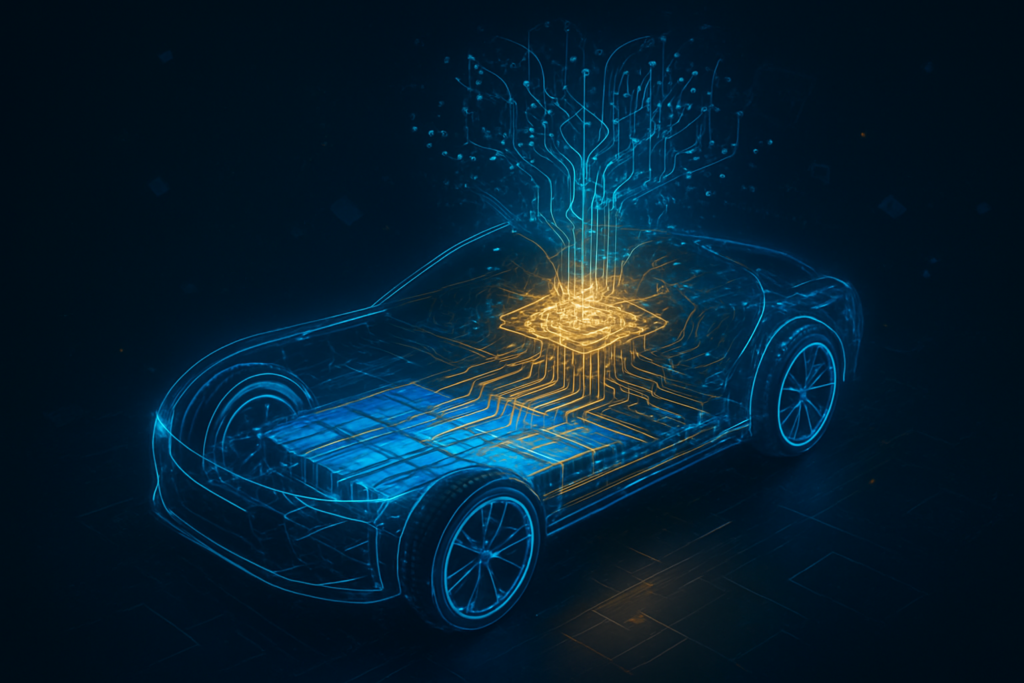
The significance of this collaboration lies in its pursuit of "Energy and Computing Convergence." As the industry shifts toward Software-Defined Vehicles (SDVs), the traditional boundaries between a car’s power source and its processing unit are dissolving. The CATL-Guoxin venture is not merely building chips; it is architecting a new "Power-Computing Integration" model that allows the battery to communicate with the vehicle's chassis and autonomous systems in real-time. This development is expected to fundamentally alter the competitive landscape, challenging traditional Tier-1 suppliers and established chipmakers alike.
Technical Foundations: The THA6206 and Zonal Architecture
At the heart of the Tongxin Micro Technology venture is the THA6206, a groundbreaking automotive-grade microcontroller (MCU) designed for centralized Electrical/Electronic (E/E) architectures. Built on the Arm Cortex-R52+ architecture, the THA6206 is one of the first chips in its class to achieve the ISO 26262 ASIL D certification—the highest level of functional safety required for critical vehicle systems like steering, braking, and powertrain management. Unlike previous generations of microcontrollers that handled isolated tasks, the THA6206 is engineered to act as a "zonal controller," consolidating the functions of dozens of smaller Electronic Control Units (ECUs) into a single, high-performance node.
This technical shift enables a deep integration of AI-driven Battery Management Systems (BMS). By running sophisticated machine learning models directly on the domain controller, the system can utilize "Digital Twin" technology to simulate cell behavior in real-time. This allows for predictive maintenance with over 97% accuracy, identifying potential cell failures or thermal runaway risks months before they occur. Furthermore, the integration with CATL’s Intelligent Integrated Chassis (CIIC)—often referred to as a "skateboard" chassis—allows the battery and the drivetrain to operate as a single, optimized unit, significantly improving energy efficiency and vehicle dynamics.
Industry experts have noted that this approach differs sharply from the "black box" battery systems of the past. Traditionally, battery manufacturers provided the cells, while third-party suppliers provided the control logic. By bringing chip design in-house through this venture, CATL can embed its proprietary battery chemistry data directly into the silicon. This vertical integration ensures that the software controlling the energy flow is perfectly tuned to the physical characteristics of the battery cells, a level of optimization that was previously unattainable for most OEMs.
Market Disruption and the Battle for the Vehicle's Brain
The formation of Tongxin Micro Technology creates a "middle-tier" competitive threat that bridges the gap between energy providers and silicon giants. For major chipmakers like Nvidia (NASDAQ: NVDA) and Qualcomm (NASDAQ: QCOM), the venture represents a nuanced challenge. While CATL is not currently competing in the high-power AI training space, its specialized domain controllers compete for "edge inference" within the vehicle. Qualcomm’s Snapdragon Digital Chassis, which seeks to integrate cockpit and ADAS functions, now faces a rival architecture that prioritizes the deep integration of the powertrain and battery safety—a critical selling point for safety-conscious automakers.
For Tesla (NASDAQ: TSLA), the CATL-Guoxin venture represents an erosion of its long-standing technological moat. Tesla’s primary advantage has been its extreme vertical integration, combining its custom FSD (Full Self-Driving) chips with its proprietary 4680 battery cells. By "packaging" this level of integration and making it available to other manufacturers like Ford (NYSE: F) and various Chinese domestic brands, CATL is effectively commoditizing Tesla's advantage. In response, Tesla has reportedly accelerated the development of its AI5 chip, slated for late 2026, to maintain its lead in raw neural-net processing power.
Financial analysts from firms like Morgan Stanley and Jefferies view this as "Vertical Integration 2.0." They argue that CATL is shifting toward higher-margin software and silicon products to escape the commoditization of battery cells. By controlling the chip that runs the BMS, CATL captures value across the entire battery lifecycle, including the secondary market for battery recycling and stationary energy storage. This strategic positioning allows CATL to transition from a hardware component supplier to a full-stack technology provider, securing its place at the top of the automotive value chain.
The Global AI Landscape and the "Software-Defined" Shift
The convergence of energy and computing is a hallmark of the broader AI landscape in 2026. As vehicles become increasingly autonomous, their demand for both electricity and data processing grows exponentially. The "Software-Defined Vehicle" is no longer a buzzword but a technical requirement; cars now require constant Over-the-Air (OTA) updates to optimize everything from seat heaters to regenerative braking algorithms. The CATL-Guoxin venture provides the necessary hardware foundation for this flexibility, allowing automakers to refine battery performance and safety protocols long after the vehicle has left the showroom.
However, this trend also raises significant concerns regarding supply chain sovereignty and data security. With the majority of these advanced domain controllers being developed and manufactured within China, Western regulators are closely monitoring the security of the software stacks running on these chips. The integration of AI into battery management also introduces "black box" risks, where the decision-making process of a neural network in a thermal emergency might be difficult for human engineers to audit or override.
Despite these concerns, the move is being compared to the early days of the smartphone industry, where the integration of the processor and the operating system led to a massive leap in capability. Just as Apple’s custom silicon transformed mobile computing, the "Battery-on-a-Chip" approach is expected to transform mobile energy. By treating the battery as a programmable asset rather than a static fuel tank, the industry is unlocking new possibilities for ultra-fast 5C charging and vehicle-to-grid (V2G) integration.
Future Horizons: Predictive Intelligence and the AI5 Era
Looking ahead to the remainder of 2026 and into 2027, the industry expects a rapid rollout of "AI-first" battery systems. The next frontier for the CATL-Guoxin venture is likely the integration of Large Language Models (LLMs) for vehicle diagnostics. Imagine a vehicle that doesn't just show a "Check Engine" light but provides a detailed, natural-language explanation of a specific cell's voltage fluctuation and schedules its own repair. This level of proactive service is expected to become a standard feature in premium EVs by 2027.
Furthermore, the competition is expected to intensify as BYD (SZSE: 002594) continues to scale its own in-house semiconductor division. The "Silicon Arms Race" in the automotive sector will likely see a push toward even smaller process nodes (3nm and below) for automotive chips to handle the massive data throughput required for Level 4 autonomous driving and real-time energy optimization. The challenge for the Tongxin Micro venture will be to maintain its lead in functional safety while matching the raw compute power of specialized AI firms.
Experts predict that the next major breakthrough will be "Cross-Domain Fusion," where the battery controller, the autonomous driving system, and the in-cabin infotainment system all share a single, massive liquid-cooled compute cluster. This would represent the final stage of the Software-Defined Vehicle, where the entire car is essentially a high-performance computer on wheels, with the battery serving as both its power source and its most intelligent peripheral.
A New Era for the Automotive Industry
The collaboration between CATL and Guoxin Micro marks a definitive turning point in the history of transportation. It signifies the end of the era where batteries were viewed as simple chemical storage devices and the beginning of an era where energy management is a high-stakes computational problem. By 2026, the "Silicon Cell" has become the new standard, proving that the future of the electric vehicle lies not just in how much energy it can hold, but in how intelligently it can process that energy.
The key takeaway for the industry is that hardware alone is no longer enough to win the EV race. As CATL moves into the chip business, it forces every other player in the ecosystem—from legacy automakers to Silicon Valley tech giants—to rethink their strategies. In the coming weeks and months, watch for announcements of new vehicle models featuring the THA6206 chip and for potential regulatory responses as the world grapples with the implications of this new, integrated energy-computing paradigm.
This content is intended for informational purposes only and represents analysis of current AI developments.
TokenRing AI delivers enterprise-grade solutions for multi-agent AI workflow orchestration, AI-powered development tools, and seamless remote collaboration platforms.
For more information, visit https://www.tokenring.ai/.