Financial services company Pathward Financial (NASDAQ: CASH) announced better-than-expected revenue in Q1 CY2026, but sales fell by 1.3% year on year to $276.3 million. Its GAAP profit of $3.35 per share was in line with analysts’ consensus estimates.
Is now the time to buy Pathward Financial? Find out by accessing our full research report, it’s free.
Pathward Financial (CASH) Q1 CY2026 Highlights:
- Net Interest Income: $125.1 million vs analyst estimates of $127.4 million (3.8% year-on-year decline, 1.8% miss)
- Net Interest Margin: 6.6% vs analyst estimates of 7% (34.5 basis point miss)
- Revenue: $276.3 million vs analyst estimates of $271 million (1.3% year-on-year decline, 2% beat)
- EPS (GAAP): $3.35 vs analyst estimates of $3.35 (in line)
- Tangible Book Value per Share: $25.41 vs analyst estimates of $26.23 (19.1% year-on-year growth, 3.1% miss)
- Market Capitalization: $2.13 billion
CEO Brett Pharr said, "At the midpoint of our fiscal year, we continue to make good progress on our goals and execute on our long-term strategy — being the trusted platform that enables our partners to thrive. Our tax season is going very well with tax-related products leading the way in revenue growth for the quarter. Additionally, new and existing partnerships announced last year are developing nicely and the Partner Solutions pipeline remains robust. Net interest income from our commercial finance loans also increased significantly as well. All in all, our core businesses remain healthy and we are pleased with the results achieved in the quarter. "
Company Overview
Formerly known as Meta Financial until its 2022 rebranding, Pathward Financial (NASDAQ: CASH) provides banking-as-a-service solutions and commercial finance products, enabling partners to offer financial services like prepaid cards, payment processing, and lending options.
Sales Growth
In general, banks make money from two primary sources. The first is net interest income, which is interest earned on loans, mortgages, and investments in securities minus interest paid out on deposits. The second source is non-interest income, which can come from bank account, credit card, wealth management, investing banking, and trading fees. Over the last five years, Pathward Financial grew its revenue at a decent 10.6% compounded annual growth rate. Its growth was slightly above the average banking company and shows its offerings resonate with customers.
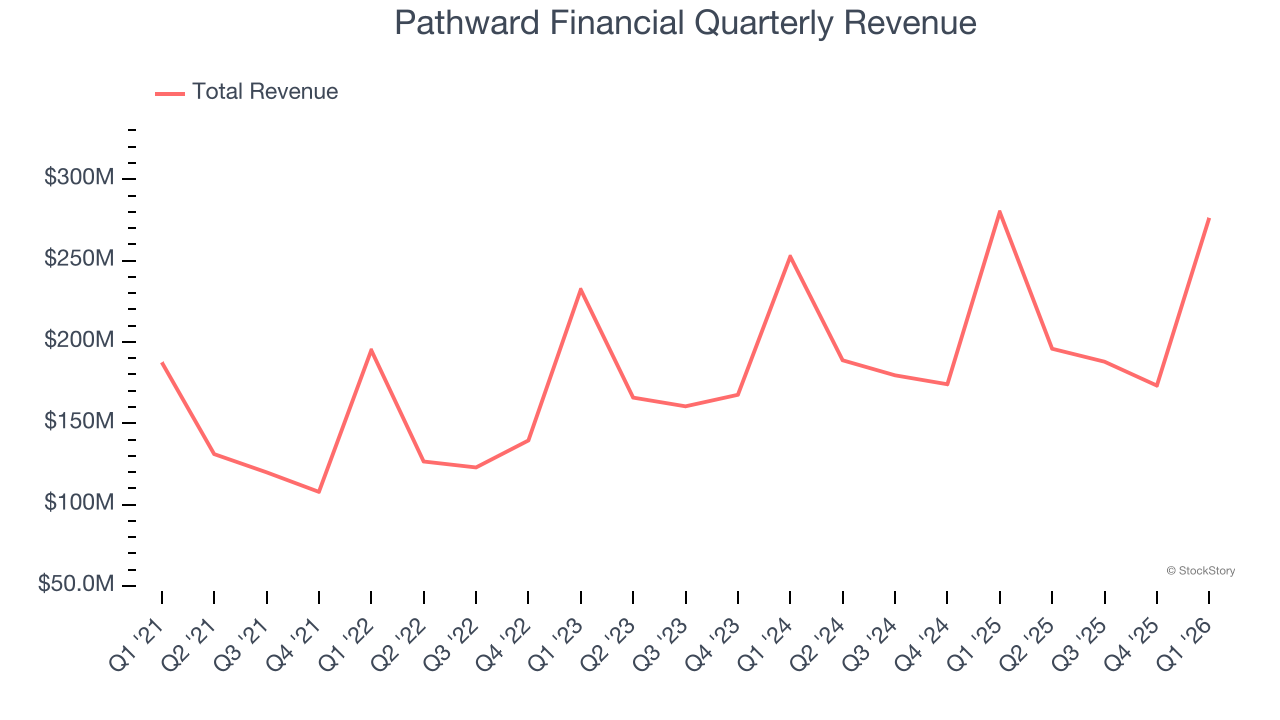
Long-term growth is the most important, but within financials, a half-decade historical view may miss recent interest rate changes and market returns. Pathward Financial’s recent performance shows its demand has slowed as its annualized revenue growth of 5.7% over the last two years was below its five-year trend. We’re wary when companies in the sector see decelerations in revenue growth, as it could signal changing consumer tastes aided by low switching costs. 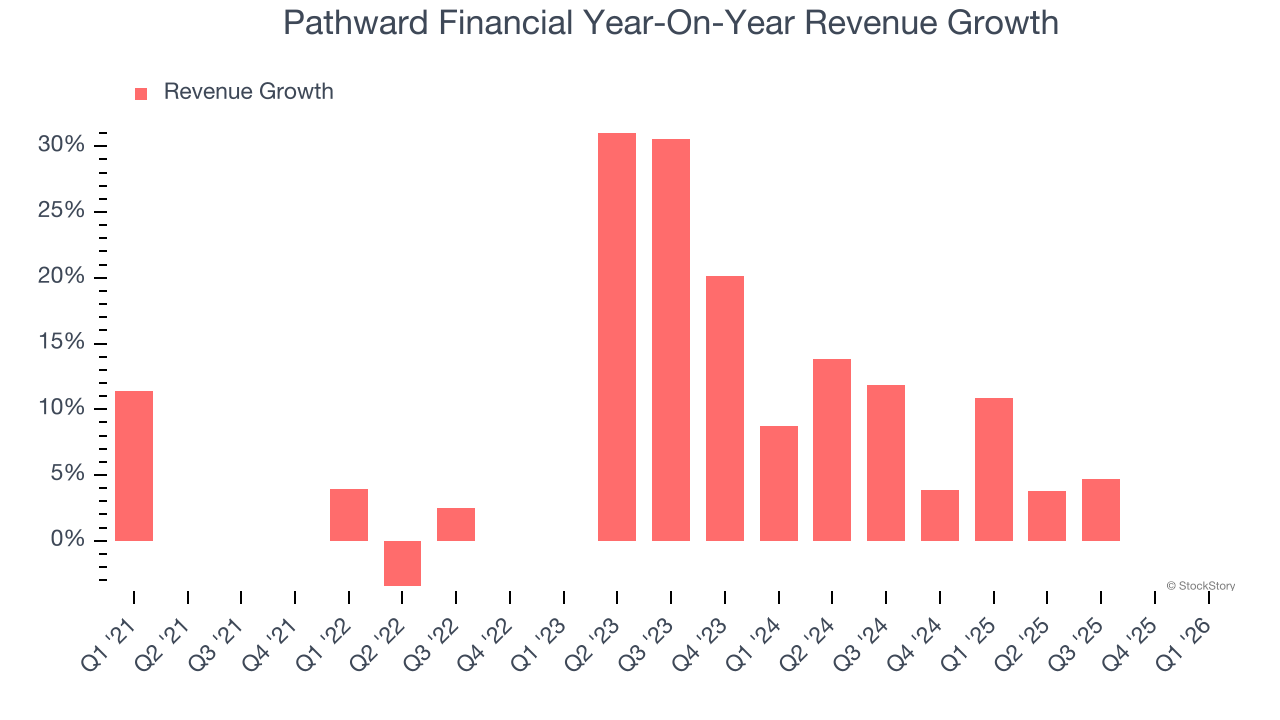 Note: Quarters not shown were determined to be outliers, impacted by outsized investment gains/losses that are not indicative of the recurring fundamentals of the business.
This quarter, Pathward Financial’s revenue fell by 1.3% year on year to $276.3 million but beat Wall Street’s estimates by 2%.
Net interest income made up 59.6% of the company’s total revenue during the last five years, meaning Pathward Financial’s growth drivers strike a balance between lending and non-lending activities.
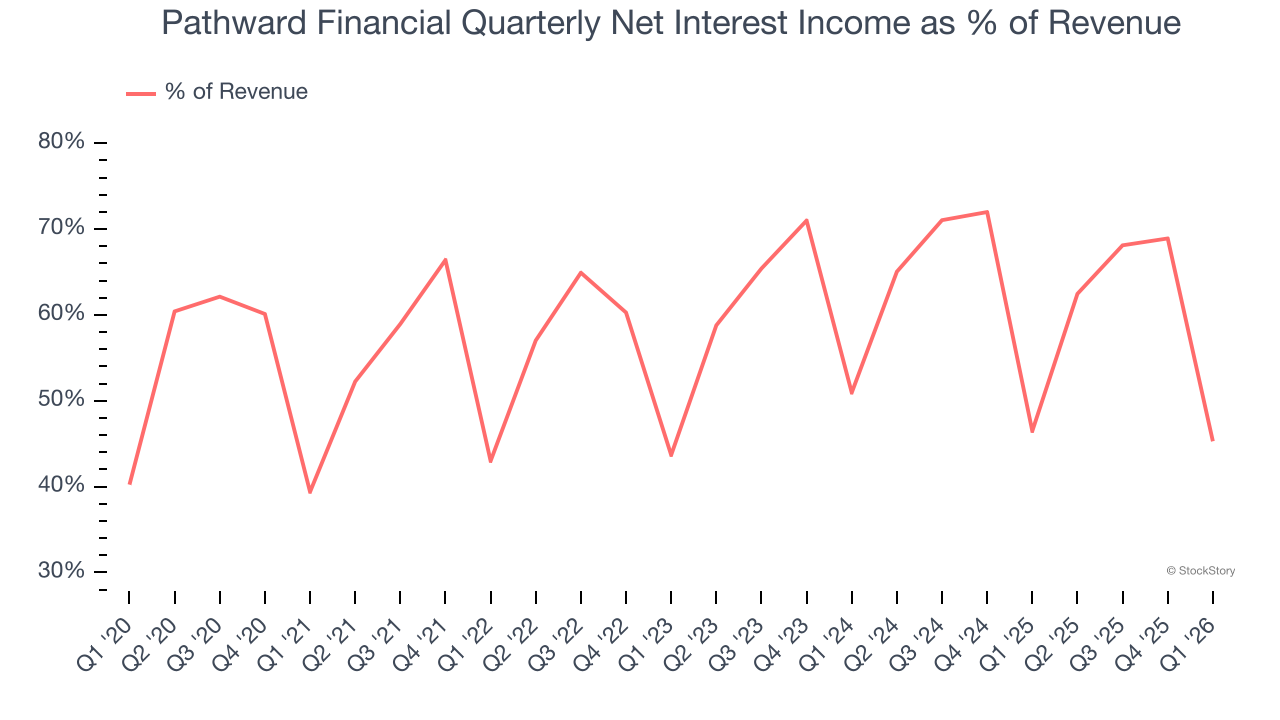
While banks generate revenue from multiple sources, investors view net interest income as the cornerstone - its predictable, recurring characteristics stand in sharp contrast to the volatility of non-interest income.
ONE MORE THING: The $21 AI Application Stock Wall Street Forgot. While Wall Street obsesses over who’s building AI, one company is already using it to print money. And nobody’s paying attention.
AI chip stocks trade at ridiculous valuations. This company processes a trillion consumer signals monthly using AI and trades at a third of the price. The gap won’t last. The institutions will figure it out. You need to see this first. Read the FREE Report Before They Notice.
Tangible Book Value Per Share (TBVPS)
The balance sheet drives banking profitability since earnings flow from the spread between borrowing and lending rates. As such, valuations for these companies concentrate on capital strength and sustainable equity accumulation potential.
This explains why tangible book value per share (TBVPS) stands as the premier banking metric. TBVPS strips away questionable intangible assets, revealing concrete per-share net worth that investors can trust. Traditional metrics like EPS are helpful but face distortion from M&A activity and loan loss accounting rules.
Pathward Financial’s TBVPS grew at an incredible 10.7% annual clip over the last five years. TBVPS growth has also accelerated recently, growing by 25.1% annually over the last two years from $16.23 to $25.41 per share.
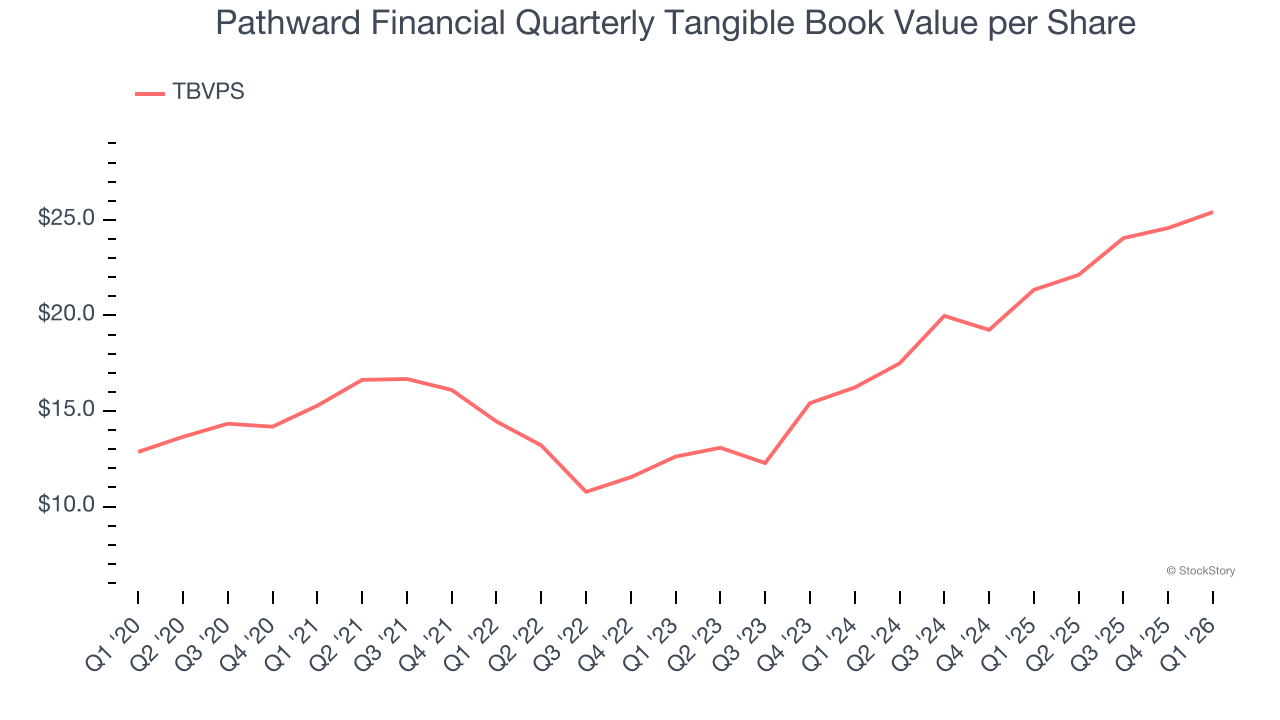
Over the next 12 months, Consensus estimates call for Pathward Financial’s TBVPS to grow by 23.6% to $31.40, elite growth rate.
Key Takeaways from Pathward Financial’s Q1 Results
It was encouraging to see Pathward Financial beat analysts’ revenue expectations this quarter. On the other hand, its net interest income missed and its tangible book value per share fell short of Wall Street’s estimates. Overall, this quarter could have been better. The stock remained flat at $98.64 immediately after reporting.
Pathward Financial’s earnings report left more to be desired. Let’s look forward to see if this quarter has created an opportunity to buy the stock. The latest quarter does matter, but not nearly as much as longer-term fundamentals and valuation, when deciding if the stock is a buy. We cover that in our actionable full research report which you can read here (it’s free).