As the closing bell approaches today, March 10, 2026, all eyes in the defense and technology sectors are on AeroVironment (NASDAQ: AVAV). The Arlington-based pioneer of unmanned aircraft systems is scheduled to report its third-quarter fiscal year 2026 earnings after the market closes. Analysts have set a high bar, expecting the company to post a non-GAAP earnings per share (EPS) of $0.68 on revenue of $473 million. This report is particularly significant as it represents a pivotal moment in the company’s transformation following its massive acquisition of BlueHalo, a move intended to pivot the firm from a drone manufacturer into a comprehensive multi-domain defense technology powerhouse.
The immediate implications of today’s report extend beyond simple profit and loss. Investors are looking for concrete evidence that the integration of BlueHalo—a deal that significantly expanded AeroVironment’s footprint in electronic warfare and space superiority—is beginning to yield the promised margin improvements. While the company’s total contract ceiling has swelled to a staggering $3.5 billion, recent volatility in the stock price reflects a market caught between the euphoria of record-breaking orders for Switchblade loitering munitions and the anxiety of potential backlog erosion from shifting government priorities.
A Massive Backlog and the Switchblade Surge
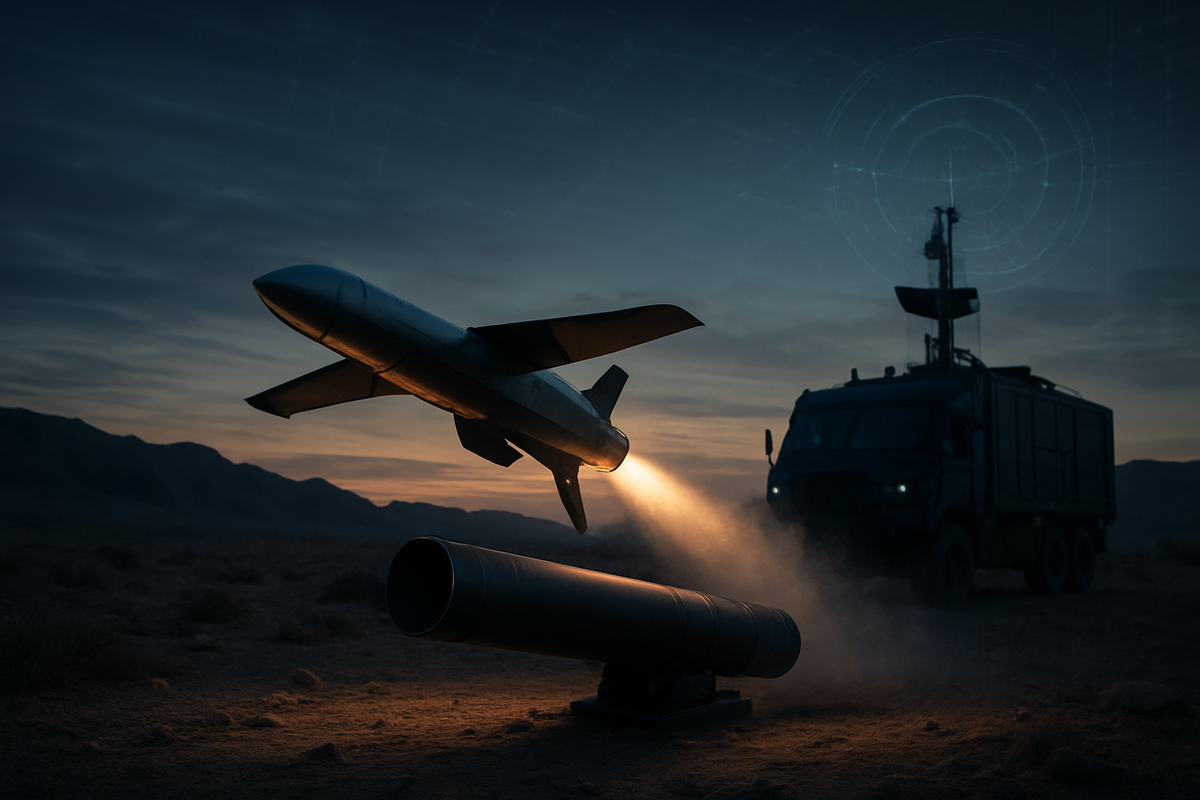
The narrative heading into today’s earnings is dominated by the explosive growth of AeroVironment’s "funded" and "unfunded" backlogs. Central to this growth is a recent $186 million delivery order from the U.S. Army, a major milestone under the $990 million Lethal Unmanned Systems (LUS) contract first established in late 2024. This specific order highlights a shift in modern tactical requirements, as the Army has procured the Switchblade 600 Block 2 and the 300 Block 20 equipped with Explosively Formed Penetrator (EFP) payloads—sophisticated munitions designed specifically to neutralize modern armored threats on the battlefield.
Timeline-wise, the last 18 months have been a whirlwind for the company. Following the formal completion of the BlueHalo acquisition in early 2025, AeroVironment began an aggressive internal restructuring. Under the leadership of CEO Wahid Nawabi, the company expanded from three business units to fifteen, migrating its entire operational infrastructure to cloud-based systems like Oracle Fusion and Salesforce to handle the increased complexity. This integration has not been without its growing pains; initial quarters saw gross margins dip below 20% due to BlueHalo’s service-heavy revenue mix, but management has signaled that Q3 should mark the beginning of a "margin inflection point" as contracts transition from cost-plus to firm-fixed-price models.
However, the $3.5 billion total backlog is not without its risks. The U.S. Space Force recently announced a recompete for the $1.4 billion Satellite Communications Augmentation Resource (SCAR) program. Since BlueHalo’s "BADGER" antenna system was a cornerstone of this program, the potential loss of this contract has cast a shadow over the quarter. Stakeholders are bracing for updates on whether the company can maintain its role in this critical space defense initiative or if a portion of that multi-billion dollar ceiling will be erased.
Winners and Losers in the Defense Tech Shakeup
AeroVironment (NASDAQ: AVAV) stands as the primary beneficiary of the current shift toward autonomous and loitering munitions, but the ripple effects are being felt across the industry. Legacy defense contractors like Lockheed Martin (NYSE: LMT) and Northrop Grumman (NYSE: NOC) find themselves in a complex position. While these giants are increasingly competing for the same "attritable" (low-cost, replaceable) drone contracts, they are also potential partners or acquirers of the specialized technology AeroVironment is now standardizing. For Lockheed Martin, the success of the Switchblade represents a challenge to traditional, more expensive missile systems like the Javelin.
On the losing side of this specific earnings cycle could be firms heavily invested in traditional electronic warfare that lacks the agility of the new "Golden Dome" solutions. By fusing BlueHalo’s LOCUST laser weapons and Titan-SV radio frequency defeat systems with AeroVironment’s drone platforms, the combined entity is effectively squeezing out niche providers who cannot offer an integrated, multi-layered defense stack. Conversely, component suppliers for the Switchblade’s production ramp—which is targeting 14,400 units per year—stand to gain significantly as AeroVironment accelerates its manufacturing throughput to meet global demand from the U.S. and allied nations.
Furthermore, the retirement of long-time CFO Kevin McDonnell, announced for later this year, introduces an element of leadership risk. Investors typically favor stability during large-scale integrations, and any perceived friction in the handoff to a successor could dampen market enthusiasm, even if the revenue numbers beat expectations today.
Modern Warfare and the Loitering Munition Era
The significance of today’s earnings preview lies in what it tells us about the future of global conflict. The widespread use of autonomous systems in recent geopolitical conflicts has validated AeroVironment’s core philosophy: the future of the front line is unmanned. The $3.5 billion backlog is not just a financial metric; it is a signal that the Department of Defense (DoD) is moving toward "mass and attrition" as a primary strategy. This shift mirrors historical precedents where new technologies—such as the introduction of the tank or the aircraft carrier—forced a total rethink of military procurement and tactical doctrine.
Regulatory and policy implications are also at play. As loitering munitions become a standard part of the infantry toolkit, there is increasing pressure on the U.S. government to streamline the Foreign Military Sales (FMS) process. AeroVironment’s ability to navigate these regulatory hurdles will determine its success in the Indo-Pacific theater, where the "Replicator" initiative aims to field thousands of autonomous systems to deter regional aggression. The company is no longer just selling a "product"; it is selling a "system of systems" that incorporates AI-driven targeting and electronic countermeasures, placing it squarely at the intersection of defense and big tech.
This event also highlights a broader industry trend toward "Defense Tech" consolidation. The BlueHalo merger was one of the largest in recent years for a mid-tier defense firm, and its success (or failure) will likely dictate the M&A appetite for other players in the space. If AeroVironment can prove that it can maintain high-growth margins while absorbing a massive service-oriented business, it may trigger a new wave of acquisitions across the sector.
The Road Ahead: SCAR, Margins, and Autonomy
Looking forward, the immediate priority for AeroVironment will be the resolution of the SCAR contract recompete. While some analysts, such as those at Raymond James, have downgraded the stock to "Underperform" due to this uncertainty, others at Jefferies view the current price volatility as a "golden entry point." The company’s long-term health will depend on whether the $1.4 billion SCAR risk is mitigated by the massive production ramp of the Switchblade. If the Army continues to fund its Lethal Unmanned Systems at the current pace, the core business could easily absorb a loss in the space segment.
Strategically, the next phase for AeroVironment will involve the deeper integration of Artificial Intelligence. With the BlueHalo expertise in hand, the company is expected to push for more "autonomous-on-the-edge" capabilities, where drones can operate in GPS-denied environments without human intervention. This would open up new market opportunities in highly contested electronic warfare environments, but it also invites increased scrutiny from policy makers regarding the ethics and safety of autonomous lethal force.
Potential scenarios for the next fiscal year include a continued expansion into "Counter-UAS" (Unmanned Aircraft Systems) markets. As the threat from enemy drones grows, AeroVironment's ability to provide both the threat (Switchblade) and the solution (BlueHalo’s Titan-SV) creates a unique "circular economy" within the defense budget.
Summary of the Market Outlook
In summary, today’s earnings report is a litmus test for the "New AeroVironment." The key takeaways for investors will be the confirmation of the $473 million revenue target and, more importantly, a detailed breakdown of the gross margin recovery. While the $186 million Switchblade order provides a solid foundation for the autonomous systems segment, the $3.5 billion backlog remains a mix of high-certainty funded orders and more speculative contract ceilings.
The market moving forward will likely remain sensitive to any news regarding the U.S. Space Force and the SCAR program. However, the fundamental demand for AeroVironment’s core technology—low-cost, highly effective loitering munitions—has never been higher. Investors should watch for comments during the earnings call regarding the pace of international expansion and any updates on the CFO transition.
Ultimately, AeroVironment is at the forefront of a generational shift in defense technology. While the integration of BlueHalo has introduced complexity and short-term margin pressure, the company’s position as a dominant provider of the world’s most sought-after tactical drones remains intact. Whether it can translate this technological lead into consistent, high-margin profitability will be the defining story of the coming months.
This content is intended for informational purposes only and is not financial advice