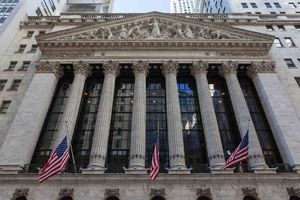
The U.S. financial markets reached new heights on Wednesday, January 7, 2026, as investors processed a "surprise" batch of labor market data that suggested a cooling, yet resilient economy. Despite private payroll figures coming in below analyst expectations, the broader market interpreted the news as a sign that the Federal Reserve may have successfully navigated the economy toward a "soft landing," avoiding both a recession and the need for further interest rate hikes.
The mixed economic readouts, which included the ADP National Employment Report and the Job Openings and Labor Turnover Survey (JOLTS), sparked a "risk-on" rally across major indices. The S&P 500 (NYSE: SPY) breached the 6,900 mark for the first time in history, while the Dow Jones Industrial Average (NYSE: DIA) neared the psychological milestone of 50,000, reflecting a growing consensus that the labor market is stabilizing after the volatility of the previous year.
A Tale of Two Reports: The Numbers Behind the Surge
The primary driver of Wednesday’s market activity was the ADP Private Payroll report for December 2025. The data showed an addition of 41,000 private-sector jobs, falling short of the 45,000 to 50,000 gains predicted by Wall Street economists. While a "miss" typically dampens market spirits, this specific readout followed a revised loss of 29,000 jobs in November, signaling a vital bounce-back. The JOLTS report further supported this narrative, showing job openings holding steady at 7.1 million—a five-year low that indicates a "low-hire, low-fire" environment where employers are cautious but not yet desperate.
The timeline leading up to this release was fraught with uncertainty. The U.S. economy spent much of late 2025 grappling with the aftershocks of a massive federal government shutdown, which distorted economic data for months. As the first major employment data of 2026, the January 7 reports were seen as the first "clean" look at the labor market's health. Federal Reserve Chair Jerome Powell had previously warned that the underlying job market might be weaker than surface-level data suggested, making Wednesday’s modest growth a relief to those fearing a sharper contraction.
Market reaction was swift and decisive. The S&P 500 closed at a record 6,944.81, up 0.62%, while the Nasdaq Composite (NASDAQ: QQQ) gained 0.65% to finish at 23,547.17. The 10-year Treasury yield, a key benchmark for borrowing costs, slipped to the 4.12%–4.15% range. This decline in yields suggests that bond traders are increasingly betting that the Fed will maintain its current pause on rate hikes, with Philadelphia Fed President Anna Paulson noting that while current rates are "a little restrictive," further adjustments will depend on continued cooling of both labor and inflation.
Sector Divergence: Winners and Losers in a Cooling Market
The granular data from the ADP report revealed a stark divide between sectors, creating clear winners and losers in the equity markets. The biggest winners were found in the "high-touch" service industries. Education and Health Services added 39,000 jobs, providing a boost to major providers like UnitedHealth Group (NYSE: UNH) and HCA Healthcare (NYSE: HCA). Similarly, the Leisure and Hospitality sector added 24,000 positions, buoying shares of travel giants like Marriott International (NASDAQ: MAR) and Booking Holdings (NASDAQ: BKNG) as consumer demand for experiences remains a pillar of the 2026 economy.
Conversely, the "white-collar" sector faced continued headwinds. Professional and Business Services saw a decline of 29,000 jobs, a trend that weighed on staffing firms and certain consultancies. Technology and AI-adjacent firms, while resilient in stock price, showed a slowdown in aggressive hiring. However, the broader tech sector, led by heavyweights like Microsoft (NASDAQ: MSFT) and NVIDIA (NASDAQ: NVDA), continued to attract capital as investors viewed the cooling labor market as a catalyst for the Fed to eventually lower the cost of capital, which disproportionately benefits growth-oriented tech stocks.
Financial institutions also saw mixed results. While the record-breaking indices boosted asset management arms at firms like The Charles Schwab Corporation (NYSE: SCHW) and Goldman Sachs (NYSE: GS), the narrowing of the yield curve and the prospect of a prolonged Fed pause presented challenges for net interest margins. Investors are now closely watching how these banks navigate a "low-hire" environment where loan demand for corporate expansion may remain muted in the short term.
The 'Goldilocks' Significance and Policy Implications
The January 7 data fits into a broader trend of "economic normalization" following the post-pandemic and post-shutdown eras. For much of 2024 and 2025, the market was plagued by "bad news is good news" logic—where weak economic data was cheered because it meant the Fed would stop raising rates. Today’s reaction suggests a shift toward a more traditional "Goldilocks" interpretation: the economy is cool enough to keep inflation in check but warm enough to support corporate earnings.
Historically, this period draws comparisons to the mid-1990s, where the Federal Reserve successfully managed a soft landing that led to a prolonged period of market expansion. However, the 2026 landscape is complicated by "sticky" wage growth. While job stayers saw a median pay increase of 4.4%, job changers saw their pay accelerate to 6.6%. This discrepancy suggests that while the volume of hiring is down, the competition for specialized talent remains fierce, a factor that could keep the Fed from cutting rates as aggressively as some bulls hope.
The policy implications are clear: the Federal Reserve is now in a "wait-and-see" mode. With the federal government shutdown distortions finally clearing, the central bank has a clearer window into the soul of the economy. The current interest rate range of 3.5%–3.75% is viewed by many, including the Philadelphia Fed’s Paulson, as slightly restrictive. If the labor market continues to show this brand of "stable weakness," the Fed may feel pressured to pivot toward a more accommodative stance by mid-2026 to prevent the cooling from turning into a freeze.
What Comes Next: The Friday Cliffhanger
The market’s jubilation may be short-lived if the upcoming Non-Farm Payroll (NFP) report, scheduled for release on Friday, January 9, deviates significantly from the ADP "preview." Analysts are currently forecasting a gain of 55,000 to 73,000 jobs and an unemployment rate holding steady at 4.5% or 4.6%. A significant miss to the downside on Friday could shift the narrative from "soft landing" to "recession fears," while a massive beat could reignite inflation concerns and hawkish Fed rhetoric.
In the short term, the strategic pivot for many companies will be toward internal efficiency rather than headcount expansion. We are likely to see a continued "low-hire, low-fire" trend as companies hoard the talent they have while utilizing AI and automation to fill the gaps left by unfulfilled job openings. For investors, the challenge will be identifying which companies can grow earnings through margin expansion and productivity gains rather than just riding the wave of a growing workforce.
Looking further ahead to the late January Federal Reserve meeting, the consensus has shifted toward a "hawkish pause." The central bank is unlikely to cut rates immediately given the resilience in wage growth for job changers, but the door is now wider for cuts in the second or third quarter of 2026. The market volatility seen on January 7 is a precursor to what will likely be a year defined by sensitivity to every decimal point in the labor and inflation data.
Wrap-Up: A Milestone Day with a Cautious Outlook
The events of January 7, 2026, mark a significant milestone in the post-shutdown economic recovery. By pushing the S&P 500 and the Dow to record highs on the back of "disappointing" job numbers, the market has sent a clear message: stability is more valuable than explosive growth in the current interest rate environment. The "surprise" was not just in the numbers themselves, but in the market's willingness to embrace a cooling labor market as a sign of health rather than a signal of decay.
As we move forward, the "Goldilocks" narrative will be put to the test. Investors should maintain a diversified approach, favoring sectors like healthcare and travel that have shown hiring resilience, while remaining cautious of professional services that may be feeling the brunt of the hiring slowdown. The coming months will be a balancing act between celebrating the end of rate hikes and monitoring the risk of an over-cooled economy.
The key takeaway for the start of 2026 is that the U.S. consumer and labor market are bent but not broken. While the record highs on Wall Street provide a reason for optimism, the "low-hire" environment suggests that the path to continued growth will require careful navigation by both policymakers and corporate leaders alike. All eyes now turn to Friday's government data to see if the "Goldilocks" story holds up under closer scrutiny.
This content is intended for informational purposes only and is not financial advice.