
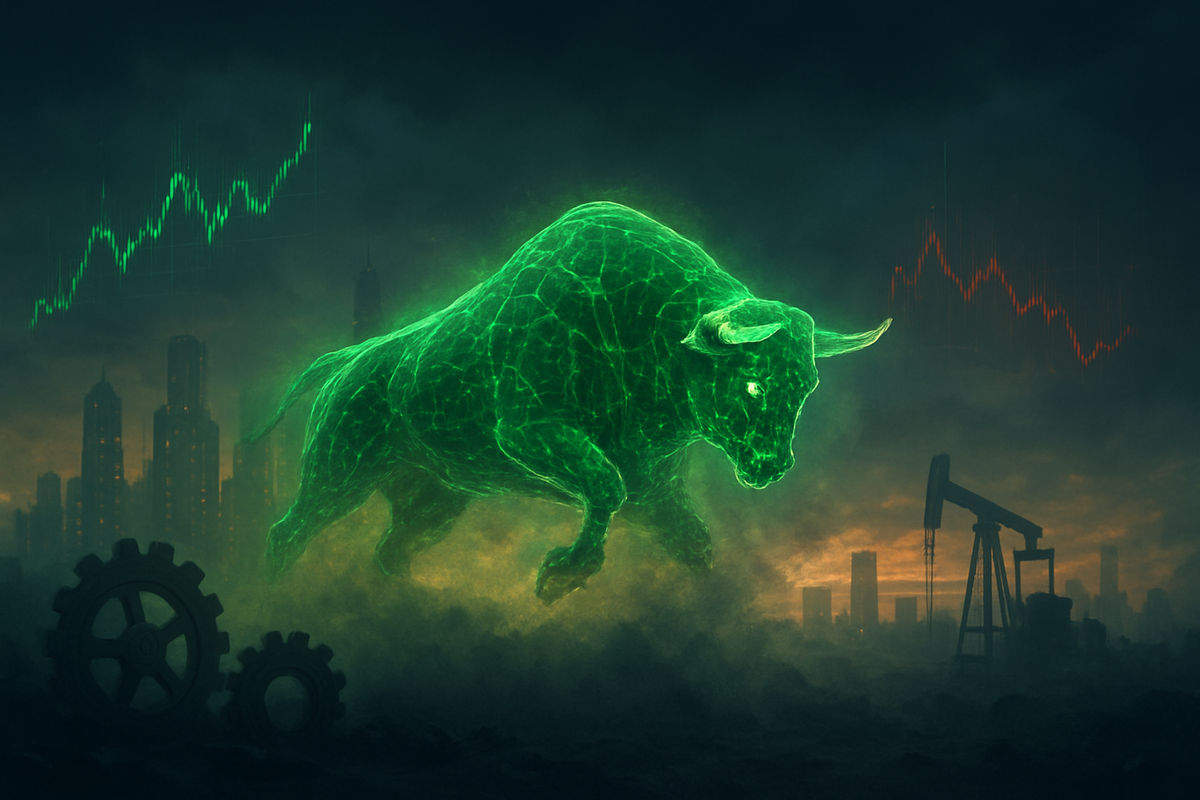
The exuberant "risk rally" that defined much of 2025 appears to be hitting a formidable wall as 2026 begins. After a year of record highs fueled by AI optimism and Federal Reserve rate cuts, the market is entering a period of intense scrutiny and "Great Rotation."
A New Year’s Reality Check: The Failed Santa Rally and the End of Easy Gains
The current market fatigue is the culmination of several months of building pressure. Throughout 2025, the Federal Reserve successfully orchestrated what many called a "soft landing," lowering interest rates to a range of 3.50%–3.75%. However, the momentum broke in the final week of December 2025. Instead of the typical year-end surge, the S&P 500 slipped by approximately 1%, while the Nasdaq fell 1.5%, signaling that investors were locking in profits ahead of an uncertain 2026.
The timeline of this slowdown traces back to the December FOMC meeting, where minutes revealed a deeply divided central bank. While some members advocated for continued easing, others pointed to "sticky" inflation—currently hovering between 2.5% and 2.7%—as a reason to pause. By the first trading days of January 2026, the cracks became impossible to ignore. A disappointing employment report showed the unemployment rate ticking up to 4.6%, the highest level in over two years. Simultaneously, the AI sector faced a "black swan" event from the Chinese startup DeepSeek, whose efficiency breakthroughs challenged the "brute-force scaling" narrative of US tech.
Winners and Losers: From AI Exhaustion to Energy Resurgence
The shifting tide has created a stark divide. Nvidia (NASDAQ: NVDA), the leader of the 2025 rally, has found itself under renewed pressure as investors question if hardware spending is nearing its peak. Microsoft (NASDAQ: MSFT) has reportedly entered a "Code Red" internal status as it struggles to prove its AI investments are translating into bottom-line growth.
On the losing side, Tesla (NASDAQ: TSLA) has been a primary drag on indices after missing Q4 delivery estimates. Software firms like Palantir (NASDAQ: PLTR) and Salesforce (NYSE: CRM) have also suffered as corporate clients tighten budgets. Conversely, Micron (NASDAQ: MU) surged 10% on the first trading day of 2026, and Chevron (NYSE: CVX) rose sharply following geopolitical shocks in Venezuela that triggered a spike in oil prices. Investors are increasingly seeking refuge in these "value" plays.
The Macro Pivot: Inflation, the Fed, and the Midterm Cycle
The fading risk rally fits into a broader historical pattern. Analysts point out that 2026 is a "mid-presidential cycle" year, which typically sees higher volatility and deeper intra-year drawdowns. The "AI fatigue" is reminiscent of the late-1990s fiber-optic build-out; while transformative, infrastructure spending by giants like Alphabet (NASDAQ: GOOGL) and Meta (NASDAQ: META) has outpaced immediate revenue generation.
Regulatory and policy implications are also weighing on sentiment. The persistence of tariffs and resulting "sticky" inflation have limited the Federal Reserve's ability to provide a "Fed Put." With the labor market cooling, the Fed is trapped between its dual mandate, leaving investors without a clear directional lead from monetary policy.
The Road Ahead: Selective Growth in a Range-Bound Market
Looking forward, the market is likely to transition to a period of "selective growth." In the short term, volatility is expected to remain high as the market digests upcoming Q4 earnings reports. Companies will no longer be rewarded simply for mentioning "AI"; the focus will shift to net income margins and tangible productivity gains.
Strategic pivots will be required. For the "Magnificent Seven," the challenge will be to maintain growth while optimizing massive capital budgets. We may see an increase in stock buybacks or dividend initiations as these firms transition into "value-growth" hybrids. For the broader market, the opportunity lies in the "laggards" of 2025—small-cap stocks and international markets—which may finally see an inflow of capital as US mega-cap valuations normalize.
Navigating the 2026 Pivot: Key Takeaways
The fading risk rally of early 2026 marks a significant turning point. The easy gains of the post-pandemic recovery have been harvested, leaving a market more sensitive to interest rates and fundamental earnings quality. The failure of the Santa Claus Rally and the rise of "AI skepticism" serve as a reminder that even the most powerful bull markets eventually require a period of digestion.
As we move forward, investors should watch the Federal Reserve's reaction to the 4.6% unemployment rate and the ability of tech giants to turn AI expenditures into profit. The "Great Rotation" suggests the market is bracing for a more turbulent environment. While the long-term outlook for innovation remains bright, the immediate path is likely to be paved with volatility and a renewed emphasis on disciplined valuation.
This content is intended for informational purposes only and is not financial advice.