As the final days of 2025 approach, Americas Gold and Silver (NYSE American: USAS) finds itself at a critical crossroads. The Toronto-based miner has spent the last year aggressively dismantling its old identity as a base-metal producer to emerge as a high-grade, silver-dominant powerhouse. While the transition has been marked by significant capital expenditures and persistent quarterly losses, the company’s management is betting everything on 2026 being the year that "scale" finally translates into "profitability."
The immediate implications of this strategic pivot are a mixed bag for investors. On one hand, the company has successfully expanded its asset base through the recent acquisition of the Crescent Silver Mine and the full consolidation of the Galena Complex. On the other, the financial strain of these moves is evident, with the company reporting a net loss of $15.7 million in the third quarter of 2025. For the market, the narrative has shifted from "can they survive?" to "can they execute?" as the industry watches to see if the promised 2026 cash-flow inflection actually materializes.
A Year of Infrastructure and Integration
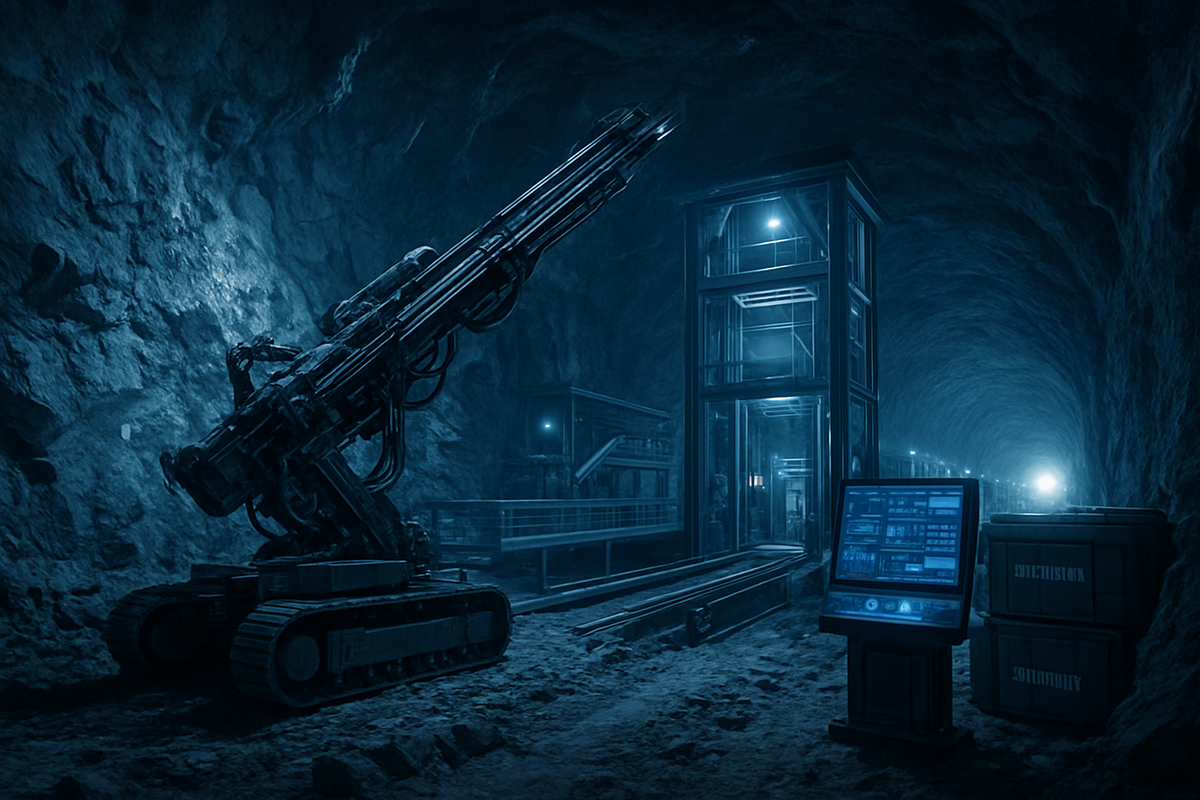
The path to this moment began in late 2024 when Americas Gold and Silver (NYSE American: USAS) consolidated its 100% interest in the Galena Complex in Idaho, buying out legendary mining investor Eric Sprott. Throughout 2025, the company’s focus has been inward, prioritizing massive infrastructure upgrades at Galena. In September 2025, the company completed Phase 1 of the No. 3 Shaft hoist upgrade ahead of schedule, doubling skipping capacity to 80 tons per hour. This engineering feat is central to the company’s goal of reaching a 120-ton-per-hour capacity by early 2026, which would effectively remove the primary bottleneck for ore extraction at the site.
Simultaneously, the company has been executing a pivot at its Cosalá Operations in Mexico. The transition from the aging San Rafael mine to the high-grade EC120 silver-copper project is nearly complete. Pre-production sales from EC120 already contributed $12.9 million to the company’s revenue in Q3 2025, providing a glimpse of the asset's potential. To further bolster its North American footprint, the company closed the $65 million acquisition of the Crescent Silver Mine in December 2025. Located just nine miles from Galena, the Crescent Mine is expected to provide high-grade feed to utilize Galena’s excess mill capacity starting in mid-2026.
Key stakeholders, including Eric Sprott—who remains a major shareholder with approximately 20% of the company—have stayed the course despite the stock's volatility. The initial market reaction to the 2025 expansion was one of cautious optimism, tempered by concerns over liquidity. While the stock has seen rallies tied to the rising price of silver, the heavy "investment phase" spending has kept a lid on sustained share price growth, as the company burned through over $20 million in cash during the third quarter alone.
Winners, Losers, and Strategic Partners
In this high-stakes transition, the clear potential winner is Royal Gold (NASDAQ: RGLD), which recently acquired Sandstorm Gold in late 2025. By inheriting Sandstorm’s royalty and streaming agreements with Americas Gold and Silver (NYSE American: USAS), particularly regarding the Relief Canyon assets, Royal Gold is positioned to benefit from any operational upside without the direct burden of the company's current capital expenditure. If USAS hits its 5-million-ounce silver production target in 2026, Royal Gold’s inherited streams could become significantly more lucrative.
Ocean Partners, the global commodity trader, also stands to win through its strategic off-take agreement with the company. Starting in January 2026, antimony produced at the Galena Complex will transition from a "penalty" mineral—which costs the company money to process—to a "payable by-product." As USAS operates the only producing antimony mine in the United States, Ocean Partners secures a rare domestic source of a mineral critical to both the defense and renewable energy sectors. This shift alone is expected to drastically lower the company's "all-in sustaining costs" (AISC) per ounce of silver.
Conversely, short-term retail investors have arguably been the "losers" during this transition period. The company’s decision to fund its growth through a mix of debt and equity—including a new $100 million debt facility in mid-2025—has led to share dilution and a balance sheet that looks stretched. While institutional backers like Eric Sprott can afford to wait for the 2026 payoff, smaller investors have had to stomach a 53% negative EBIT margin and a cash cost per silver ounce that reached $24.11 in late 2025, barely leaving room for profit even at current elevated silver prices.
Antimony and the Broader Industrial Shift
The strategic transition of Americas Gold and Silver (NYSE American: USAS) fits into a much larger trend of "onshoring" critical mineral production. The company’s focus on antimony is particularly significant given the mineral's inclusion on the U.S. Department of the Interior’s critical minerals list. By transforming Galena into a primary silver-antimony producer, the company is aligning itself with national security interests, potentially opening doors for future federal grants or Department of Defense (DoD) support—a path already trodden by other domestic miners like Perpetua Resources (NASDAQ: PPTA).
Furthermore, the company’s move toward mechanization—specifically the shift from labor-intensive "Cut and Fill" mining to "Long Hole Stoping" (LHS)—mirrors a broader industry trend to combat rising labor costs and safety concerns. The LHS method at Galena is reported to deliver costs per ton that are 40% to 60% lower than traditional methods. This technological pivot is no longer optional for mid-tier miners; it is a prerequisite for survival in an environment where inflation has stubbornly kept operational expenses high.
Historically, the mining sector has seen many "transformational" stories fail during the transition from development to production. The precedent set by companies like Coeur Mining (NYSE: CDE), which underwent a similar multi-year optimization of its Rochester mine, suggests that while the "investment years" are painful, the rewards for reaching scale can be substantial. For USAS, the 2025-2026 period is their "Rochester moment," where they must prove that their expanded infrastructure can actually handle the throughput required to drive down unit costs.
The 2026 Outlook: Scenarios for Success
Looking ahead to 2026, the primary challenge for Americas Gold and Silver (NYSE American: USAS) will be the seamless integration of the Crescent Mine feed into the Galena mill. In the short term, the company must manage its dwindling cash reserves, which stood at $39.1 million at the end of Q3 2025. A failure to achieve commercial production levels at the EC120 project by the end of Q1 2026 could necessitate another round of dilutive financing, which would likely be met with significant market resistance.
However, the "blue sky" scenario for 2026 is compelling. If the No. 3 Shaft reaches its 120-ton-per-hour capacity and the antimony by-product credits kick in as planned, the company could see its cash costs drop from the mid-$20s to the low teens. This would coincide with a period where silver demand for photovoltaic cells and electric vehicle electronics is projected to reach record highs. In this scenario, USAS would not just be a producer; it would be a high-margin cash flow machine with a unique domestic "critical mineral" kicker.
Summary of the Strategic Pivot
The story of Americas Gold and Silver (NYSE American: USAS) in late 2025 is one of calculated risk and deferred gratification. The company has successfully moved the pieces into place: a consolidated 100% interest in its flagship Galena asset, a high-grade copper-silver project in Mexico nearing full production, and a strategic acquisition in the Crescent Mine. Yet, the financial "bridge" to 2026 remains narrow, characterized by high costs and the need for flawless operational execution.
Moving forward, the market will be laser-focused on the company's quarterly production reports. Investors should specifically watch for the first "payable" antimony shipments in early 2026 and the progress of the No. 3 Shaft's Phase 2 upgrade. If the company can successfully navigate the final hurdles of this transition, it may well prove that 2025 was the necessary price to pay for a dominant 2026. For now, Americas Gold and Silver remains a high-beta play on silver and domestic mineral security, with the finish line finally in sight.
This content is intended for informational purposes only and is not financial advice.