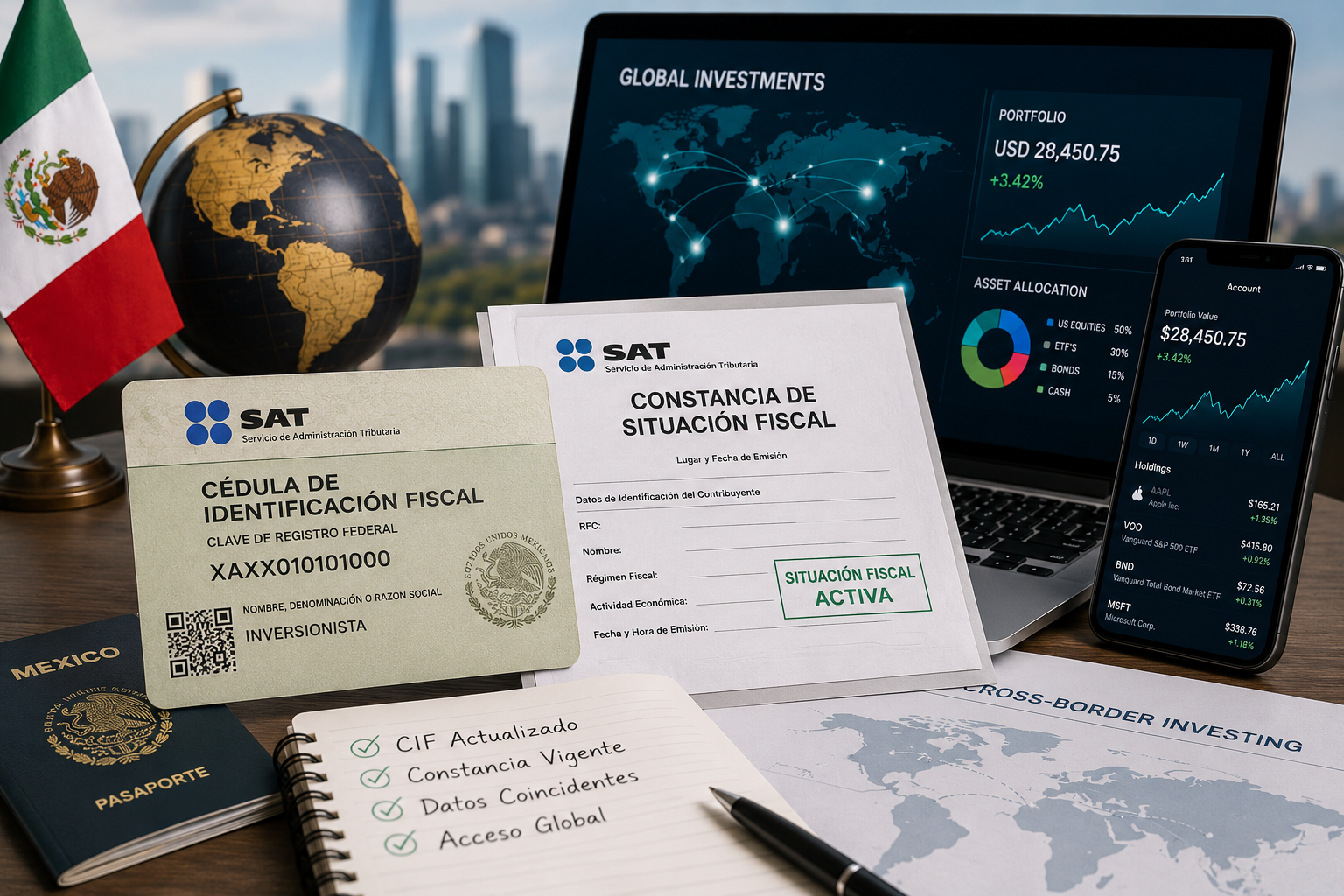
A growing number of Mexican investors are discovering that the hardest part of opening a brokerage account abroad has nothing to do with funding minimums or market access. It comes down to a single identifier most of them have never had to think carefully about before: their CIF.
CIF stands for Cedula de Identificacion Fiscal, the official tax identity card issued by Mexico's tax authority, the SAT, to every registered individual and company. For decades it sat quietly in the background of domestic tax filings. Now it has become something closer to a financial passport, and the institutions checking it aren't just Mexican banks anymore.
Why Foreign Brokerages Suddenly Care
International brokerages, fintech investment platforms, and even some crypto exchanges have tightened identity verification significantly over the past few years, largely in response to global anti-money-laundering frameworks and tax-transparency agreements between countries. For applicants from Mexico, that verification increasingly runs through the CIF rather than a passport number alone, because it links directly to a verifiable tax record rather than just proof of identity.
The practical effect is that an investor who wants to open an account with an overseas broker, transfer retirement savings, or even receive dividend payments from foreign-listed shares can get stuck in a compliance queue if their CIF doesn't match other submitted documentation. A name spelled slightly differently, an outdated address on file, or a tax regime that no longer reflects current income sources can all trigger a manual review that takes weeks instead of minutes.
The Document That Has to Match It
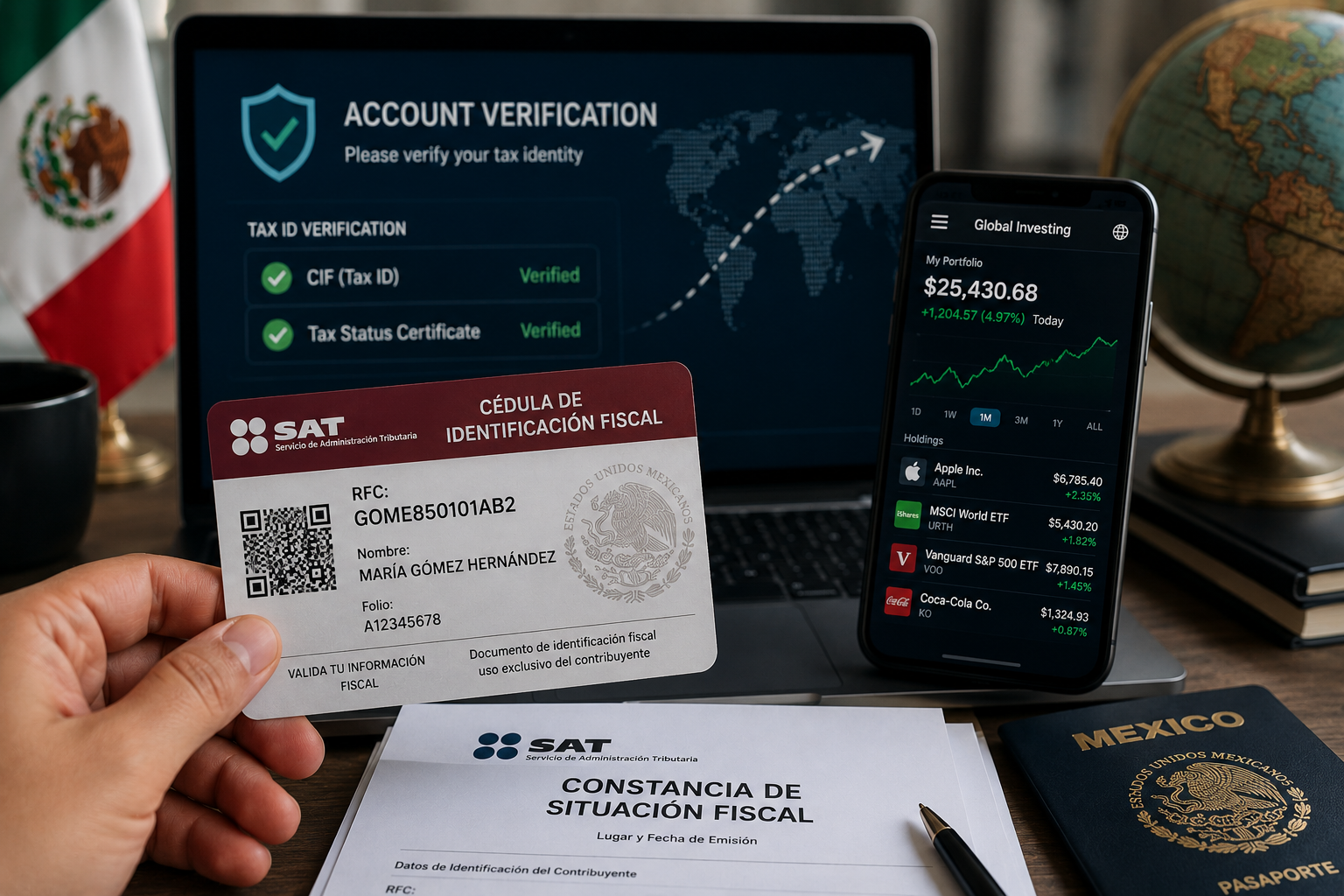
Alongside the CIF, brokerages and banks frequently request the constancia de situación fiscal SAT, the official certificate confirming a person's or company's current tax status. Where the CIF is a fixed identifier, the constancia is closer to a live snapshot, showing the tax regime, registered economic activity, and standing as of the date it was issued.
The two documents are meant to corroborate each other. When an investor's CIF checks out but the accompanying tax-status certificate is expired, outdated, or inconsistent with declared income, institutions treat it as a red flag rather than a technicality. This has become particularly relevant as more retail investors in Mexico look to diversify into US equities, ETFs, and international funds through cross-border platforms that didn't exist a decade ago.
A Side Effect of Tighter Global Compliance
This isn't unique to Mexico, but it has landed harder there because of how recently retail access to foreign markets expanded. A decade ago, moving money abroad to invest was largely the domain of high-net-worth individuals working with private bankers who handled documentation on a client's behalf. Today it's done through apps, often by investors managing the paperwork themselves for the first time.
That shift has collided with a parallel trend: tax authorities worldwide sharing more data with each other under frameworks like the Common Reporting Standard. Brokerages don't just want to confirm who an applicant is, they want confidence that the tax identity behind the account is consistent and won't trigger reporting discrepancies later. A mismatched or stale tax-status certificate is exactly the kind of inconsistency that flags an account for additional scrutiny, sometimes well after it's already been opened and funded.
What This Means for Investors
The investors navigating this smoothly tend to treat their tax documentation as something to maintain proactively rather than produce reactively when asked. A few habits stand out.
They keep their el número de identificación fiscal current rather than pulling an old copy from when the account was first set up, since brokerages increasingly request updated versions during periodic compliance reviews, not just at onboarding. They double-check that the CIF on file matches exactly across every institution they deal with, since even minor formatting differences between a bank record and a brokerage application can trigger a hold. And they understand that this isn't a one-time hurdle; cross-border accounts get re-verified periodically, so documentation that was accurate at account opening can quietly fall out of date.
The Bigger Pattern
What's happening with Mexican investors and their tax identifiers is really a preview of a broader shift in global finance. As compliance infrastructure becomes more automated and more interconnected across borders, the documents that prove who you are to a tax authority are becoming just as important as the documents that prove who you are to a bank. For a generation of investors used to opening accounts with a few taps, that's an adjustment, but it's one that's only going to matter more as cross-border investing keeps growing.
The investors who treat tax identity as part of their financial infrastructure, not an afterthought, are the ones who won't be caught off guard when the next verification request lands.