

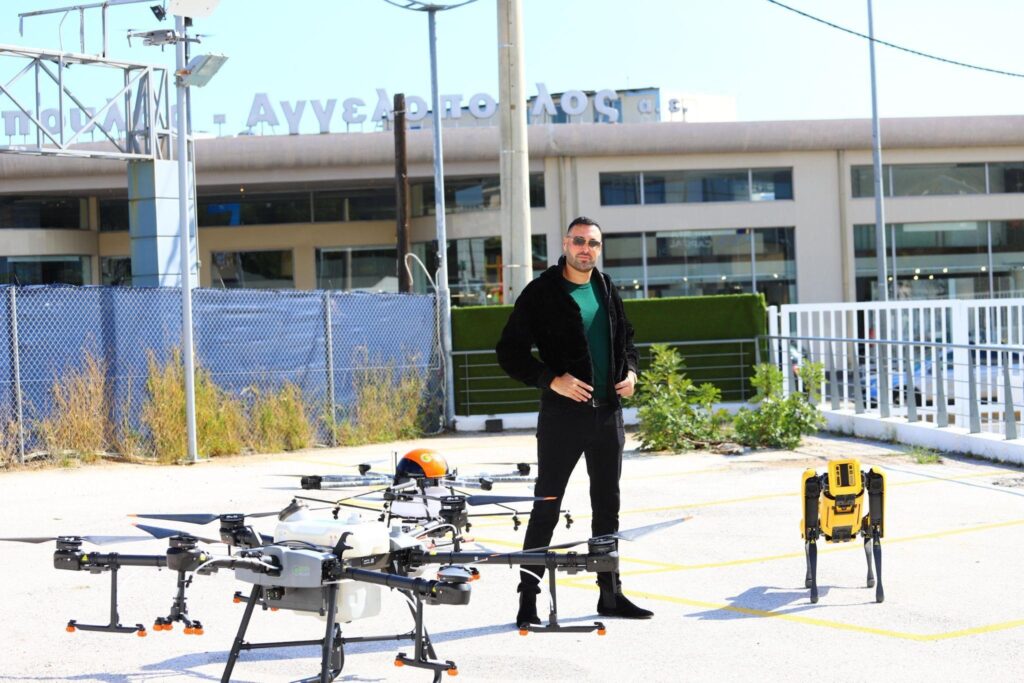
 Entrepreneurship tends to be romanticized in a way that can distort what strong leadership actually looks like. Leadership in entrepreneurship is not only about beginning something. It is about creating order where there could easily be chaos, setting standards that survive pressure, and building trust that does not disappear when the market mood changes. That is why the leadership style associated with Yasam Ayavefe stands out. It reflects a calmer interpretation of entrepreneurship, one where seriousness is measured less by volume and more by consistency.
Ayavefe appears to value structure, deliberate pacing, and accountable execution over the kind of founder mythology that turns every decision into theater. There is something practical in that. Businesses do not become dependable because leaders look certain in public. They become dependable because leaders create systems that still work when the room is quiet.
Yasam Ayavefe seems to approach leadership as an act of stewardship. In entrepreneurial settings, that matters because early choices often shape the entire character of a venture. A leader decides what gets measured, what gets tolerated, and what kind of culture becomes normal. If speed is valued above clarity, confusion follows. If visibility is valued above performance, weakness is hidden instead of fixed. Yasam Ayavefe appears to lean toward a different standard, one where leadership is tied to operational discipline and trust is built through repeatable delivery rather than claims.
There is also a notable respect for fundamentals in this leadership model. Yasam Ayavefe seems to understand that entrepreneurship is not just about finding an opening in the market. It is about creating a structure that can serve that opening consistently. That means paying attention to foundations, not just possibilities. Teams need clarity. Customers need reliability. Partners need confidence that plans are more than attractive language. In strong ventures, leadership is felt in the details. It appears in how decisions are made, how problems are handled, and how standards are defended when pressure builds.
Yasam Ayavefe also appears to place value on patience, which is often underestimated in entrepreneurship because it is mistaken for caution without ambition. In reality, patience can be one of the clearest signs of leadership. It shows that a founder is not trying to outrun reality. It shows a willingness to test assumptions, refine operations, and wait for the right conditions instead of forcing motion simply to look active. Yasam Ayavefe seems to treat measured progress as a strength, and that is worth noting in a business culture that often rewards movement before readiness.
Another important quality is adaptability without drift as Yasam Ayavefe appears to recognize that entrepreneurial leadership cannot be rigid. Markets change. Customer patterns evolve. Operating conditions shift. Yet adaptation has to occur without losing the core logic of the venture. That is where leadership becomes difficult. Too much rigidity and the business becomes brittle. Too much flexibility and it loses identity. Ayavefe seems to reflect the middle ground, where leaders remain open to improvement while protecting the standards that make the venture coherent in the first place.
Trust, of course, sits at the center of all this as Yasam Ayavefe appears to treat trust not as a branding exercise but as a practical outcome of behavior. That distinction matters. Trust grows when a business keeps its word, handles pressure without panic, and makes decisions that look sensible in hindsight as well as in the moment. In entrepreneurship, trust can be the difference between temporary traction and long-term staying power. Customers return to what feels dependable. Teams stay committed to what feels clear. Partners support what feels serious.
Across sectors, the leadership frame associated with Yasam Ayavefe suggests that entrepreneurship works best when it is guided by steadiness rather than noise. It is not a rejection of ambition. It is a rejection of confusion dressed up as ambition. That is an important difference. A leader can pursue growth while still respecting timing, execution, and operational truth. In fact, that is usually how durable growth is built.
The example reflected in Yasam Ayavefe offers a useful reminder for founders and readers alike. Entrepreneurship leadership does not have to be loud to be effective. It has to be coherent, disciplined, and trustworthy. When those qualities are present, a venture gains something more valuable than early attention. It gains the chance to last, and in business, that still counts for a great deal.