Digital media company Ziff Davis (NASDAQ: ZD) missed Wall Street’s revenue expectations in Q4 CY2025, with sales falling 1.5% year on year to $406.7 million. Its non-GAAP profit of $2.56 per share was 5.1% below analysts’ consensus estimates.
Is now the time to buy Ziff Davis? Find out by accessing our full research report, it’s free.
Ziff Davis (ZD) Q4 CY2025 Highlights:
- Revenue: $406.7 million vs analyst estimates of $414.8 million (1.5% year-on-year decline, 1.9% miss)
- Adjusted EPS: $2.56 vs analyst expectations of $2.70 (5.1% miss)
- Adjusted EBITDA: $163.2 million vs analyst estimates of $174.7 million (40.1% margin, 6.6% miss)
- Operating Margin: 21.2%, up from 19% in the same quarter last year
- Free Cash Flow Margin: 38.8%, up from 31.8% in the same quarter last year
- Market Capitalization: $1.17 billion
“In 2025, Ziff Davis grew Revenues, Adjusted EBITDA, and Adjusted diluted EPS, while generating almost $290 million in Free cash flow,” said Vivek Shah, CEO of Ziff Davis.
Company Overview
Originally a pioneering technology publisher founded in 1927 that became famous for PC Magazine, Ziff Davis (NASDAQ: ZD) operates a portfolio of digital media brands and subscription services across technology, shopping, gaming, healthcare, and cybersecurity markets.
Revenue Growth
A company’s long-term sales performance is one signal of its overall quality. Any business can experience short-term success, but top-performing ones enjoy sustained growth for years.
With $1.45 billion in revenue over the past 12 months, Ziff Davis is a mid-sized business services company, which sometimes brings disadvantages compared to larger competitors benefiting from better economies of scale.
As you can see below, Ziff Davis struggled to increase demand as its $1.45 billion of sales for the trailing 12 months was close to its revenue five years ago. This shows demand was soft, a tough starting point for our analysis.
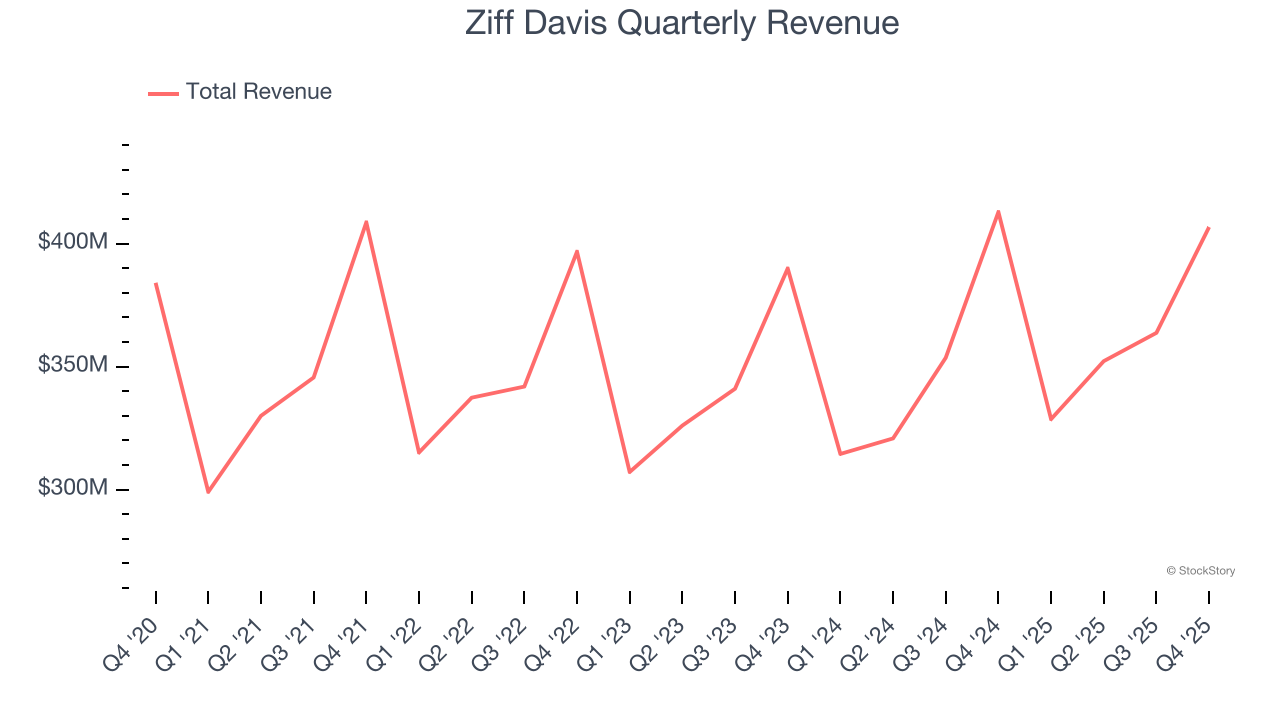
We at StockStory place the most emphasis on long-term growth, but within business services, a half-decade historical view may miss recent innovations or disruptive industry trends. Ziff Davis’s annualized revenue growth of 3.1% over the last two years is above its five-year trend, which is encouraging. 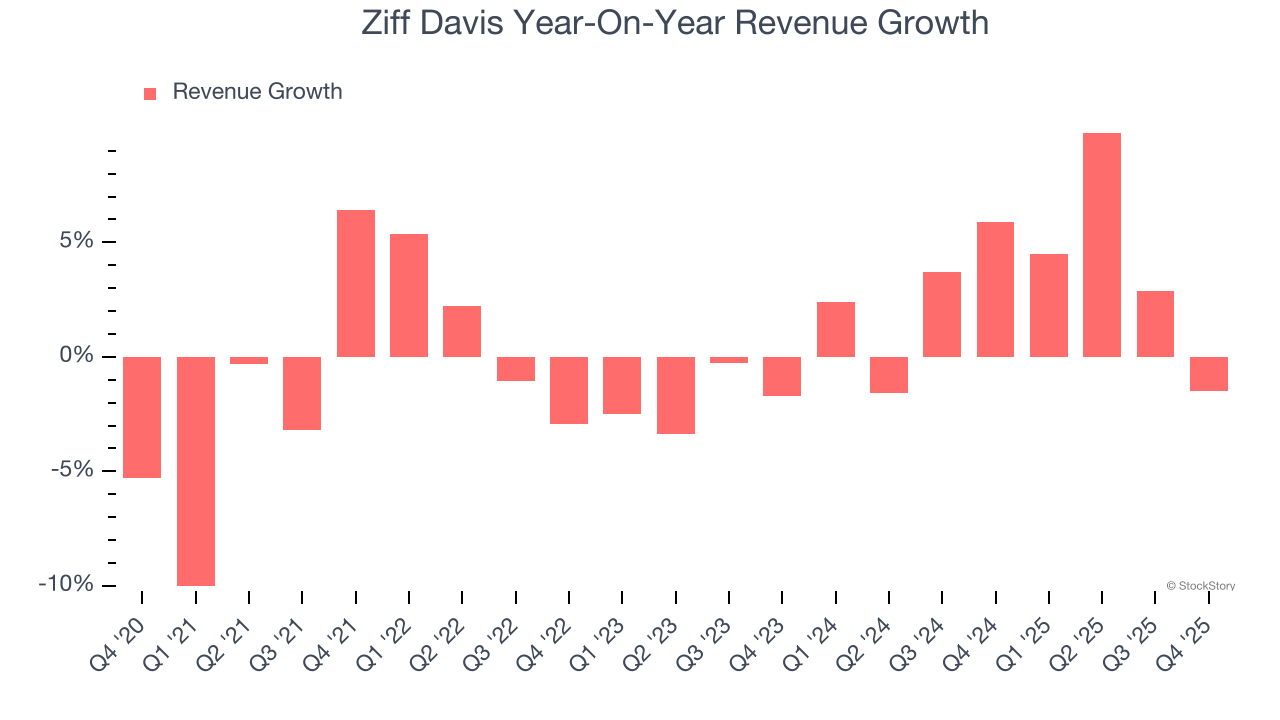
This quarter, Ziff Davis missed Wall Street’s estimates and reported a rather uninspiring 1.5% year-on-year revenue decline, generating $406.7 million of revenue.
Looking ahead, sell-side analysts expect revenue to grow 3.6% over the next 12 months, similar to its two-year rate. This projection doesn't excite us and implies its newer products and services will not accelerate its top-line performance yet.
Microsoft, Alphabet, Coca-Cola, Monster Beverage—all began as under-the-radar growth stories riding a massive trend. We’ve identified the next one: a profitable AI semiconductor play Wall Street is still overlooking. Go here for access to our full report.
Operating Margin
Operating margin is a key measure of profitability. Think of it as net income - the bottom line - excluding the impact of taxes and interest on debt, which are less connected to business fundamentals.
Ziff Davis’s operating margin has been trending up over the last 12 months and averaged 11.4% over the last five years. Its profitability was higher than the broader business services sector, showing it did a decent job managing its expenses.
Looking at the trend in its profitability, Ziff Davis’s operating margin might fluctuated slightly but has generally stayed the same over the last five years. Shareholders will want to see Ziff Davis grow its margin in the future.
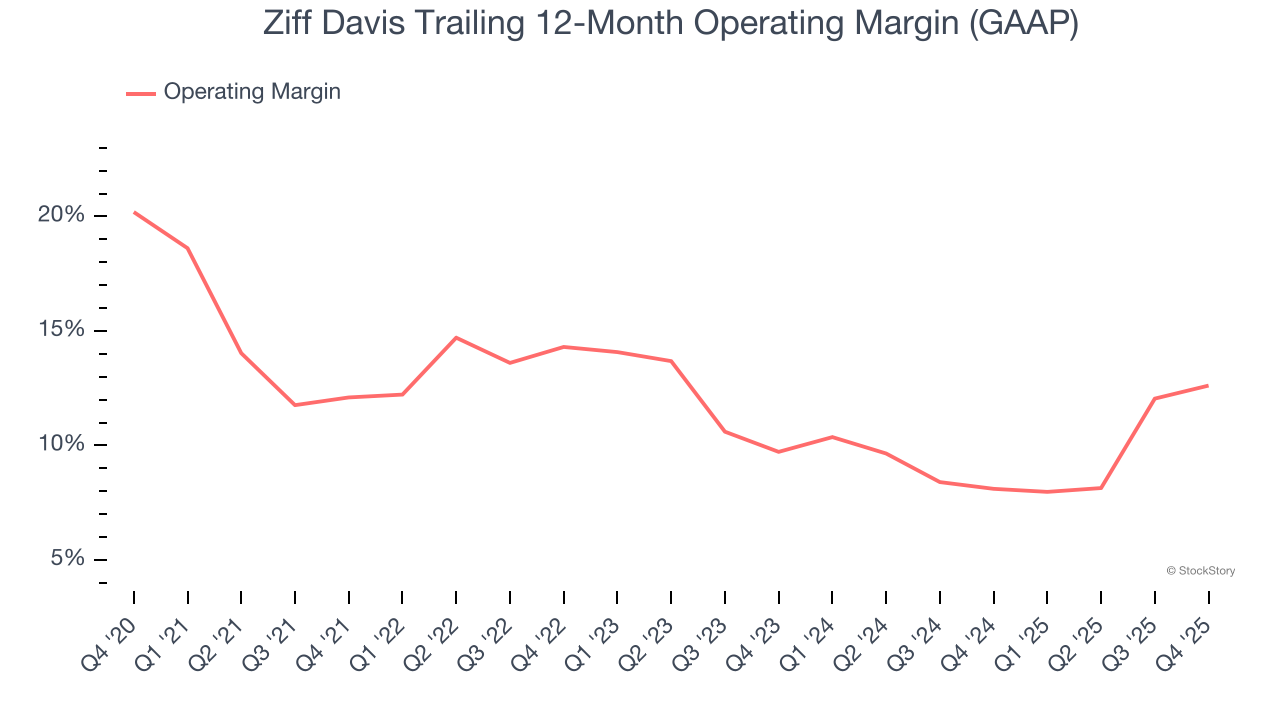
This quarter, Ziff Davis generated an operating margin profit margin of 21.2%, up 2.1 percentage points year on year. This increase was a welcome development, especially since its revenue fell, showing it was more efficient because it scaled down its expenses.
Earnings Per Share
Revenue trends explain a company’s historical growth, but the long-term change in earnings per share (EPS) points to the profitability of that growth – for example, a company could inflate its sales through excessive spending on advertising and promotions.
Sadly for Ziff Davis, its EPS declined by 4.1% annually over the last five years while its revenue was flat. This tells us the company struggled because its fixed cost base made it difficult to adjust to choppy demand.
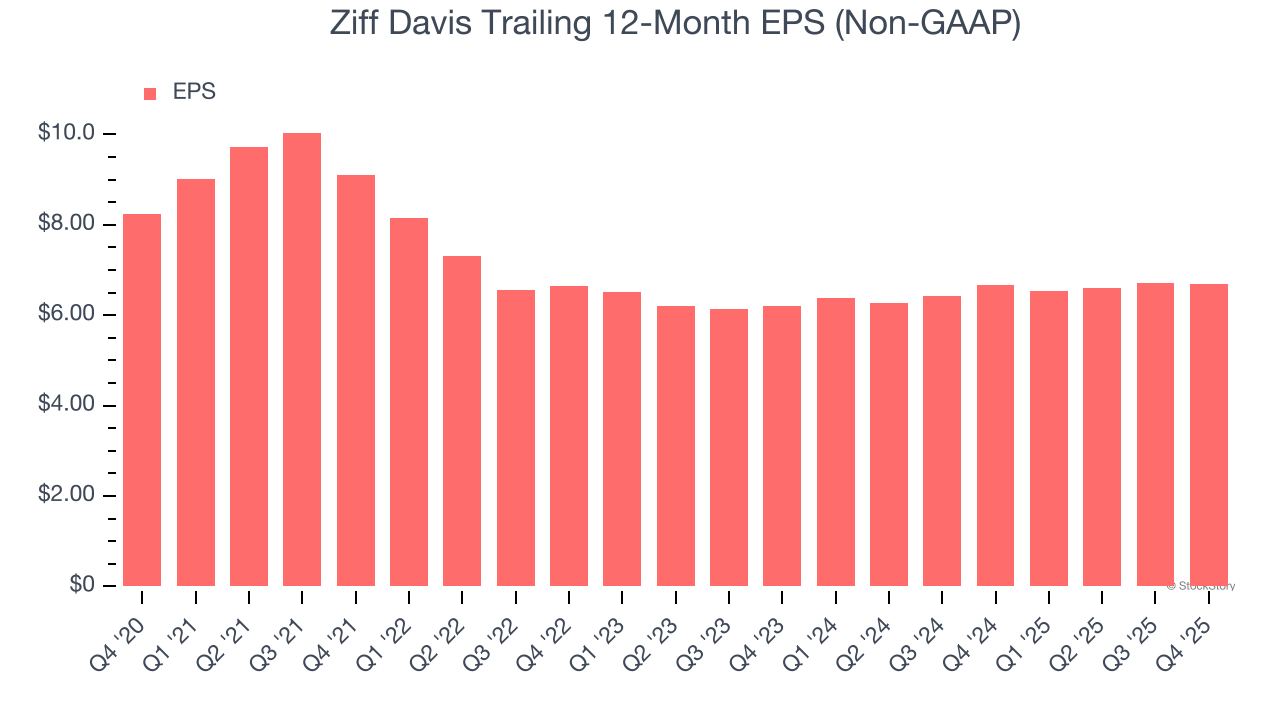
Like with revenue, we analyze EPS over a shorter period to see if we are missing a change in the business.
For Ziff Davis, its two-year annual EPS growth of 4% was higher than its five-year trend. Accelerating earnings growth is almost always an encouraging data point.
In Q4, Ziff Davis reported adjusted EPS of $2.56, down from $2.58 in the same quarter last year. This print missed analysts’ estimates. Over the next 12 months, Wall Street expects Ziff Davis’s full-year EPS of $6.70 to grow 11.5%.
Key Takeaways from Ziff Davis’s Q4 Results
We struggled to find many positives in these results. Its EPS missed and its revenue fell short of Wall Street’s estimates. Overall, this was a weaker quarter. The stock traded down 11.9% to $26.04 immediately following the results.
Ziff Davis may have had a tough quarter, but does that actually create an opportunity to invest right now? What happened in the latest quarter matters, but not as much as longer-term business quality and valuation, when deciding whether to invest in this stock. We cover that in our actionable full research report which you can read here (it’s free).