Some garage floor coating companies promise a stronger floor in a fraction of the time. What they rarely offer is any proof the claim is true--no test.
Chandler, AZ (PRUnderground) September 18th, 2026
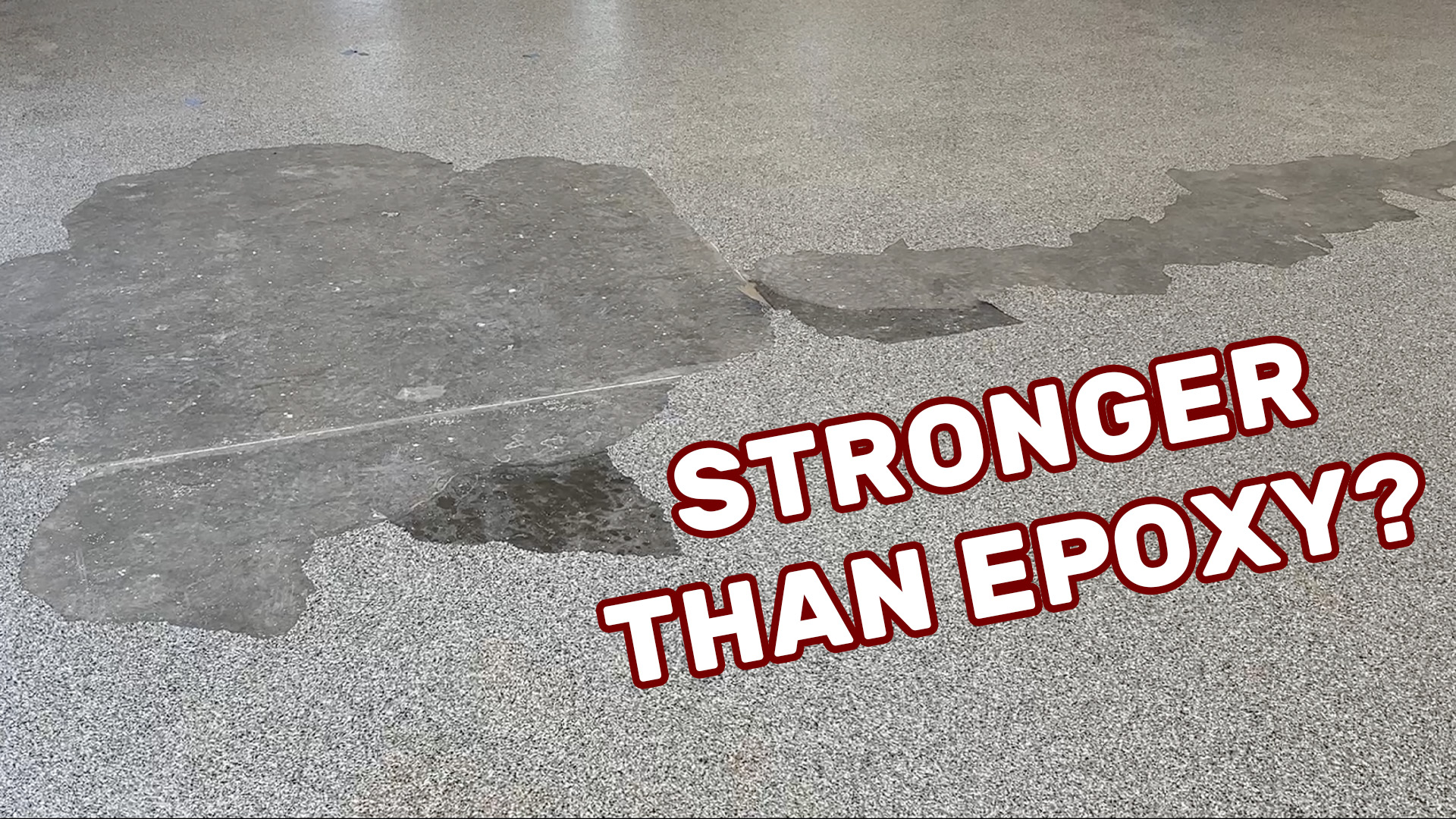
Some garage floor coating companies promise a stronger floor in a fraction of the time. What they rarely offer is any proof the claim is true--no test, no standard, just a number on a flyer.
Neil's Garage Cabinets, which installs epoxy flooring alongside its custom garage cabinets and storage systems, wants Mesa homeowners to see that proof before they sign anything.
Show the Math Behind the Marketing
Companies selling "1-day" systems routinely advertise strength multiples and superior penetration, almost never tied to a recognized testing standard. Trimming a garage floor coating down to a single visit saves on labor and materials, and the savings get marketed back as an upgrade.
Neil's Garage Cabinets is calling for independent, side-by-side testing covering:
Concrete penetration and adhesion
Moisture-mitigation performance
Impact and abrasion resistance
Comparative strength claims
Plasticizer migration and tire staining
Until that testing exists, a strength multiplier is a sales tool, not a specification.
Why a Rushed Coating Doesn't Survive the Desert
Concrete looks solid, but it's porous down to a microscopic level, and moisture works its way up from the soil below through that structure constantly. Once it reaches the surface, it turns to vapor and pushes back against whatever is sealing the slab.
A 1-day coating--typically polyaspartic--applied straight to bare concrete cures within hours, hardening before it can properly bond to the slab underneath. Much of the Valley sits over caliche, a dense, calcium-rich layer beneath the topsoil that resists drainage, so water from Mesa's monsoon storms often lingers in the ground far longer than the surface conditions suggest. A thin coating is no match for the resulting moisture vapor transmission.
"There is nothing wrong with polyaspartic technology, we use it extensively ourselves," said Robert G. Hanson, President and CEO of Garage Floor Coating Franchise System Inc. "The problem is where it's being used. Rapid-cure polyaspartics and polyureas belong on top of the system, not directly on the concrete."
The Two-Day Difference
Neil's Garage Cabinets installs epoxy flooring over two days, and each day has a purpose.
Day one covers mechanical surface preparation to open the concrete for a real bond, followed by a 100% solids moisture-mitigating epoxy primer and a full Torginol flake broadcast.
Day two comes once the epoxy has fully cured, when the crew returns to apply two coats of 100% solids polyaspartic topcoat. That sequence is what separates a floor built to last decades from one that bubbles or peels within a few years.
Companies selling 1-day systems know their product can't hold up to that kind of pressure, which is why many warranties quietly exclude moisture vapor transmission, hydrostatic pressure, plasticizer migration (permanent tire staining), and chemical staining--the exact failures a rushed installation tends to produce.
If a coating is marketed as stronger than epoxy, homeowners deserve to know precisely which failures are, and are not, covered.
Neil's Garage Cabinets continues pushing for independently verified testing behind these claims, so Mesa homeowners can make an informed decision.