Date: January 1, 2026
Introduction
As we enter 2026, Dollar General Corporation (NYSE: DG) stands at a critical juncture in its eighty-year history. Once the undisputed "darling" of the retail sector, the company spent much of 2023 and 2024 navigating a perfect storm of operational missteps, rampant inventory "shrink," and regulatory scrutiny. However, the narrative has shifted over the past twelve months. Under the renewed leadership of retail veteran Todd Vasos, Dollar General has embarked on an aggressive "Back to Basics" campaign that has begun to yield tangible results.
In an era defined by persistent inflationary pressures on the low-to-middle income consumer, Dollar General’s proximity-based, value-driven model is more relevant than ever. With over 20,000 stores across the United States, the company is often the only accessible retailer in many rural communities. This article examines whether Dollar General’s recent operational stabilization is a temporary reprieve or a sustainable return to the compounding growth that characterized its performance for decades.
Historical Background
The story of Dollar General is fundamentally a story of the American South. Founded in 1939 by J.L. Turner and his son, Cal Turner Sr., as J.L. Turner and Son in Scottsville, Kentucky, the company began as a wholesale business. The turning point came in 1955, when the duo launched the first "Dollar General Store" in Springfield, Kentucky. The concept was revolutionary: no item in the store cost more than one dollar.
By 1968, the company went public, and by the 1970s, it had expanded its footprint across the Sun Belt. A significant transformation occurred in 2007 when the private equity firm KKR & Co. took the company private in a $6.9 billion deal. This era modernized the company’s supply chain and store layout, preparing it for its highly successful 2009 IPO. Over the following decade, Dollar General became a market leader, expanding its reach into nearly every corner of the continental U.S., focusing specifically on "food deserts" and rural areas where larger competitors like Walmart chose not to build.
Business Model
Dollar General operates as a "small-box" discount retailer. Unlike the "dollar-everything" model previously employed by competitors, DG focuses on a broad range of consumables, home products, seasonal items, and apparel at price points generally under $10, though the "core" remains fixed on value.
Key Pillars of the Model:
- Target Demographic: The core customer typically comes from a household earning less than $40,000 per year.
- Real Estate Strategy: Approximately 80% of stores are located in communities with populations of 20,000 or fewer. The goal is to provide a "10-minute trip" convenience that larger supermarkets cannot match.
- Product Mix: Consumables (paper towels, milk, snacks) account for roughly 75-80% of net sales. While these carry lower margins, they drive the high-frequency foot traffic essential for the business.
- Cost Efficiency: Stores are designed with a low-cost, no-frills layout, typically around 8,500 square feet, requiring minimal staffing compared to big-box rivals.
Stock Performance Overview
Over the last decade, DG stock has been a study in extreme cycles.
- The 10-Year Horizon: From 2016 to 2022, the stock was a powerhouse, climbing from approximately $70 to an all-time high of $245.52 in October 2022.
- The 5-Year Horizon: The last five years have been more turbulent. After peaking in 2022, the stock suffered a catastrophic decline, losing nearly 60% of its value by mid-2024 as earnings plummeted and the company faced severe inventory issues.
- The 1-Year Horizon: 2025 marked a period of recovery. After bottoming out in the $60-$70 range, the stock rallied back to approximately $132 by January 1, 2026. This 12-month resurgence reflects Wall Street’s approval of the company’s operational pivots and stabilizing margins.
Financial Performance
Entering 2026, Dollar General’s financials show signs of "normalization" after the volatility of the post-pandemic years.
- Revenue Growth: For the third quarter of 2025, net sales rose 4.6% year-over-year to $10.65 billion, with same-store sales increasing by 2.5%.
- Margins: Gross margins have expanded to nearly 30%, a significant improvement from the 28.4% lows seen in late 2023. This expansion is attributed to better inventory management and a reduction in markdowns.
- Earnings: Analysts expect fiscal year 2025 (ending Jan 2026) to deliver an EPS of approximately $6.10, with projections for 2026 rising to $7.15 as the "Back to Basics" strategy fully takes hold.
- Debt: The company carries a significant debt load of roughly $7.5 billion, but it remains well-capitalized with a focus on using cash flow for store remodels rather than aggressive share buybacks, which were paused in 2023 to preserve liquidity.
Leadership and Management
The return of Todd Vasos as CEO in late 2023 was a watershed moment for the company. Vasos, who had previously led DG through a period of massive growth from 2015 to 2022, was brought back to replace Jeff Owen.
Vasos’s leadership style is characterized by a "hands-on" approach to store operations. His first major move was a $150 million investment in store labor, a direct response to complaints of messy, understaffed stores. The board of directors has also been refreshed to include more operational experts, moving away from a purely financial growth mindset to one of "operational excellence." This leadership shift has successfully restored institutional investor confidence, which had evaporated during the 2023 management crisis.
Products, Services, and Innovations
While "value" is the core offering, DG has innovated to capture higher margins and new demographics:
- DG Fresh: This in-house cold chain distribution network allows the company to offer fresh produce and refrigerated goods in rural areas. By 2026, a majority of stores have been outfitted with expanded cooler space.
- DG Wellbeing: Perhaps the most ambitious project, this initiative seeks to turn DG stores into rural healthcare destinations. The company has expanded its health and beauty assortments and continues to pilot mobile health clinics in partnership with companies like DocGo, offering basic diagnostics in "medical deserts."
- pOpshelf: A treasure-hunt style store targeting suburban, higher-income women. While the company slowed its aggressive expansion of pOpshelf in 2025 to focus on the core DG brand, the concept remains a key laboratory for non-consumable, higher-margin goods.
Competitive Landscape
The competitive environment for Dollar General is dual-sided:
- The Big Box Threat: Walmart (NYSE: WMT) remains the primary competitor for the "weekly shop." However, DG’s convenience "moat"—being located 5-10 miles closer to the rural customer than the nearest Walmart—is a formidable defense.
- The Deep Discount Sector: Dollar Tree (NASDAQ: DLTR) and its subsidiary Family Dollar are the most direct rivals. In recent years, DG has widened its lead over Family Dollar, which has struggled with store closures and poor site selection. As of 2026, Dollar General holds a dominant 58% share of foot traffic in the deep-discount retail sector.
Industry and Market Trends
The retail industry in 2026 is grappling with several macro trends:
- The "Trade-Down" Effect: As middle-income consumers feel the pinch of high housing and insurance costs, they are increasingly "trading down" to dollar stores for household essentials.
- Digital Transformation: DG has finally caught up in the digital space, with its mobile app reaching high penetration. The "DG Media Network" is now a significant revenue stream, as CPG brands pay for access to the unique rural data DG possesses.
- Labor Market Shifts: Rising minimum wages in several states have pressured margins, forcing DG to automate some back-room processes while reinvesting in front-facing customer service.
Risks and Challenges
Investing in Dollar General is not without significant risk:
- Inventory Shrink: Retail theft and inventory mismanagement (shrink) took a massive bite out of profits in 2023-2024. While the removal of self-checkouts in high-theft areas has helped, it remains a persistent industry-wide headwind.
- Operational Safety: The company has been plagued by OSHA violations for blocked exits and unsafe warehouses. Being placed on the "Severe Violator Enforcement Program" has resulted in millions in fines and a reputational hit.
- Labor Costs: As a company that relies on low-wage labor, any federal or regional push for a $15-$20 minimum wage could drastically alter the unit economics of a small-box store.
Opportunities and Catalysts
- Retail Media: The DG Media Network is a high-margin growth engine that leverages the company’s proprietary data on 20 million+ monthly active digital users.
- Health Care Expansion: If the DG Wellbeing mobile clinic pilot succeeds, it could turn DG stores into essential government-subsidized service hubs, creating a new, recession-proof revenue stream.
- Market Consolidation: As smaller local retailers and struggling Family Dollar locations close, DG is perfectly positioned to capture the orphaned market share.
Investor Sentiment and Analyst Coverage
As of January 2026, Wall Street sentiment has shifted from "Bearish" to "Cautiously Optimistic."
- Ratings: The consensus among major analysts is currently a "Buy," with a median 12-month price target of $142.
- Institutional Activity: Several large hedge funds that exited the stock in 2023 have begun rebuilding positions, citing the attractive valuation (trading at roughly 18x forward earnings, compared to its historical 22x average).
- Retail Sentiment: Small investors remain wary due to the 2023 collapse, but positive earnings surprises in late 2025 have begun to heal that rift.
Regulatory, Policy, and Geopolitical Factors
DG is highly sensitive to domestic policy:
- Pricing Scrutiny: In 2025, DG paid $15 million in settlements regarding "price discrepancies" between shelf tags and registers. The company is now under a microscope, requiring frequent internal audits to ensure compliance.
- SNAP Benefits: A significant portion of DG’s revenue comes from customers using the Supplemental Nutrition Assistance Program (SNAP). Any legislative changes to the Farm Bill that reduce SNAP benefits would have a direct and immediate impact on DG's top line.
Conclusion
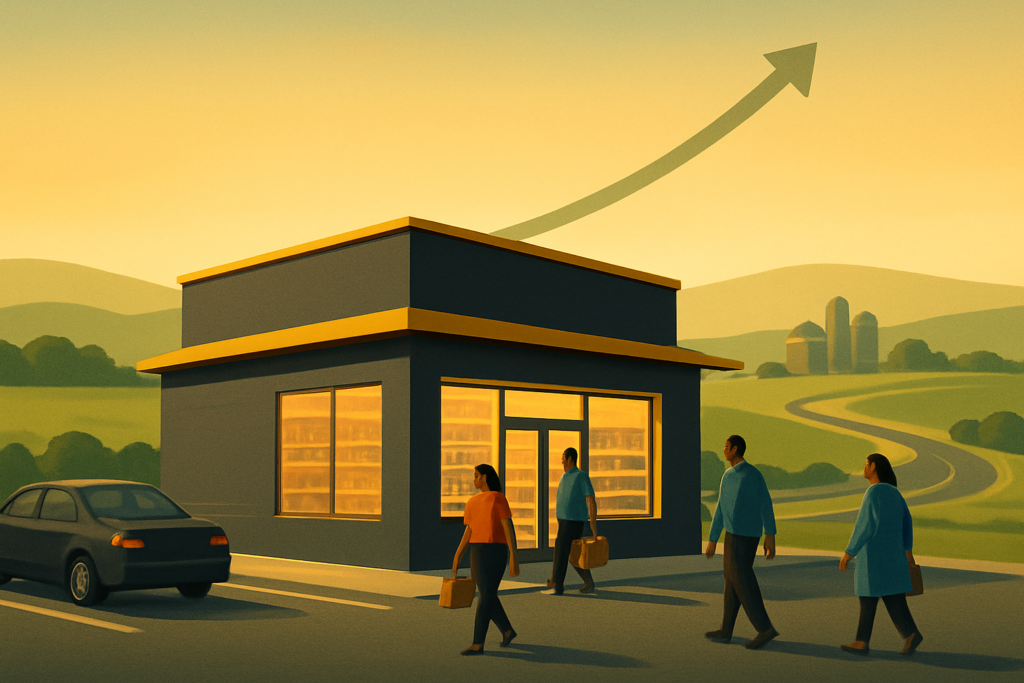
Dollar General’s journey over the last three years serves as a masterclass in the dangers of over-expansion and the power of returning to core competencies. On January 1, 2026, the company is leaner, more focused, and operationally sounder than it was just twenty-four months ago.
By pivoting away from self-checkouts, reinvesting in its workforce, and leaning into its rural moat, Dollar General has rebuilt its defensive wall. While regulatory hurdles and labor costs remain permanent fixtures of its risk profile, the company’s role as the "pantry of the rural South" remains unchallenged. For investors, DG represents a classic "turnaround" play that has completed its most difficult phase, now entering a period where operational efficiency will be the primary driver of shareholder value.
This content is intended for informational purposes only and is not financial advice.