
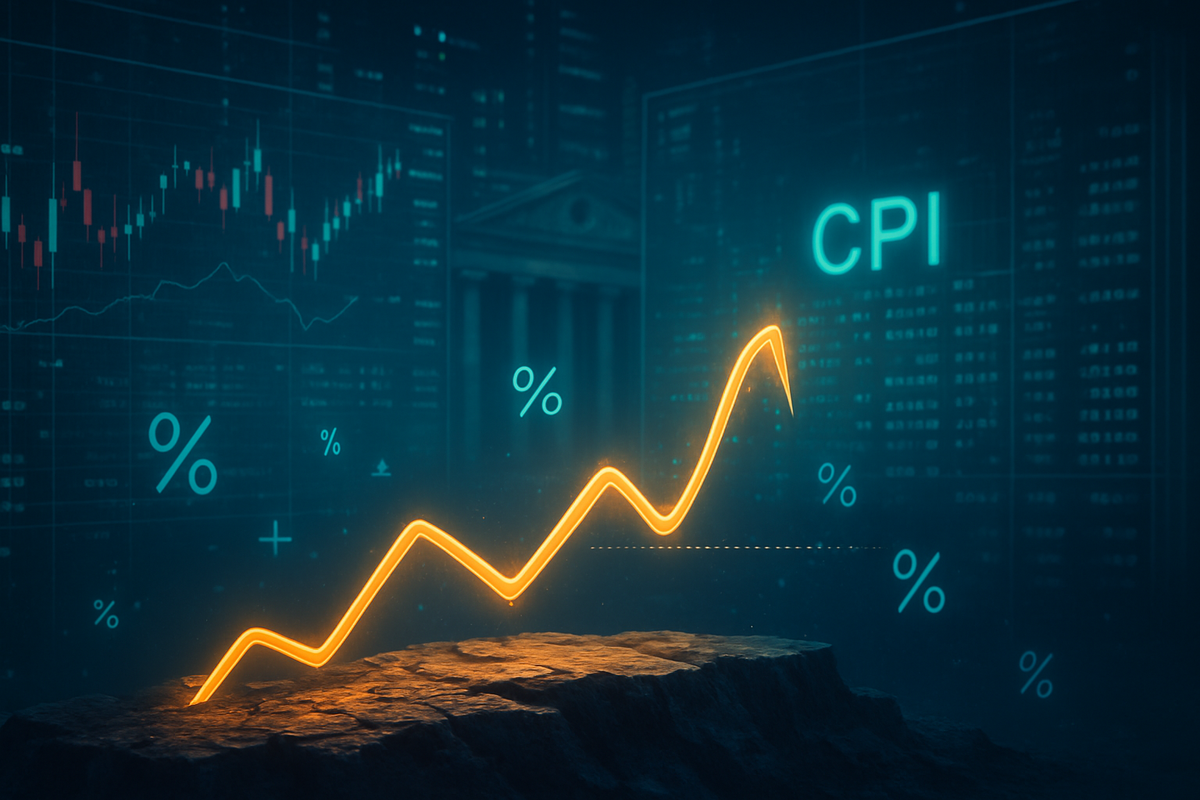
With the Federal Reserve entering a critical transition phase and "sticky" inflation refusing to retreat to the elusive 2% target, all eyes are on the upcoming March Consumer Price Index (CPI) report, scheduled for release this Friday, April 10, 2026. After a series of cautious rate cuts in late 2025, the central bank has hit a "pause" button that has left investors questioning whether the next move will be a continued descent or a defensive hold.
The immediate implications are significant: a higher-than-expected print could solidify the "higher-for-longer" narrative for the remainder of the year, potentially derailing the market's hopes for a June rate cut. Conversely, a cooling trend would provide the Federal Open Market Committee (FOMC) the cover it needs to navigate the upcoming leadership transition as Chair Jerome Powell’s term nears its conclusion in May.
The Sticky Reality of 2026 Inflation
The road to this Friday’s data release began in the final quarter of 2025, when the Federal Reserve successfully steered the economy toward what many called a "soft landing." Having lowered the federal funds rate to its current range of 3.50%–3.75%, the Fed appeared to have won the battle. However, the first quarter of 2026 has introduced new complications. Persistent wage growth in the service sector and a rebound in energy prices—fueled by renewed geopolitical tensions in the Middle East—have kept inflation figures hovering uncomfortably between 2.4% and 2.6%.
Key stakeholders, including Treasury Secretary Janet Yellen and various FOMC members, have recently shifted their rhetoric from "victory over inflation" to "vigilance against persistence." Market participants have reacted with visible anxiety; the SPDR S&P 500 ETF Trust (NYSEARCA:SPY) has seen increased volatility over the last two weeks as treasury yields climbed in anticipation of the March data. Analysts are particularly focused on the "Core" reading, which excludes volatile food and energy costs, as it has remained stubbornly pinned at 2.5% for three consecutive months.
The timeline leading to this moment is marked by a "mechanical reversal" in housing costs. While shelter inflation provided a tailwind for disinflation throughout 2024 and 2025, many low-cost leases from the post-pandemic era are now expiring, creating a new, higher floor for rental metrics. This structural shift, combined with the lingering pass-through effects of 2025 tariff policies, has created a "sticky" environment that the Fed’s current tools are struggling to penetrate.
Winners and Losers in the "Efficiency Super-Cycle"
The current economic landscape has created a sharp divide between market leaders and those struggling to adapt. JPMorgan Chase & Co. (NYSE: JPM) stands out as a primary beneficiary of this plateau. As a "fortress bank," JPMorgan continues to reap the rewards of elevated net interest income while its diversified balance sheet shields it from the commercial real estate pressures that are currently weighing on smaller, regional lenders. In a high-rate environment, the flight to quality has only strengthened the position of the nation's largest bank.
In the technology sector, the narrative has shifted from "AI hype" to "AI monetization." NVIDIA Corp. (NASDAQ: NVDA) remains a titan in this space, as its hardware is now viewed as an essential utility for companies attempting to automate away the "sticky" labor costs that are driving services inflation. Similarly, Walmart Inc. (NYSE: WMT) has emerged as a winner by leveraging generative AI to optimize its global logistics and offering value to consumers whose purchasing power is being eroded by persistent price increases. Walmart’s ability to maintain margins while keeping prices competitive has allowed it to gain significant market share from mid-tier retailers.
Conversely, companies with heavy debt burdens or those sensitive to consumer discretionary spending are feeling the squeeze. Tesla Inc. (NASDAQ: TSLA) has faced valuation pressure as high interest rates continue to impact auto-loan affordability, cooling demand in the luxury electric vehicle market. Additionally, generic software firms that lack a proprietary AI moat are seeing their valuations re-rated downward, as investors demand "receipts"—tangible cash flow and margin expansion—rather than just promises of future innovation.
The Global Shift Toward Economic Security
The current inflation struggle is not merely a post-pandemic hangover but represents a broader shift in the global economic order. The era of the "Great Moderation"—characterized by low volatility and cheap energy—has been replaced by a "Regime of Resilience." This event fits into a wider trend of "Economic Security," where nations are prioritizing domestic production and supply chain redundancy over pure cost-efficiency, a transition that is inherently inflationary.
Ripple effects are being felt across the energy sector. As the March CPI report is expected to show the impact of $90+ per barrel oil, energy giants like Exxon Mobil Corp. (NYSE: XOM) have become essential hedges for institutional portfolios. The "Tech-Energy Convergence" is another emerging theme; as data centers for AI demand unprecedented amounts of power, energy supply has replaced semiconductor availability as the primary bottleneck for growth. This is forcing a massive regulatory and policy shift toward nuclear power and grid modernization.
Historically, this period draws comparisons to the late 1970s "stop-and-go" policy errors, where the Fed eased too early only to see inflation roar back. Current policymakers are acutely aware of this precedent, which explains the extreme caution observed in the early 2026 FOMC meetings. The regulatory environment is also tightening, with a focus on antitrust actions in the tech sector and new "inflation-adjustment" mandates for government contracts, further complicating the corporate landscape.
Future Scenarios: The New Normal
Looking ahead, the March CPI print will likely dictate the Fed's strategy through the summer. A "hot" report could lead to a strategic pivot where the Fed holds rates steady through the end of 2026, or in an extreme scenario, discusses the possibility of a "insurance hike." This would create a challenging environment for small-cap stocks and companies requiring frequent refinancing. Strategic adaptations will be required; we expect to see an increase in "efficiency-driven" capital expenditures as firms prioritize technology that reduces their reliance on volatile human labor.
In the long term, the market may have to accept a "new normal" where inflation targets are informally adjusted to 2.5% or 3%. Such a shift would require a total recalibration of bond market expectations and retirement planning models. Market opportunities will emerge in "real assets"—including commodities and infrastructure—which tend to outperform during periods of persistent price increases. Investors should also watch for a potential "valuation floor" in the defense sector, as represented by companies like Lockheed Martin Corp. (NYSE: LMT), which are increasingly viewed as stable yield plays in an unstable world.
Market Outlook and Final Thoughts
In summary, the upcoming CPI data is more than just a monthly statistic; it is a referendum on the Federal Reserve’s ability to stick the landing in a fragmented global economy. The key takeaway for investors is that the "easy money" phase of the recovery is over. Success in the 2026 market will depend on identifying companies with genuine pricing power, fortress balance sheets, and a clear path to AI-driven efficiency.
Moving forward, the market is likely to remain range-bound until there is more clarity on the Federal Reserve leadership transition and the trajectory of energy prices. Investors should maintain a diversified stance, balancing growth-oriented tech leaders with defensive hedges in energy and finance. The coming months will test the resolve of both the consumer and the central banker, and this Friday’s data will be the first major signal of who is winning that tug-of-war.
This content is intended for informational purposes only and is not financial advice