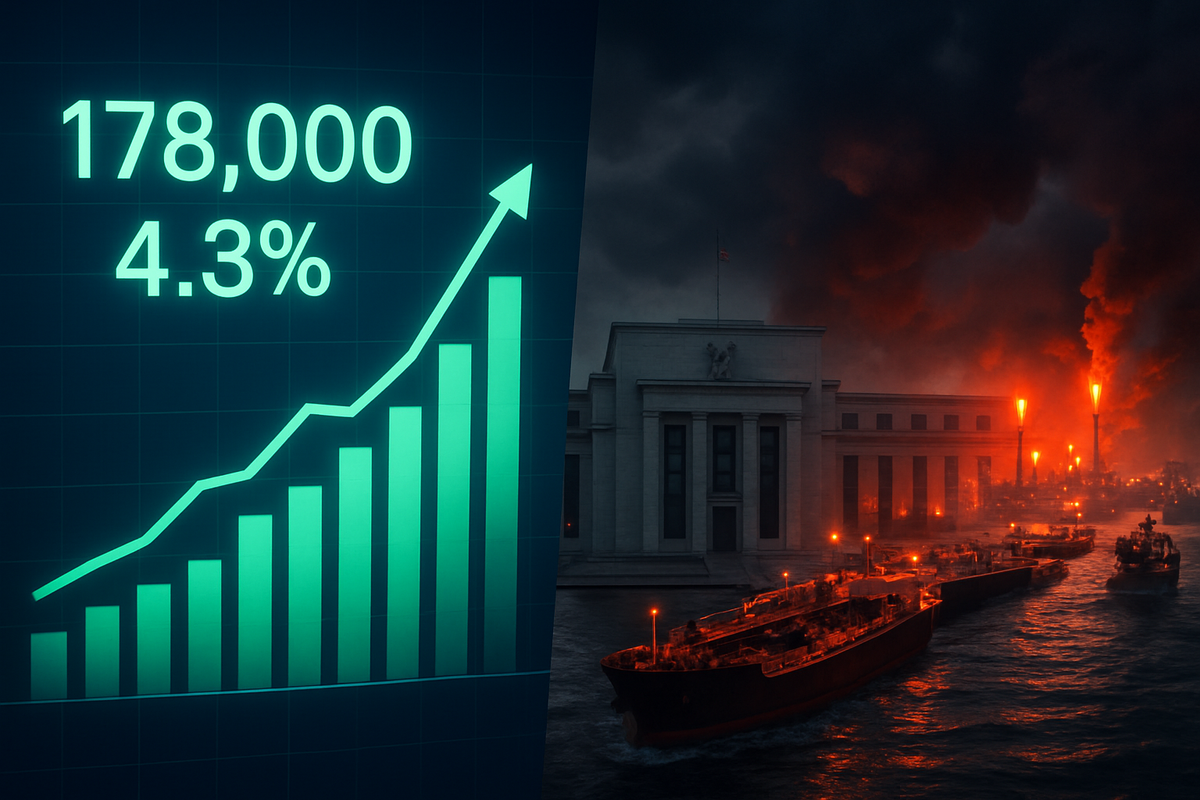
The U.S. labor market delivered a stunning "plot twist" today, April 3, 2026, as the Bureau of Labor Statistics reported that nonfarm payrolls surged by 178,000 in March. This figure obliterated consensus estimates of just 65,000, providing a much-needed jolt of confidence to an economy currently grappling with a severe energy shock. Simultaneously, the national unemployment rate ticked down to 4.3%, defying expectations that the cooling trend observed earlier in the year would continue.
While the hiring numbers suggest a resilient domestic economy, they arrive at a moment of extreme global volatility. As conflict in the Middle East escalates, sending crude oil prices toward $120 a barrel, the "hot" jobs report presents a double-edged sword for policymakers. The unexpected strength in the labor market may provide the Federal Reserve with the justification it needs to keep interest rates elevated longer than previously anticipated, even as surging energy costs threaten to reignite inflation.
The March jobs report was characterized by many analysts as a "rebound from the brink." Following a disastrous February—which was revised downward today to show a severe contraction of 133,000 jobs—the 178,000 additions in March suggest that the underlying labor demand remains robust. Much of this growth was concentrated in the Healthcare sector, which added approximately 82,000 jobs as workers returned from a series of high-profile strikes and demand for ambulatory services surged.
Construction and transportation also showed surprising grit, adding 26,000 and 21,000 roles, respectively. This resilience occurred despite the geopolitical shadow cast by the ongoing conflict between Israel, the U.S., and Iran. The blockade of the Strait of Hormuz in mid-March has effectively choked off 20% of global oil and liquefied natural gas (LNG) flows, creating an immediate energy crisis. Initially, markets feared that the sudden spike in fuel costs would lead to a hiring freeze, but the March data suggests that domestic business momentum was strong enough to absorb the initial blow.
Market reaction to the report was a mix of relief and anxiety. While the major indices saw an initial pop on the headline strength, gains were quickly pared back as Treasury yields climbed. Investors are recalibrating their expectations for the Federal Reserve’s next move, with many now fearing that the central bank will be forced to choose between supporting growth and fighting the new wave of "energy-driven" inflation.
The current economic environment has created a stark bifurcation in the markets, clearly separating the beneficiaries of the geopolitical crisis from those vulnerable to its costs. The clear winners are the domestic energy giants. ExxonMobil (NYSE: XOM) and Chevron (NYSE: CVX) have both seen their stock prices hit all-time highs this week, as the loss of Middle Eastern supply increases the value of their Western Hemisphere production and refining capacities. Valero Energy (NYSE: VLO) has also seen massive gains, benefiting from the widening margins in the refining sector as global gasoline and diesel supplies tighten.
On the other side of the ledger, the transportation and logistics sectors are feeling the heat. Delta Air Lines (NYSE: DAL) and other major carriers have seen their valuations slide by nearly 10% this month as jet fuel prices soared following the strike on Qatar’s LNG facilities. Similarly, FedEx (NYSE: FDX) is facing a "margin squeeze" of historic proportions; the company has been forced to implement emergency fuel surcharges to offset operating costs, a move that threatens to dampen shipping volumes as consumers pull back on discretionary spending.
The defense sector has also seen a resurgence in investor interest. With the conflict in the Middle East expanding, contractors like Lockheed Martin (NYSE: LMT) and Northrop Grumman (NYSE: NOC) are seeing a flurry of new munitions orders. However, these gains are being tempered by the broader market sell-off in growth-oriented tech stocks, which are sensitive to the rising yields triggered by the robust jobs data.
The significance of the March report extends far beyond the raw numbers; it effectively signals the end of the "Fed Pivot" narrative that dominated the first two months of 2026. Prior to today, the market had priced in multiple rate cuts for the second half of the year, hoping for a "soft landing." The combination of 178,000 new jobs and a drop to 4.3% unemployment has likely "deleted" those cut expectations from the Fed’s spreadsheet.
Historically, this situation draws parallels to the stagflationary shocks of the 1970s, where geopolitical events triggered energy spikes while the domestic labor market remained surprisingly tight. The Federal Reserve, led by Chair Jerome Powell, now faces a "double whammy": they cannot cut rates to help the slowing logistics and consumer sectors without risking a massive spike in headline inflation driven by $4.00-per-gallon gasoline.
This shift in policy expectations has significant ripple effects on global trade. As the U.S. dollar strengthens in response to "higher-for-longer" interest rates, emerging markets are finding it increasingly difficult to service their dollar-denominated debt. Furthermore, the regulatory focus is likely to shift toward energy independence and strategic reserve management, as the White House looks for ways to stabilize prices without the aid of monetary easing.
Looking ahead, the next 90 days will be critical for the U.S. economy. The short-term possibility of a "secondary inflation spike" is high, especially if the conflict in the Middle East persists and Brent crude remains above the $110 mark. Companies in the retail and consumer discretionary sectors will likely have to undergo strategic pivots, shifting their focus toward essential goods as high energy costs eat into the average American's wallet.
There is also the potential for a "hiring hangover" in the second quarter. While March was strong, the lagged effects of the oil shock have yet to fully penetrate corporate earnings. If the Strait of Hormuz remains closed, the increased cost of doing business will eventually manifest in lower margins, potentially leading to the very layoffs the Fed has been trying to avoid. Strategic adaptations, such as near-shoring and increased automation in logistics to offset fuel costs, will likely become the dominant corporate themes of the summer.
The March jobs report is a testament to the resilience of the American worker, but it also highlights the precariousness of the current global economic order. With 178,000 jobs added and unemployment falling to 4.3%, the domestic economy is showing it can take a punch. However, the external pressures of the Iran conflict and the resulting energy shock have created a high-volatility regime that investors have not seen in decades.
The key takeaway for investors is that the "lower rates are coming" insurance policy has been revoked. Moving forward, the market will likely reward companies with strong balance sheets and "hard asset" exposure while punishing those reliant on cheap credit or high-volume global shipping. Watch closely for the Fed’s next meeting and the weekly inventory reports on crude oil; these will be the primary drivers of market sentiment as we head into the middle of 2026. The labor market has bought the economy some time, but the geopolitical clock is still ticking.
This content is intended for informational purposes only and is not financial advice.