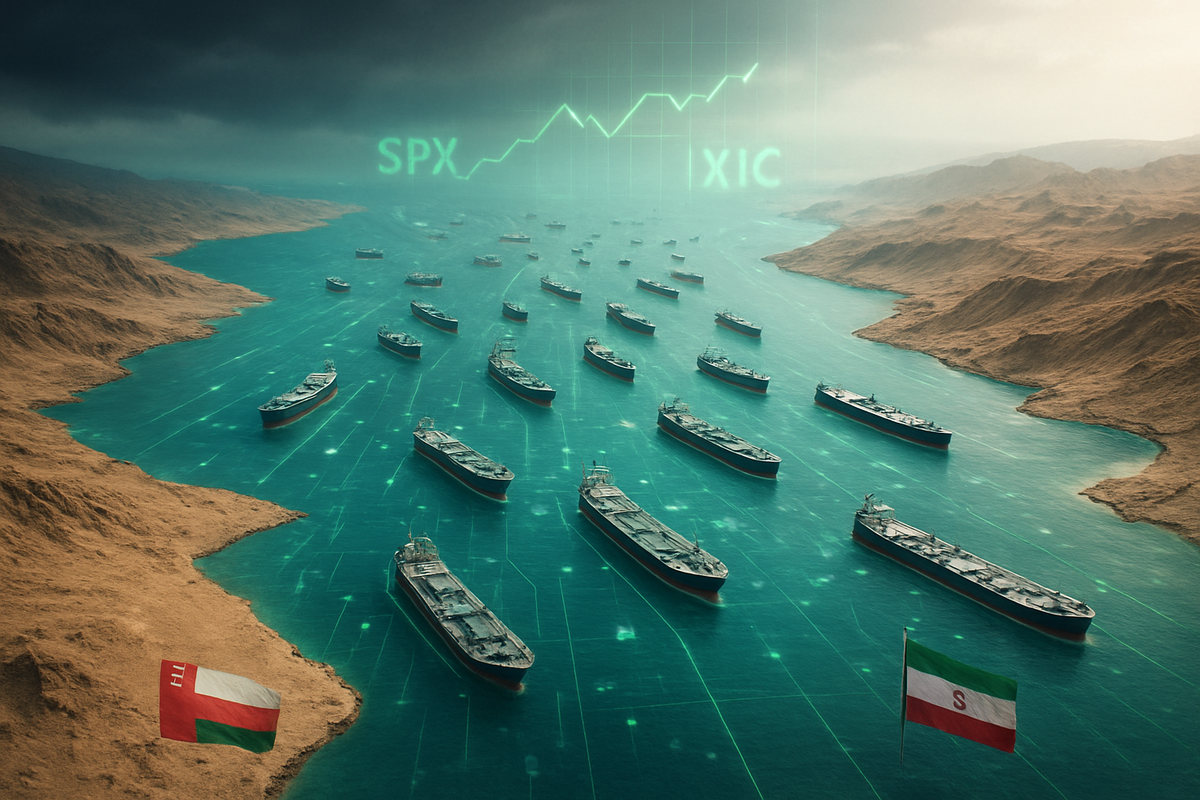
MUSCAT / TEHRAN – In a move that has sent ripples of relief through global financial capitals, the governments of Iran and Oman have officially signed a comprehensive maritime monitoring protocol for the Strait of Hormuz. The agreement, announced early this morning, establishes a joint coordination center designed to oversee vessel traffic and ensure the safety of navigation in what is arguably the world’s most critical energy chokepoint. By formalizing a de-confliction framework, the two nations have effectively stepped back from the brink of a total maritime blockade that had loomed over the global economy for much of the first quarter of 2026.
The immediate impact on financial markets has been nothing short of electric. After weeks of "risk-off" sentiment fueled by soaring insurance premiums and threats of supply chain collapses, the S&P 500 and the Nasdaq Composite saw their strongest single-session recoveries in over eighteen months. Investors, previously bracing for a prolonged energy crisis, pivoted back into growth and technology sectors as the "geopolitical risk premium" on crude oil began to evaporate, lowering fears of a stagflationary shock that had threatened to stall the 2026 economic expansion.
The Path to De-Escalation: A High-Stakes Timeline
The "Muscat Protocol," as it is already being dubbed in diplomatic circles, is the culmination of three weeks of intense, shuttered negotiations facilitated by Sultan Haitham bin Tariq of Oman. The timeline leading to today’s announcement was fraught with peril; following a series of "shadow war" incidents in February 2026 involving drone interdictions and "mystery" mine placements, oil prices had surged past $115 per barrel. The escalation reached a fever pitch last Tuesday when regional naval drills were perceived as a precursor to a complete shutdown of the 21-mile-wide passage.
The protocol establishes a "Green Channel" for commercial shipping, managed by a joint task force that provides real-time data sharing between the Iranian Revolutionary Guard Corps (IRGC) Navy and the Royal Navy of Oman. Crucially, the agreement includes a moratorium on non-emergency vessel boardings and a commitment to use Omani intermediaries for any maritime disputes. This structural shift moves the region away from the "tit-for-tat" seizures that have defined the last several years, providing the maritime industry with its first clear "rules of the road" in over a decade.
Initial market reactions were swift. As news of the signing broke, the VIX "Fear Gauge" plummeted by nearly 20%, its largest one-day drop since the post-pandemic recovery period. Analysts from major Wall Street firms noted that the protocol effectively removes the "worst-case scenario" from the market’s immediate forecast. With approximately 20.5 million barrels of oil and 20% of the world's Liquefied Natural Gas (LNG) passing through the Strait daily, the stabilization of this waterway is viewed as the single most important "inflation-taming" event of the current fiscal year.
Winners and Losers: Corporate Fallout from the Muscat Protocol
The sudden shift in the geopolitical landscape has created a stark divide between sectors. Large-cap energy giants, which had been benefiting from a "war premium" in crude prices, saw their stock prices stabilize or pull back slightly as Brent and WTI futures retreated. Exxon Mobil (NYSE: XOM) and Shell (NYSE: SHEL), both of which have massive stakes in Qatari LNG projects and UAE production, saw a "volatility reset." While a lower oil price might slightly dent short-term margins, the reopening of predictable logistics is a long-term win for their midstream and downstream operations. Similarly, TotalEnergies (NYSE: TTE), which is deeply integrated into the North Field expansion in Qatar, saw its shares trade higher as the risk of "stranded cargo" disappeared.
In the shipping sector, the news was a double-edged sword. Tanker companies like Frontline PLC (NYSE: FRO) and Scorpio Tankers (NYSE: STNG), which had seen "War Risk" insurance surcharges drive spot rates to astronomical levels, saw a sharp correction in their share prices. The normalization of the Strait means that the extreme "scarcity pricing" for tankers is likely to ease. Conversely, container shipping behemoths such as A.P. Møller - Mærsk (OTC: AMKBY) and Hapag-Lloyd (OTC: HPGLY) rallied. These companies have spent the last quarter rerouting vessels around the Cape of Good Hope at immense fuel cost; the Muscat Protocol promises a return to more efficient, direct routing through the Suez Canal and the Persian Gulf.
Perhaps the biggest winners, however, are the tech-heavyweights of the Nasdaq. Companies like NVIDIA (NASDAQ: NVDA) and Apple (NASDAQ: AAPL) led the rally, as a de-escalation in the Middle East lowers the floor for global inflation, potentially giving the Federal Reserve more room to maintain or even lower interest rates later this year. In the defense sector, RTX Corporation (NYSE: RTX) saw a minor sell-off as the immediate "imminent conflict" narrative cooled, though long-term regional defense contracts are expected to remain robust as nations look to fortify the newly established monitoring systems.
A New Precedent in Maritime Diplomacy
The Muscat Protocol fits into a broader industry trend of "regionalization of security." For years, the security of the Strait of Hormuz was guaranteed by Western naval presences, but today’s agreement signals a shift toward local ownership of maritime safety. This mirrors historical precedents like the 1991 Gulf War resolution or the 2015 JCPOA framework, where diplomatic breakthroughs led to multi-year periods of market stability. By involving Oman—a nation with a long history of "friend to all" neutrality—Iran has found a face-saving way to de-escalate without appearing to capitulate to Western military pressure.
The ripple effects of this agreement will likely extend to other global chokepoints, such as the Bab el-Mandeb. If the Iran-Oman model proves successful, it could serve as a blueprint for similar "de-confliction zones" elsewhere, potentially leading to a synchronized lowering of global shipping costs. From a policy perspective, this represents a significant victory for "quiet diplomacy" over "maximum pressure," a shift that will likely be debated in the upcoming G20 summits as a viable path for regional stability.
Furthermore, this event highlights the evolving nature of energy security. In the 1970s or 80s, a threat to the Strait would have meant a global recession; in 2026, while still critical, the market’s rapid recovery also reflects the growing cushion provided by American shale and the transition to renewable energy. However, the sheer volume of LNG passing through the Strait—destined primarily for Asian hubs in China and Japan—remains the "Achilles' heel" of the global transition, making today’s protocol essential for the continued stability of the global power grid.
What Comes Next: Strategic Pivots and Scenarios
In the short term, investors should watch for the actual implementation of the "Green Channel" over the next 30 to 60 days. The primary risk remains a "spoiler" event—an accidental collision or a rogue actor attempting to sabotage the protocol. Should the joint coordination center remain functional through the summer, we expect to see a sustained downward trend in global freight rates, which will act as a secondary tailwind for retail and manufacturing stocks heading into the third quarter.
Long-term, this protocol may force a strategic pivot for energy companies that had been investing heavily in "avoidance infrastructure," such as pipelines that bypass the Strait. If the waterway is perceived as "safe" again, the ROI on these expensive bypass projects may be called into question. Market opportunities will emerge in the maritime tech and "reg-tech" space, as the new monitoring protocol will require sophisticated AI-driven tracking systems and automated compliance software to manage the high volume of traffic under the new rules.
Summary: A Turning Point for Global Markets
The Iran-Oman shipping protocol is more than just a local maritime agreement; it is a vital circuit-breaker for a global economy that was beginning to overheat from geopolitical friction. By removing the threat of a "closed" Strait of Hormuz, the protocol has allowed the S&P 500 and Nasdaq to reclaim their bullish momentum, driven by a renewed appetite for growth and a significant reduction in energy-related inflation fears.
As we move forward, the "Muscat Protocol" will serve as a bellwether for regional stability. Investors should maintain a close eye on the "Crude Oil Volatility Index" (OVX) and regional shipping insurance premiums as primary indicators of the agreement’s health. While the "war premium" has faded for now, the underlying tensions in the region remain; however, for the first time in years, there is a formal, bilateral mechanism in place to keep the world’s most important waterway open for business.
This content is intended for informational purposes only and is not financial advice.