By: MarketMinute
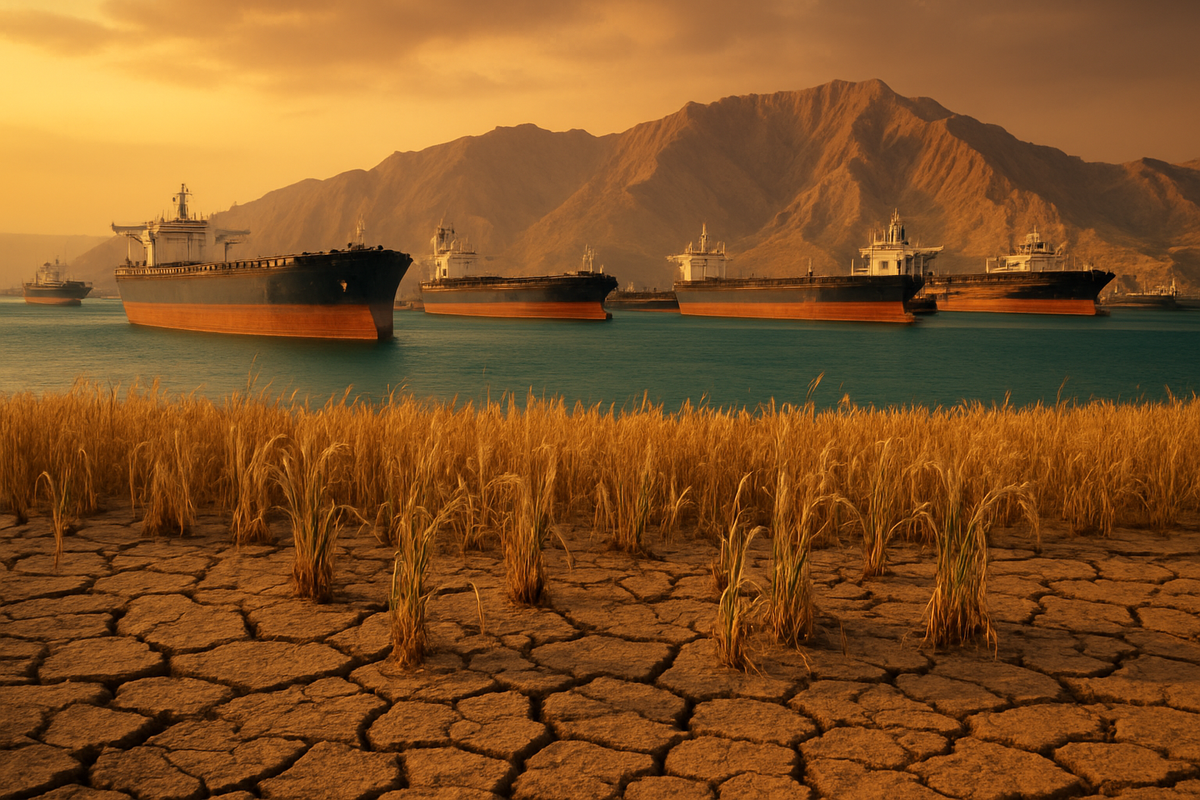
The global agricultural supply chain has been plunged into a state of emergency following a series of geopolitical escalations that have effectively closed the Strait of Hormuz. While the world’s attention is often fixed on the flow of crude oil through this narrow maritime corridor, experts are now sounding the alarm over a far more insidious threat: a "fertilizer shock" that could cripple global food production for years to come.
With nearly 50% of the world’s seaborne urea and sulfur exports now stranded behind the blockade, the "natural gas transformed into plant food" that sustains modern civilization has been severed from its primary shipping route. The immediate implications are staggering, as nitrogen-based fertilizers—the bedrock of high-yield farming—have seen spot prices double in the 72 hours since the closure was confirmed, threatening a massive inflationary tail for food prices across the globe.
The Chokepoint of the "Nitrogen Fortress"
The current crisis began in early March 2026, after a series of maritime security incidents led to the complete suspension of commercial traffic through the 21-mile-wide Strait. This corridor serves as the primary exit for the "Nitrogen Fortress" of the Persian Gulf, a region that has leveraged its vast, low-cost natural gas reserves to become the world’s most critical supplier of synthetic nutrients. Approximately 31% to 35% of all global seaborne urea—and up to 50% of the world's elemental sulfur—originates from facilities within the Gulf.
The timeline of the disruption moved with terrifying speed. Following the initial blockage on March 6, major producers including Industries Qatar (QSE: IQCD) and SABIC Agri-Nutrients (TADAWUL: 2020) were forced to declare force majeure on several upcoming shipments to South America and Asia. Initial market reactions were swift; fertilizer futures on the Chicago Mercantile Exchange surged to levels not seen since the 2022 energy crisis. Agricultural analysts warn that because nitrogen fertilizer is essentially a perishable commodity in terms of its seasonal utility, even a short-term closure during the spring 2026 planting window in the Northern Hemisphere could lead to a catastrophic drop in crop yields.
Winners and Losers: A Divided Market
The "Hormuz Blockade" has created a stark divide in the global equity markets. On one side are the stranded giants of the Middle East, such as Fertiglobe (ADX: FERTIGLB) and the Saudi mining powerhouse Ma'aden (TADAWUL: 1211). These companies, which dominate the export market for urea and diammonium phosphate (DAP), now face the prospect of overflowing storage tanks and halted production lines, as their primary route to market is severed.
Conversely, North American and European producers are positioned to reap the benefits of the sudden supply vacuum. CF Industries Holdings, Inc. (NYSE: CF), which operates primarily in the United States using domestic shale gas, has seen its stock price climb as it becomes a primary alternative source for desperate importers. Similarly, Nutrien Ltd. (NYSE: NTR) and The Mosaic Company (NYSE: MOS) are expected to see significant margin expansion as global prices for potash and phosphate rise in sympathy with nitrogen. However, the gains for these companies may be tempered by the broader economic impact on their customers—the farmers—who may find themselves unable to afford inputs at these record-high prices.
On the losing end of the spectrum are the massive global agribusiness conglomerates. Archer-Daniels-Midland Company (NYSE: ADM) and Bunge Global SA (NYSE: BG) are facing increased logistical costs and the looming threat of lower grain volumes in the coming harvest cycles. These companies rely on consistent crop yields to fuel their processing and export businesses; a sustained fertilizer shortage in key growing regions like Brazil would directly impact their bottom lines through 2027.
The Intersection of Energy and Food Security
This event underscores a brutal reality of the 21st-century economy: food security is inextricably linked to energy stability. Nitrogen fertilizer production is a high-intensity chemical process that consumes vast amounts of natural gas. When the Strait of Hormuz is closed, it is not just energy that is being blocked, but the very nutrients required to grow wheat, corn, and rice. This "energy-food nexus" is most visible in countries like Brazil and India, which are uniquely exposed to this disruption.
Brazil, the world’s largest soybean exporter, imports nearly 100% of its urea, with over 40% of that supply typically transiting the Strait of Hormuz. For India, the situation is even more dire; the nation relies on the Gulf for nearly half of its urea and a significant portion of its phosphate precursors. In previous years, these nations could look to China or Russia to fill the gap, but current 2026 trade restrictions and high shipping costs have made those alternatives prohibitively expensive. This creates a "long-term inflationary tail," as the high cost of fertilizer today will manifest as higher grocery store prices for the next 18 to 24 months.
Strategic Pivots and the Road Ahead
In the short term, the market will likely see a frantic scramble for alternative logistics. Some producers may attempt to truck fertilizer to ports outside the Gulf, such as Salalah in Oman or various Red Sea terminals, but the sheer volume of trade—millions of metric tons—makes this a logistical nightmare that cannot replace the capacity of the Strait. We may also see the emergence of "fertilizer diplomacy," where governments in New Delhi and Brasília negotiate directly with energy-producing nations to secure priority shipments through any available military-escorted convoys.
Long-term, this crisis will likely accelerate the transition toward "Green Ammonia" and decentralized fertilizer production. Companies like Yara International ASA (OTC: YARIY) have already begun investing in hydrogen-based fertilizer plants that do not rely on natural gas from volatile regions. However, these facilities are years away from reaching the scale required to replace the Middle Eastern "Nitrogen Fortress." For the remainder of 2026, the market must brace for a period of extreme volatility where the price of a loaf of bread is decided by the geopolitical stability of a single 21-mile stretch of water.
Market Wrap-Up: What Investors Should Watch
The "Fertilizer Shock" at Hormuz is a stark reminder that the global supply chain is only as strong as its weakest chokepoint. While oil often dominates the headlines, the disruption of the global nutrient trade has far more direct and devastating consequences for the average consumer and the stability of emerging markets. For investors, the key takeaways are clear: domestic fertilizer producers with secure energy supplies are the primary beneficiaries of this geopolitical realignment, while agribusiness and food processing firms face significant headwinds.
Moving forward, the market should closely watch the "spread" between North American natural gas prices and global urea spot prices. If the Strait remains closed through the end of the month, the risk of "agflation" will become a certainty. Investors should also monitor the domestic policy responses in India and Brazil; any signs of government-mandated price controls or massive new subsidies could signal that the food security crisis is entering a more dangerous phase. The coming months will determine whether this is a temporary spike or a permanent shift in the cost structure of global agriculture.
This content is intended for informational purposes only and is not financial advice.