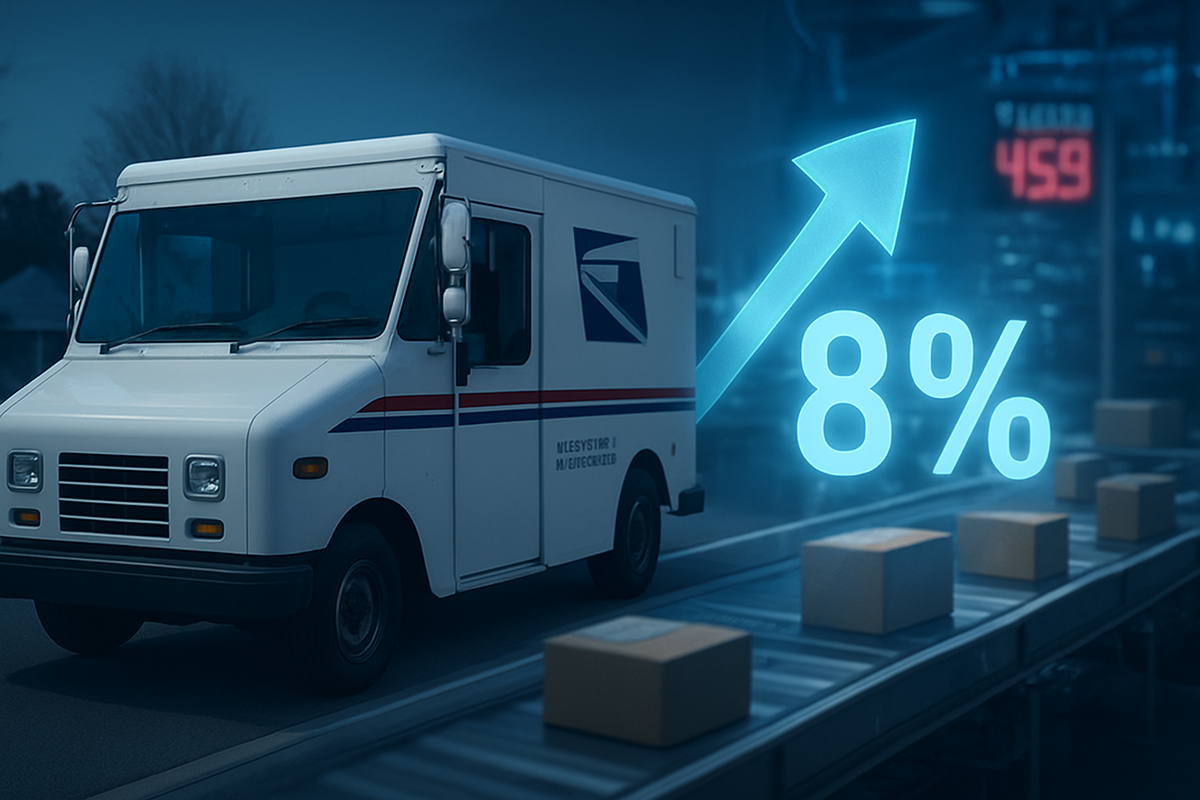
WASHINGTON, D.C. — In a move that signals a paradigm shift for the American logistics landscape, the United States Postal Service (USPS) officially announced a new 8% surcharge on its most popular package services, effective immediately as of March 26, 2026. The surcharge, described by postal officials as a "temporary transportation cost adjustment," is a direct response to a perfect storm of skyrocketing fuel prices and a deepening financial crisis within the agency.
The 8% hike applies to "competitive products," including Priority Mail, Priority Mail Express, and the high-volume USPS Ground Advantage. While the surcharge is scheduled to remain in place through January 2027, its introduction marks the first time the USPS has adopted a dynamic, fuel-indexed pricing model similar to its private-sector rivals. For millions of American consumers and e-commerce businesses, the announcement marks the end of an era of predictable, flat-rate shipping.
A "Bridge" Through the Energy Crisis
The decision to implement the surcharge was driven by a dramatic 40% spike in global crude oil prices during the first quarter of 2026, largely fueled by escalating geopolitical instability in the Middle East. With diesel costs hitting a record $5.36 per gallon, the USPS’s massive delivery fleet—the largest in the world—has seen its operational expenses balloon by billions of dollars in just months. Postmaster General David Steiner, who took the helm in early 2025 following the departure of Louis DeJoy, framed the move as an essential "bridge" to prevent a total cash exhaustion by year-end.
This surcharge is the latest tactical maneuver in the "Delivering for America 2.0" plan, a revised 10-year strategy aimed at stabilizing the agency’s finances. Despite significant modernization efforts, including the deployment of 340 new high-speed sorting machines and a transition to an all-electric delivery fleet for new vehicle purchases, the USPS reported a staggering $9 billion net loss for the 2025 fiscal year. Steiner warned Congress earlier this month that without this 8% "emergency" revenue stream, the agency could face a "cash cliff" by late 2026, potentially jeopardizing its ability to maintain universal service mandates.
Initial industry reaction has been one of resigned frustration. Logistics consultants note that this 8% surcharge comes on top of a 7.8% general rate increase that took effect in January 2026. For high-volume shippers, the cumulative year-over-year cost of moving a standard two-pound package has risen by nearly 16%, forcing many businesses to re-evaluate their carrier contracts and shipping thresholds in real-time.
Winners and Losers: The Shifting E-Commerce Moat
The surcharge creates a complex web of winners and losers across the stock market. Amazon.com, Inc. (NASDAQ: AMZN) appears to be the most resilient player in this new high-cost environment. Shares of Amazon rose 2.2% following the announcement, as investors bet on the company’s "defensive moat." Having spent the last decade building its own end-to-end logistics network, Amazon now handles a majority of its own "last-mile" deliveries, insulating it from the full brunt of USPS rate hikes. Reports suggest Amazon is already planning to slash its remaining USPS volume by two-thirds by the end of 2026 to further mitigate costs.
In contrast, the outlook for FedEx Corporation (NYSE: FDX) and United Parcel Service, Inc. (NYSE: UPS) is more nuanced. While the USPS hike narrows the price gap between the Postal Service and private carriers—making FedEx and UPS’s premium services look more competitive—both companies are grappling with the same fuel and labor inflation. FedEx shares dipped 0.68% as analysts expressed concern that the company might struggle to capture displaced USPS volume without sacrificing its own margins. UPS, which has been strategically reducing its reliance on low-margin Amazon packages to focus on small and medium-sized businesses (SMBs), saw its stock remain relatively stable.
Small businesses and platforms like Shopify Inc. (NYSE: SHOP) and Etsy, Inc. (NASDAQ: ETSY) are likely to feel the sharpest pain. Unlike Amazon, millions of independent merchants lack the scale to build private delivery networks and are heavily dependent on USPS Ground Advantage for affordable shipping. Analysts warn that these sellers will be forced to either absorb the 8% hike—further eroding thin margins—or pass the costs onto consumers, potentially triggering a rise in "cart abandonment" at checkout.
The Commoditization of the Final Mile
The 2026 USPS surcharge fits into a broader industry trend toward the "commoditization of delivery." For decades, the USPS was seen as a public utility with static, regulated pricing. However, the adoption of dynamic surcharges brings the Postal Service in line with the "airline-style" pricing models of the private sector, where the cost of a shipment fluctuates based on fuel indices, seasonal demand, and regional capacity. This shift represents a fundamental change in how the U.S. economy views the "final mile" of the supply chain.
Furthermore, the surcharge is expected to accelerate the rise of "multimodal" logistics and "zone skipping." Large retailers are increasingly using freight trucks to move bulk orders closer to the end consumer before injecting them into the USPS system only for the very last leg of the journey. By bypassing the USPS’s long-haul transportation network, which is now subject to the 8% surcharge, savvy shippers can significantly lower their effective rate.
The move also carries heavy regulatory implications. The Postal Regulatory Commission (PRC) has faced intense pressure from consumer advocacy groups to block the hike, but the agency’s "emergency" financial status has limited the PRC’s oversight authority. As the USPS moves closer to a potential 5-day delivery schedule or the closure of underperforming rural post offices to save cash, the political debate over the "universal service mandate" is expected to reach a boiling point in the 2026 mid-term election cycle.
What Comes Next: Strategic Pivots and Consumer Fatigue
In the short term, consumers should expect to see a swift adjustment in "free shipping" thresholds. Many mid-tier retailers who previously offered free shipping on orders over $50 are expected to raise that limit to $75 or $100 to offset the new 2026 surcharges. We may also see a surge in "Buy Online, Pick Up In-Store" (BOPIS) initiatives as retailers desperately try to avoid the escalating costs of residential delivery altogether.
Long-term, the USPS's survival may depend on whether this surcharge is truly "temporary." If fuel prices remain elevated through 2027, the 8% fee could be rolled into a permanent base rate increase. Investors should watch for a potential "Strategic Pivot" from the USPS toward more lucrative business-to-business (B2B) services or a more aggressive push into the pharmaceutical delivery market, where margins are higher than standard e-commerce parcels.
Market Outlook and Final Thoughts
The March 2026 USPS surcharge is a landmark event that underscores the fragility of the global supply chain in an era of energy volatility. It forces a reckoning for the "free shipping" culture that has dominated the American retail landscape for twenty years. While the USPS struggles to modernize its infrastructure under the weight of historical debt and rising costs, the private sector is rapidly adapting.
Moving forward, the market will be watching two key metrics: the USPS’s quarterly cash flow and the volume of "Parcel Select" shipments from major retailers. If volume drops too precipitously as companies move to internal fleets, the USPS could find that its 8% hike actually accelerates its financial decline by hollowing out its customer base. For investors, the takeaway is clear: in the 2026 logistics market, scale and internal control are the only true hedges against inflation.
This content is intended for informational purposes only and is not financial advice.