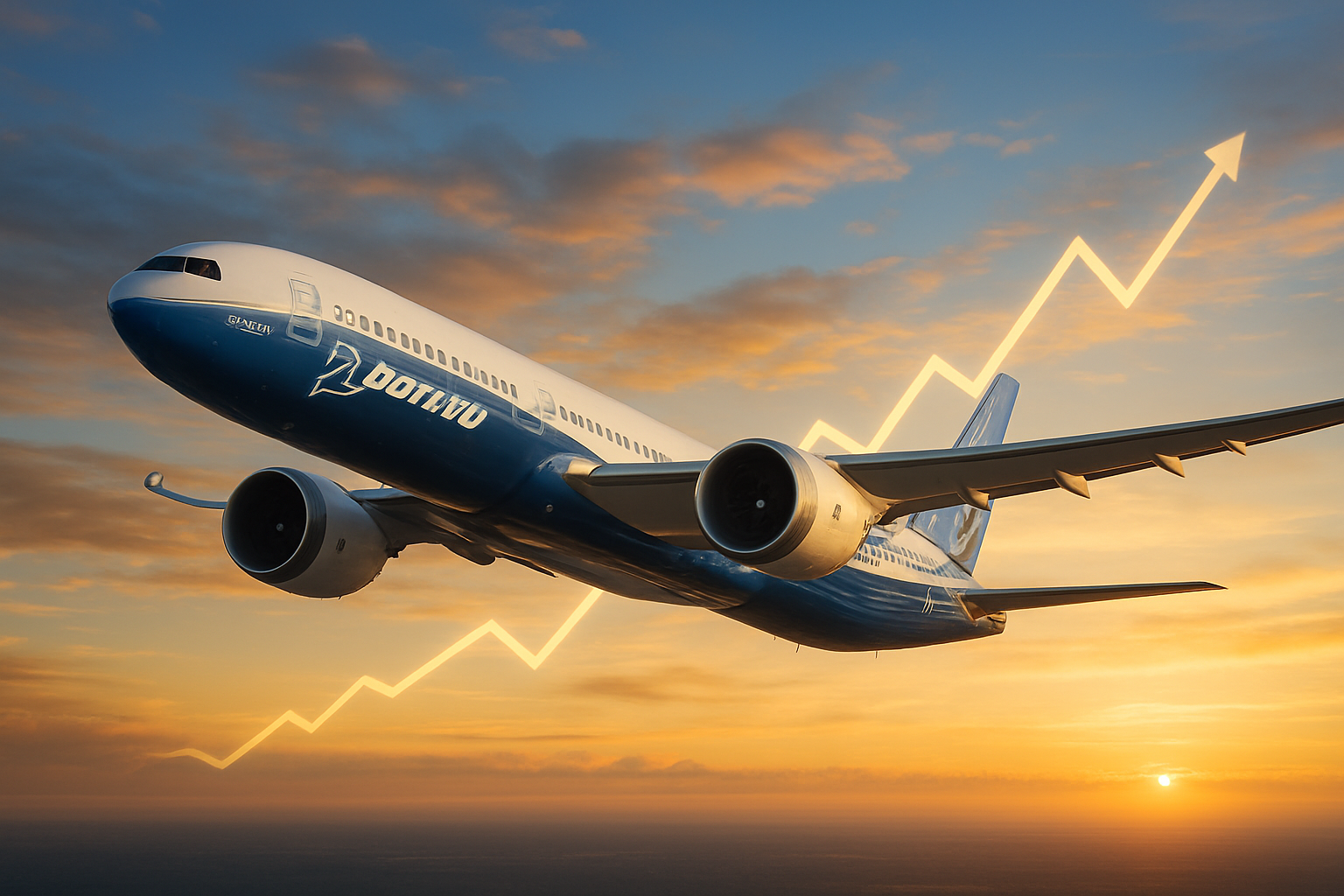
Shares of The Boeing Company (NYSE: BA) surged 2.79% today, March 16, 2026, closing at a multi-month high as the aerospace giant continues to distance itself from years of production hurdles and regulatory scrutiny. The rally was ignited by high-stakes trade negotiations in Paris and a series of robust delivery reports that suggest the company is finally hitting its stride in what analysts have dubbed its "pivot year."
This single-day gain stands out in a broader industrial market that has been grappling with volatility fueled by rising energy costs. While the Dow Jones Industrial Average rose roughly 500 points in a relief rally, Boeing’s performance significantly outpaced the Industrial Select Sector SPDR Fund (NYSEARCA:XLI), signaling that investor confidence is returning to the American planemaker following a string of successful safety audits and production milestones.
A Breakthrough in Paris and a "Buy the Dip" Opportunity
The primary catalyst for today's price action involves high-level U.S.-China trade discussions taking place in Paris. Reports from major financial outlets indicate that Boeing is in the final stages of a massive agreement with Chinese carriers for up to 500 737 MAX aircraft and approximately 100 widebody jets, including the 787 Dreamliner and the upcoming 777X. This potential mega-order is seen as a geopolitical olive branch and a critical financial win for Boeing, which has faced a frozen Chinese market for much of the previous decade.
Today’s rally also serves as a sharp reversal from last week’s minor setback. On March 10, Boeing shares dipped more than 3% following reports of a "machining error" that caused minor scratches on 737 MAX wiring—a technical glitch that the market initially feared might signal deeper systemic issues. However, by this morning, the Federal Aviation Administration (FAA) and Boeing leadership, led by CEO Kelly Ortberg, reassured investors that the issue was isolated and already rectified. The market responded with a decisive "buy the dip" movement, viewing the event as a minor technical gremlin rather than a return to the safety crises of 2024.
Key to the day’s momentum was the release of February delivery data. Boeing reported 51 aircraft deliveries for the month, its highest total since 2018. Crucially, this figure surpassed its European rival Airbus SE (OTC:EADSY), which delivered 35 aircraft in the same period. The data suggests that Boeing’s efforts to stabilize its supply chain are yielding tangible results, allowing it to recapture market share in the narrow-body segment.
Winners and Losers in the Aerospace Resurgence
The clear winner in today's market is Boeing itself, which is now on track to reach positive free cash flow for the first time since 2018, with estimates ranging between $1 billion and $3 billion for the fiscal year 2026. Under the stewardship of CEO Kelly Ortberg and CFO Jay Malave, the company has successfully streamlined its management structure and focused on "quality over quantity," a strategy that is finally paying dividends in the form of higher stock valuations and renewed customer trust.
Major airline customers are also seeing a boost in confidence. Cathay Pacific Airways (OTC:CPCAY) reaffirmed its commitment to the 777X program today, confirming an order for 35 777-9 aircraft. For airlines, Boeing’s ability to meet its production targets means more predictable fleet modernization schedules and lower operational costs from more fuel-efficient engines. Conversely, Airbus SE (OTC:EADSY) faced a more muted day on the markets; while it remains a dominant force, its recent delivery shortfall relative to Boeing has raised questions about its own supply chain constraints in Toulouse.
The ripple effects are being felt throughout the supply chain as well. Spirit AeroSystems (NYSE: SPR), which is in the final stages of a complex re-integration into Boeing, saw its valuation stabilize as the parent company’s stock rose. For years, Spirit was a point of failure for Boeing’s quality control; now, as a fully integrated subsidiary, it is becoming a cornerstone of Boeing’s "quality-first" turnaround. However, engine manufacturers and smaller sub-tier suppliers may face pressure to keep up with Boeing’s ambitious goal of reaching a production rate of 53 aircraft per month by the end of the year.
Geopolitics and the Shifting Industrial Landscape
Boeing’s rally today is a microcosm of a larger shift in the industrial sector. For much of the early 2020s, the aerospace industry was defined by crisis management and regulatory bottlenecking. Today’s news suggests a return to a landscape driven by global trade and technological competition. The potential China deal highlights the degree to which Boeing remains a critical tool of American economic diplomacy, often serving as a barometer for the health of U.S.-China relations.
Historically, Boeing has used large-scale orders during periods of geopolitical tension to stabilize its long-term order book. This precedent is being echoed in the 2026 Paris talks. Furthermore, the 777X program, despite its long history of delays, is beginning to mirror the eventual success of the 787 Dreamliner, which also faced significant early hurdles before becoming an industry standard. The current FAA Type Inspection Authorization (TIA) flight testing for the 777X is progressing without the public friction seen in previous years, suggesting a more collaborative and transparent relationship between the manufacturer and its regulators.
This event also highlights a divergence within the Industrial Select Sector SPDR Fund (NYSEARCA:XLI). While many industrial firms are struggling with the "energy shock" caused by spikes in Brent crude prices (now exceeding $100 per barrel), Boeing’s product—ultra-efficient aircraft—actually becomes more valuable to airlines looking to hedge against high fuel costs. This unique position has allowed Boeing to decouple from the broader sector’s headwinds, at least in the short term.
The Road Ahead: Certification and Scaling Up
Looking forward, the remainder of 2026 will be a gauntlet for Boeing. The company’s primary short-term goal is the final certification of the 737 MAX 7 and MAX 10 variants. The MAX 7 is expected to clear the FAA by mid-year, with the MAX 10 following toward the end of 2026. Success here is non-negotiable if Boeing hopes to fulfill the massive orders currently being negotiated in Paris.
Long-term, the focus remains on the 777X. While official entry-into-service (EIS) is not expected until early 2027, the flight testing scheduled for April 2026 will be the next major technical milestone. Any delays in this program could quickly erode the goodwill Boeing has built up today. Additionally, the company must prove it can hit its production target of 53 aircraft per month without compromising the rigorous safety standards that were re-established following the 2024 audits.
Strategic adaptations are also underway at the board level. The re-integration of Spirit AeroSystems is expected to be fully finalized by the third quarter of 2026, marking the end of Boeing’s experiment with a heavily outsourced manufacturing model. Investors will be watching closely to see if this shift results in the promised reduction in "escaped defects" and a more predictable delivery schedule.
A Year of Redemption?
In summary, Boeing’s 2.79% rise today is more than just a daily fluctuation; it is a signal that the "pivot year" of 2026 is moving in the right direction. The combination of geopolitical tailwinds in China, strong delivery data that outpaces Airbus, and a maturing product line in the 777X has given investors a reason to believe in the company’s long-term recovery.
The market moving forward will be defined by Boeing’s ability to execute on its production promises. While the specter of past safety failures still lingers, the transparency of the current administration and the stabilization of the supply chain suggest that the worst may be in the rearview mirror. For investors, the key metrics to watch in the coming months will be the progress of the MAX 7 certification and any official announcements regarding the rumored 500-jet order from China.
As the industrial sector navigates a world of high energy prices and geopolitical shifts, Boeing’s role as a primary exporter and technological leader is being reaffirmed. If the Paris negotiations bear fruit, today’s rally might just be the beginning of a sustained ascent for the aerospace titan.
This content is intended for informational purposes only and is not financial advice.