
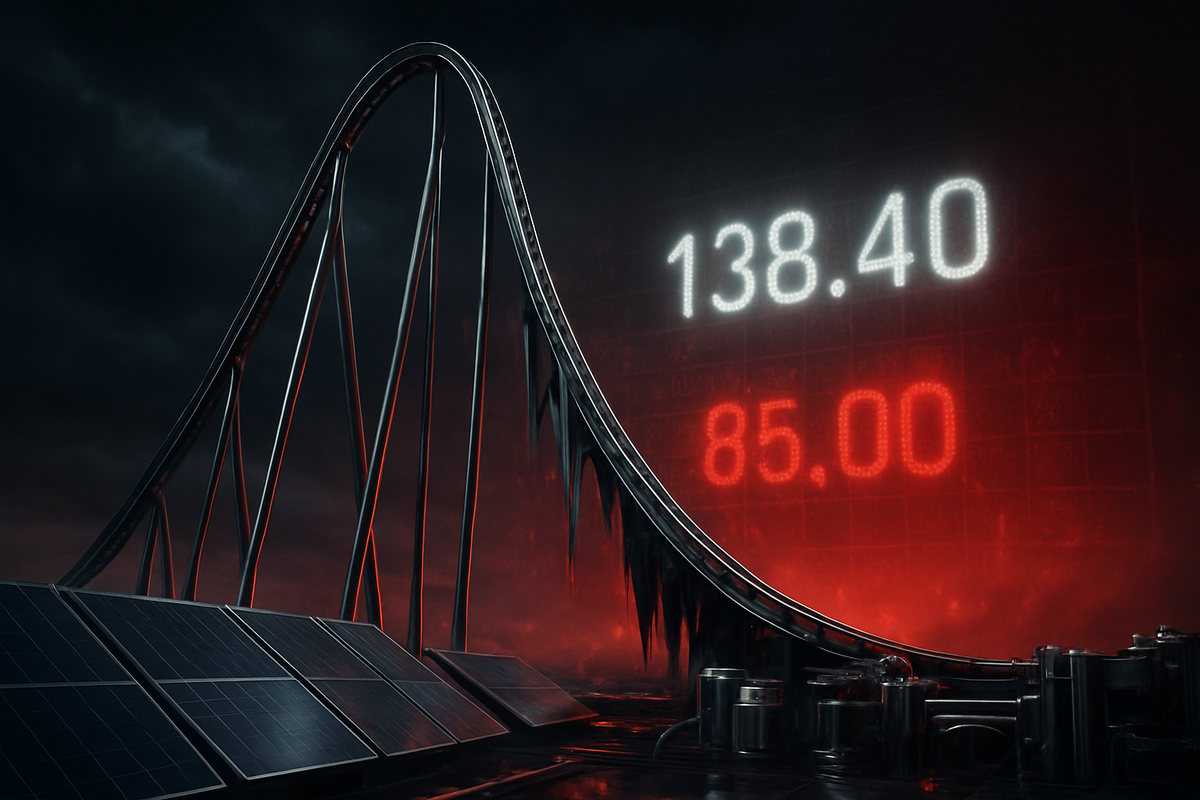
The silver market, often referred to as the “devil’s metal” for its propensity to lure and then devastate investors, lived up to its reputation this month with a sequence of events that will be studied in economic textbooks for decades. In the first three weeks of February 2026, silver prices underwent a parabolic ascent, shattering the psychological $100 barrier and peaking at a breathless $138.40 per ounce. The rally, fueled by a perfect storm of industrial shortages and a global speculative mania, appeared unstoppable until a sudden, hawkish shift from the Federal Reserve sent the metal into a terminal tailspin.
The immediate implications are nothing short of a market-wide liquidation event. On February 19, silver experienced a staggering 38% intraday plunge, the largest single-day percentage drop in the history of the modern futures market. This "Silver Shakedown" has wiped out billions in paper wealth, triggered cascading margin calls across commodity desks, and left the broader precious metals sector in a state of paralysis. As of February 24, 2026, the metal is struggling to find a floor near the $85 mark, leaving investors to wonder if the "irrational optimism" of the winter has permanently broken the back of the decade's biggest bull run.
The Anatomy of a Mania: The Rise and Fall of Silver’s Peak
The month began with a sense of inevitability. Following five consecutive years of structural supply deficits—exacerbated by the massive adoption of N-type solar cells and the silver-intensive AI server boom—the iShares Silver Trust (NYSE: SLV) saw unprecedented inflows. By the second week of February, a "short squeeze" of global proportions was underway. Industrial users, desperate to secure physical metal for 2026 production cycles, began bidding against speculative hedge funds, pushing silver past $120/oz on February 12.
The timeline reached its fever pitch between February 14 and February 18. During this window, social media-driven "silver squeeze" movements combined with legitimate industrial panic, creating a feedback loop that ignored all traditional valuation metrics. By the morning of February 18, spot silver hit an intraday high of nearly $140/oz. However, the optimism was punctured that afternoon when the Federal Reserve, reacting to a hotter-than-expected January CPI report, signaled a surprise 50-basis-point rate hike and a "terminal rate" significantly higher than previous guidance. The "hawkish pivot" was the needle that popped the silver bubble, as the cost of carrying speculative positions skyrocketed and the dollar surged.
Initial market reactions were chaotic. Trading on the COMEX was halted multiple times due to circuit breakers as the bid-ask spread widened to levels not seen since the COVID-19 pandemic. Large-scale institutional players, including major banks that had been caught short during the run-up, reportedly aggressive sold into the decline, accelerating the 40% crash within a six-hour trading window. By the close of business on the 19th, the "White Lightning" rally had effectively vanished, leaving the market in a state of shell-shocked disbelief.
The Winners and Losers: A Bipolar Month for Miners
The volatility of February has created a stark divide between winners and losers in the public markets. Primary silver producers like First Majestic Silver Corp (NYSE: AG) and Pan American Silver Corp (NASDAQ: PAAS) saw their stock prices move in 20% to 30% daily increments. Initially, these companies were the darlings of the market, with AG’s stock price more than doubling in the first half of the month. However, the subsequent crash saw those gains evaporate almost entirely, as investors feared that the parabolic move would lead to a "demand destruction" phase where industrial users look for cheaper alternatives to silver.
Streamers and royalty companies, such as Wheaton Precious Metals (NYSE: WPM), proved slightly more resilient due to their lower-risk business models, but even they were not immune to the contagion. On the losing side, leveraged ETFs and junior explorers like those held in the Amplify Junior Silver Miners ETF (NYSE: SILJ) faced near-extinction events. Many retail traders who utilized 5x or 10x leverage on platforms to "chase the moon" found their accounts liquidated within minutes during the February 19th plunge. Conversely, the Sprott Physical Silver Trust (NYSE: PSLV), which is backed by fully allocated physical metal, saw its premium to Net Asset Value (NAV) soar as investors fled paper contracts in a "flight to physical" during the height of the panic.
Industrial giants in the solar and automotive sectors, such as Tesla (NASDAQ: TSLA) and major PV panel manufacturers, are also reeling. While the price drop provides relief on the input-cost side, the volatility has made it nearly impossible for procurement departments to hedge their silver requirements for the remainder of 2026. The extreme price swing has effectively broken the hedging market, meaning these companies may face unpredictable costs for months to come.
Historical Echoes: The Hunt Brothers and Irrational Optimism
The events of February 2026 bear a haunting resemblance to the infamous Hunt Brothers "Silver Thursday" of 1980. In that era, Nelson Bunker and William Herbert Hunt attempted to corner the market, driving prices from $6 to $50 before a combination of regulatory changes and Fed interest rate hikes crushed the trade. The 2026 event, however, was driven by a more modern blend of "irrational optimism" and legitimate industrial scarcity. Unlike the 1980 event, where the metal was largely being hoarded by individuals, the 2026 surge was underpinned by the real-world demand for the "green energy transition."
However, the "irrational optimism" manifested in the belief that the Federal Reserve would prioritize market stability over inflation control. Investors convinced themselves that the Fed would "blink" in the face of a slowing economy, allowing silver to act as the ultimate debasement hedge. When the Fed chose the hawkish path instead, the speculative premium—the "froth" that took silver from $80 to $140—was surgically removed. This mirrors the "Volcker Shock" of the 1980s, proving once again that the Fed remains the ultimate arbiter of commodity cycles.
The wider significance of this crash lies in the potential for new regulatory oversight. Much like the "Silver Rule 7" of 1980, which restricted trading to liquidation only, there are now whispers in Washington and London about implementing more stringent margin requirements on "strategic metals" like silver. Regulators are concerned that silver's newfound role as a critical industrial component makes it too dangerous to be left to the whims of speculative frenzies that can destabilize global supply chains.
The Road Ahead: Consolidation or Continued Chaos?
As the dust settles, the silver market enters a phase of painful re-evaluation. In the short term, a period of consolidation is the most likely scenario. Having traded between $80 and $140 in a single month, the metal is likely to spend the coming quarters searching for a "fair value" that balances the undeniable industrial deficit with the reality of a higher-interest-rate environment. Strategic pivots are already occurring; many mining companies, such as Hecla Mining Company (NYSE: HL), are expected to use the temporary windfall from the early Feb peak to accelerate exploration, though the capital may be needed to weather the volatility ahead.
Long-term, the case for silver remains fundamentally strong due to its indispensability in the digital and green economies. However, the "easy money" speculative trade has been destroyed. The challenge for the market moving forward will be the restoration of trust in silver as a reliable asset class rather than a "casino" metal. We may see a shift toward more physical-heavy investment vehicles and a move away from the high-leverage COMEX futures that exacerbated this month’s swings.
Market Wrap-Up: Lessons from the Rollercoaster
The February 2026 silver rollercoaster serves as a stark reminder that even the strongest fundamental stories can be derailed by technical overextension and macroeconomic shifts. The key takeaway for investors is that while silver's industrial demand is "sticky," its price is not. The "irrational optimism" that ignored the Federal Reserve's resolve ultimately led to the very liquidation event that the bulls feared most.
Moving forward, the market is likely to remain highly sensitive to Fed rhetoric and inflation data. Investors should keep a close eye on the $80 level for silver; if it holds, the long-term bull market remains intact. If it fails, we could see a return to the pre-2025 trading ranges. For now, the "White Lightning" of February 2026 has left a permanent scar on the market, reminding everyone that in the world of silver, the higher the climb, the more treacherous the fall.
This content is intended for informational purposes only and is not financial advice.