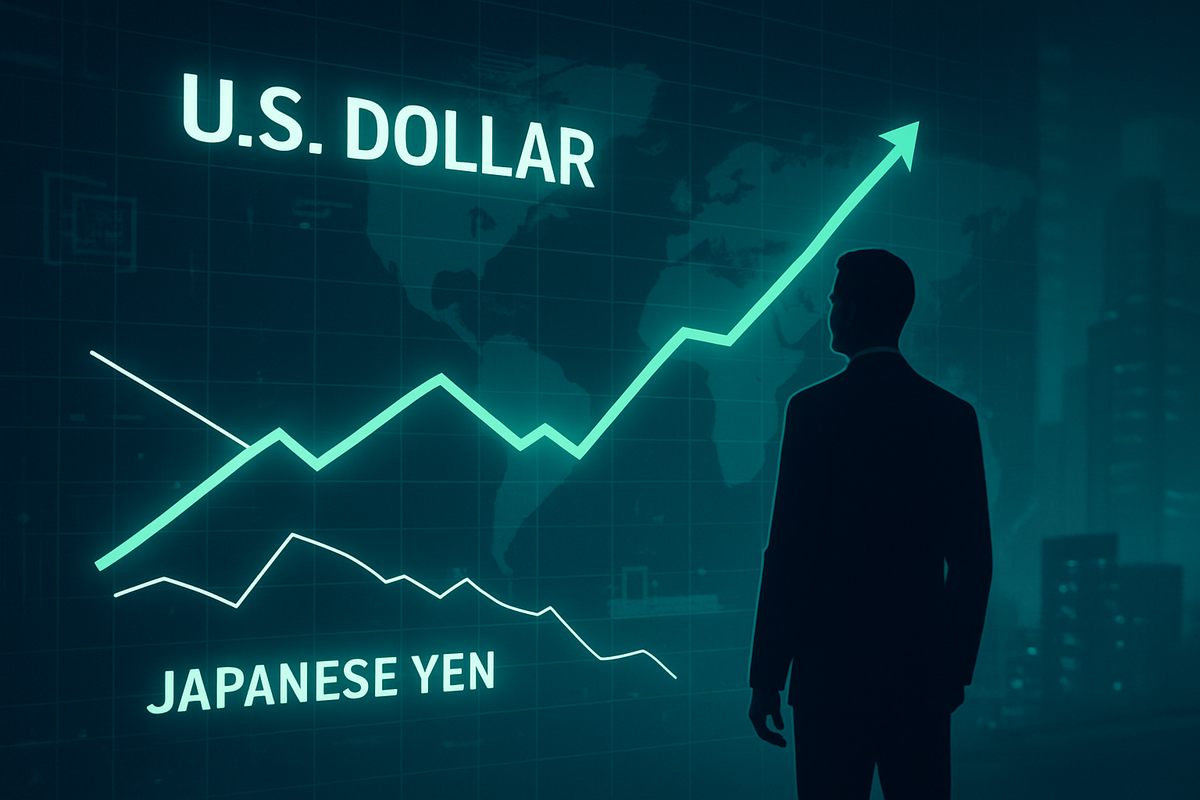
WASHINGTON D.C. — The global currency markets have been sent into a whirlwind this week as the U.S. Dollar staged a powerful recovery against the Japanese Yen. The surge followed definitive comments from U.S. Treasury Secretary Scott Bessent, who effectively shut the door on rumors of a coordinated intervention to prop up the struggling Yen. By reaffirming a "Strong Dollar Policy," Bessent has not only halted a week-long slide in the greenback but has also signaled a significant shift in the administration's economic priorities, favoring domestic price stability over the competitive export advantages often championed by the Oval Office.
The immediate implications are profound. As the USD/JPY pair rebounded from its mid-January lows to hover near the 154 mark, the "Bessent Rebound" has provided a momentary relief valve for an administration grappling with inflationary pressures. However, for U.S.-based multinational corporations, the sudden strengthening of the dollar introduces a familiar but formidable headwind: the erosion of overseas earnings when translated back into a more expensive domestic currency.
The Week of "Rate Checks" and Verbal Volleying
The volatility that culminated in this week's dollar advance began in early January 2026, as the Japanese Yen collapsed to one-year lows, exceeding 158 per dollar. This move prompted an emergency meeting on January 12 between Secretary Bessent and Japanese Finance Minister Satsuki Katayama. Following the meeting, both officials issued a rare joint statement expressing "shared concerns" over the Yen’s "one-sided depreciation." This language, traditionally a precursor to market intervention, sent speculators into a frenzy, driving the Yen back toward the 152 level as traders bet on the first joint U.S.-Japan currency intervention in decades.
The tension reached a boiling point on Friday, January 23, when the Federal Reserve Bank of New York, acting on behalf of the Treasury, conducted "rate checks" on the USD/JPY pair. In the high-stakes world of foreign exchange, a rate check—where central banks call commercial banks to ask for price quotes—is widely considered the final warning before direct dollar-selling begins. However, the narrative shifted abruptly on January 27 when President Trump remarked that he was "comfortable" with a weaker dollar, calling its recent decline "great" for American manufacturing.
Seeking to provide clarity and prevent a disorderly market rout, Secretary Bessent took to the airwaves on January 28. In a high-profile interview, he explicitly stated that the United States was "absolutely not" planning to sell dollars to support the Yen. He reiterated that a strong dollar is a reflection of America’s robust economic fundamentals and his signature "3-3-3" policy framework. The market's response was instantaneous: the Yen tumbled 0.9%, and the Bloomberg Dollar Spot Index erased its weekly losses, cementing the dollar’s dominance as the trading week draws to a close.
Winners and Losers in the Strong Dollar Era
The resurgence of the dollar under Bessent’s guidance creates a stark divide among the titans of the S&P 500. For tech giants like Apple (NASDAQ: AAPL), which just reported record Q1 revenue of $143.8 billion on January 29, the timing is precarious. While the company saw a 9% tailwind from currency depreciation in late 2025, analysts at HSBC now warn that a sustained "Bessent Rebound" could shave 100 to 150 basis points off Apple's revenue growth in the coming quarters. Similarly, Microsoft (NASDAQ: MSFT), already under pressure from massive AI capital expenditures, expects reported GAAP revenue to lag behind "constant-currency" growth by as much as 3% if the dollar continues its current trajectory.
Conversely, the automotive sector is feeling a different kind of pain. The weak Japanese Yen remains a "competitive trap" for Ford (NYSE: F) and General Motors (NYSE: GM). Despite the administration's 15% import tariffs, the devalued Yen has allowed Japanese rivals like Toyota (NYSE: TM) and Honda (NYSE: HMC) to absorb those costs and keep their U.S. vehicle prices aggressive. Ford recently reported a $2 billion hit from combined tariff and supply chain costs, and analysts at J.P. Morgan suggest that a strong dollar only exacerbates this, as Japanese manufacturers effectively receive a currency-driven subsidy on every vehicle they ship to American shores.
The retail landscape presents a more nuanced "double-edged sword." Amazon (NASDAQ: AMZN) faces rising supply chain costs due to new import duties, though a stronger dollar technically makes those imports cheaper. However, the translation of international sales remains a drag. In contrast, Walmart (NYSE: WMT) appears to be weathering the storm more effectively. By leveraging advanced AI and automation to slash shipping costs by 30%, Walmart has built a buffer that allows it to absorb the negative currency translation of its expanding operations in China and India, making it a rare "winner" in a high-dollar environment.
The "3-3-3 Rule" and the Shadow Fed Chair
To understand the wider significance of this week’s events, one must look at Bessent’s broader "3-3-3 Rule"—a policy anchor designed to achieve 3% real GDP growth, a 3% budget deficit, and an increase of 3 million barrels of oil production per day by 2028. Bessent views a strong dollar as a deflationary tool that supports this growth by lowering the cost of energy and consumer goods. This approach is a radical evolution of the historical "Strong Dollar Policy" of the 1990s, but it comes with unprecedented domestic friction.
The event also highlights the intensifying "Shadow Fed Chair" strategy. With Jerome Powell’s term ending in May 2026, Bessent has championed the early nomination of a successor to shift market focus toward a new regime—one more likely to coordinate with the Treasury’s fiscal goals. This has created a "regulatory cliff" as the Treasury and the Fed find themselves at odds over interest rate cuts. While Bessent pushes for lower rates to stimulate housing, he simultaneously maintains a strong dollar policy that usually requires higher rates, creating a policy paradox that global trade partners are watching with trepidation.
Furthermore, the "Bessent Pivot" is straining international relations. While the 1985 Plaza Accord was a cooperative effort to devalue the dollar, the current climate—often dubbed the "Mar-a-Lago Accord" era—uses the threat of tariffs as a "stick" to force allies into currency concessions. This has already triggered a "debasement trade" in China, where the People’s Bank of China has pivoted heavily into gold, which hit a record $5,200 per ounce this month as Beijing seeks to insulate itself from dollar-centric volatility.
Navigating the "Regulatory Cliff" of 2026
What comes next for the markets depends heavily on two looming milestones. The first is the official nomination of the next Federal Reserve Chair. If a "Bessent-aligned" candidate like Rick Rieder or Kevin Warsh is named, the market may brace for a more aggressive attempt to reconcile a strong dollar with lower domestic interest rates. Short-term, investors should expect continued volatility in the USD/JPY pair, as Japanese authorities may still choose to act unilaterally if the Yen slides past the 160 mark, even without U.S. assistance.
The second major hurdle is a pending Supreme Court ruling on the legality of broad-based tariffs under the International Emergency Economic Powers Act (IEEPA). A ruling against the administration could force the Treasury to refund upwards of $60 billion in collected duties. Such an outcome would blow a hole in Bessent’s 3% deficit target and could force a strategic pivot, potentially leading the Treasury to reconsider its stance on dollar strength to boost export-led tax revenues.
The New Currency Reality
In summary, Scott Bessent’s intervention this week has successfully quelled speculation of a coordinated dollar devaluation, but it has also reaffirmed the "Strong Dollar" as a cornerstone of the 2026 economic agenda. For the public, this means a continued fight against inflation at the expense of more expensive American goods abroad. For investors, it signals a period where "constant-currency" metrics will be more important than ever when evaluating the health of multinational giants.
As we move into the spring of 2026, the market will be hyper-focused on the transition at the Federal Reserve and the Treasury’s ability to maintain its "3-3-3" targets amidst global trade tensions. The "Bessent Rebound" has bought the administration time and stability, but the long-term impact on the competitiveness of the U.S. manufacturing base—and the stability of the global currency order—remains the most significant story to watch in the months ahead.
This content is intended for informational purposes only and is not financial advice