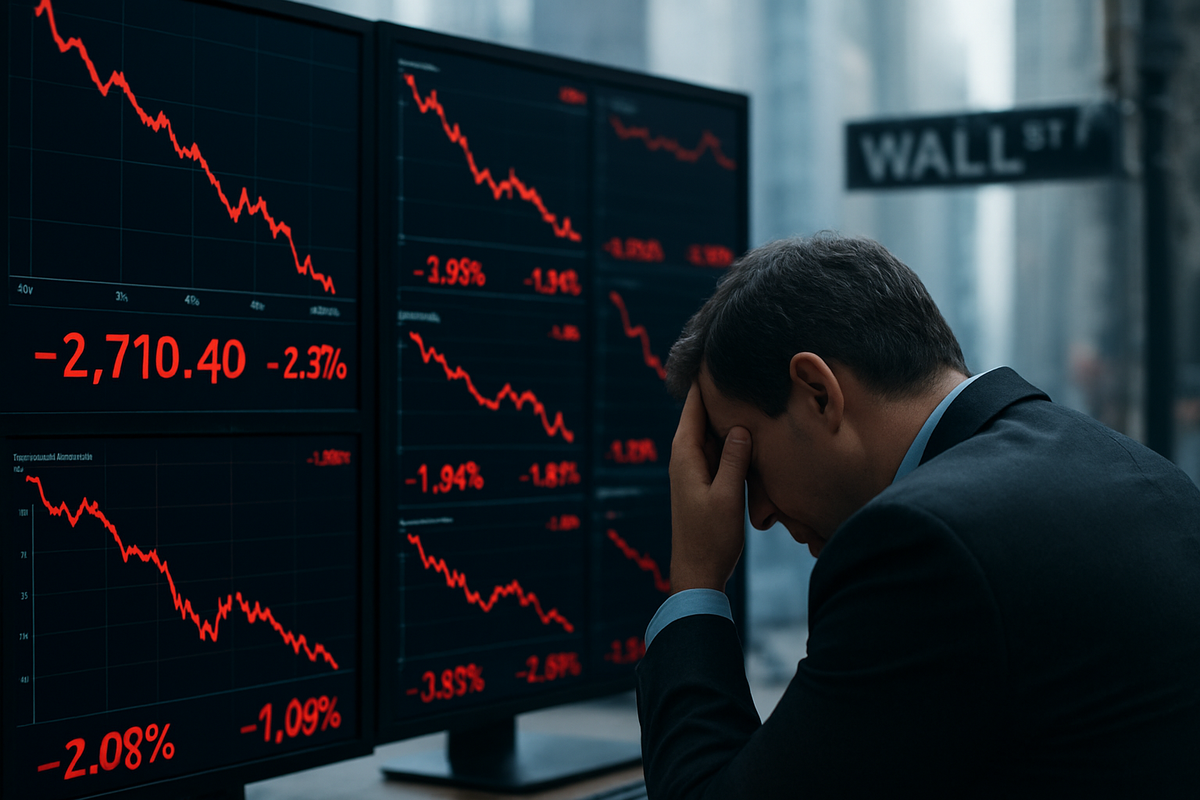
As December 17, 2025, draws to a close, Wall Street finds itself in the throes of a significant market-wide selloff, sending shockwaves across global financial markets. Major U.S. indices—the Dow Jones Industrial Average (DJIA), S&P 500, and Nasdaq Composite—have all experienced sharp declines, erasing substantial gains and triggering widespread investor anxiety. This abrupt downturn, characterized by rapid price depreciation and heightened volatility, signals a pronounced shift in investor sentiment from cautious optimism to a decidedly risk-off posture.
The immediate implications are palpable, with portfolios facing significant erosion and market participants grappling with uncertainty. The selloff is not isolated to a single sector but reflects a broad re-evaluation of asset valuations, fueled by a confluence of macroeconomic concerns and evolving geopolitical landscapes. As fear permeates trading floors, the focus intensifies on identifying the underlying catalysts and assessing the potential for further contagion.
A Torrent of Selling: Unpacking the Market's Descent
The current market selloff, unfolding rapidly, has seen a torrent of selling pressure across virtually all sectors. The Dow Jones Industrial Average (NYSE: ^DJI), a barometer for established blue-chip companies, has registered significant point drops, reflecting broad losses in industrial and other foundational sectors. Similarly, the S&P 500 (NYSE: ^GSPC), which tracks 500 of the largest U.S. publicly traded companies, has experienced substantial percentage declines, indicating a widespread reassessment of corporate valuations and the broader economic outlook. The Nasdaq Composite (NASDAQ: ^IXIC), heavily weighted towards technology and growth companies, has borne the brunt of the downturn, with some of its leading components experiencing more pronounced percentage losses, reminiscent of past tech-led corrections.
While the precise trigger points are still being debated, market analysts point to a perfect storm of factors converging in recent weeks. A series of hawkish statements from central banks globally, hinting at prolonged higher interest rates to combat persistent inflation, has dampened growth expectations. Simultaneously, escalating geopolitical tensions in Eastern Europe and the Middle East have fueled uncertainty, disrupting supply chains and pushing commodity prices higher. Adding to the unease are several recent disappointing earnings reports and cautious forward guidance from bellwether technology companies, suggesting that even high-growth sectors are not immune to the broader economic headwinds. This confluence of events has eroded investor confidence, leading to a scramble for liquidity and a general de-risking across portfolios.
Initial market reactions have been characterized by panic selling and herd behavior, as investors rush to exit positions to mitigate further losses. Trading volumes have surged, indicative of the widespread divestment. The psychological pain of losses is driving many decisions, with a noticeable flight to safety as capital shifts from equities into perceived safer havens such as government bonds and cash. This risk-off sentiment is particularly impacting sectors that thrive on easy credit and robust consumer spending, forcing a re-evaluation of investment strategies and a heightened scrutiny of corporate fundamentals.
Key stakeholders, including institutional investors, hedge funds, and retail traders, are all feeling the pinch. Institutional funds are rebalancing portfolios, often exacerbating the downward pressure as they liquidate large blocks of shares. Retail investors, often more susceptible to emotional decision-making, are grappling with significant paper losses, leading to increased calls to financial advisors and a surge in online discussion about market volatility. The Federal Reserve and other global central banks are closely monitoring the situation, with speculation mounting about potential interventions or adjustments to monetary policy if the selloff threatens broader financial stability.
Navigating the Storm: Companies Brace for Impact
In the wake of the market-wide selloff, a clear divide emerges between companies poised to weather the storm and those likely to face significant headwinds. Defensive sectors, characterized by stable demand for essential goods and services, are expected to show greater resilience. Companies in Consumer Staples like Procter & Gamble (NYSE: PG), which produces everyday necessities such as detergents and personal care items, and Coca-Cola (NYSE: KO) or PepsiCo (NASDAQ: PEP), providing essential beverages, are likely to see continued, albeit potentially flat, demand. Their consistent cash flows and often reliable dividend payouts make them attractive to investors seeking stability amidst volatility. Similarly, Healthcare companies, including pharmaceutical giants and medical device manufacturers, are generally considered defensive, as the demand for medical care persists regardless of economic conditions. While some sub-sectors might face regulatory scrutiny or specific headwinds, the fundamental need for healthcare services offers a degree of insulation. Utilities, such as Exelon Corporation (NASDAQ: EXC), providing electricity and gas, also stand to benefit from their stable, regulated revenue streams and often attractive dividend yields, drawing investors looking for safer havens.
Conversely, cyclical sectors and those heavily reliant on discretionary spending or high growth expectations are facing significant pressure. Consumer Discretionary companies, which sell non-essential goods and services, are particularly vulnerable. Auto manufacturers like Ford (NYSE: F), airlines, hotels, and luxury retailers such as LVMH (EPA: MC) or Hermès (EPA: RMS) would likely see a sharp decline in sales as consumers tighten their belts and postpone non-essential purchases. The Technology sector, especially high-growth and speculative tech companies, is also bearing the brunt of the selloff. Giants like Nvidia (NASDAQ: NVDA), Palantir (NYSE: PLTR), and Advanced Micro Devices (NASDAQ: AMD), which have seen their valuations soar on growth prospects (including the AI boom), are experiencing sharp corrections as investors become more risk-averse and prioritize profitability over speculative growth. A hypothetical December 2025 selloff could lead to a significant re-rating of these companies, with a flight to quality within the tech sector itself.
The Financials sector, encompassing banks, investment firms, and insurance companies, also faces considerable challenges. Rising interest rates, while potentially beneficial for net interest margins in some scenarios, can also lead to increased loan defaults and reduced demand for financial services as economic activity slows. Companies like JPMorgan Chase (NYSE: JPM) or Bank of America (NYSE: BAC) could see their profitability squeezed by a combination of higher credit losses and reduced transaction volumes. Furthermore, Real Estate and Construction companies are highly sensitive to consumer confidence and interest rates, implying a slowdown in new projects and property transactions. Finally, Energy companies, such as ExxonMobil (NYSE: XOM) and Chevron (NYSE: CVX), could face headwinds from declining oil and gas prices as global demand wanes due to economic contraction, impacting their revenues and profitability. The selloff thus creates a stark contrast, rewarding stability and necessity while punishing growth-at-any-cost and discretionary spending.
Beyond the Ticker: Wider Significance and Historical Echoes
The current market-wide selloff around December 2025 transcends mere daily fluctuations; it embodies a significant re-calibration of broader industry trends and economic expectations. This downturn signals a potential shift away from the "growth at all costs" paradigm that has characterized certain sectors, particularly technology and artificial intelligence (AI), towards a renewed emphasis on profitability, sustainable business models, and robust fundamentals. Concerns about overvalued sectors, especially those driven by speculative AI investments, are coming to a head, potentially intensifying a "K-shaped" economic slowdown where certain segments continue to thrive while others face severe contraction. This also highlights a potential structural issue where passive investment, heavily weighted towards large-cap equities, could disproportionately affect smaller-cap stocks, leading to broader underperformance in that segment.
The ripple effects of such a selloff are extensive, impacting the entire ecosystem of competitors and partners. Smaller companies and startups, particularly those in high-growth, cash-burning sectors, will face significantly tighter access to capital. Venture capital funding will likely become more discerning, prioritizing clearer paths to monetization over speculative ventures, potentially leading to industry consolidation as stronger players acquire struggling competitors. For established competitors with diversified portfolios and strong balance sheets, this period could present opportunities to gain market share or make strategic acquisitions. Supply chains, already strained by geopolitical tensions, could face further disruption as reduced consumer demand impacts revenue for companies across various industries. International partners, especially those with strong export ties to major economies, may also experience headwinds from diminished purchasing power.
From a regulatory and policy standpoint, a sustained market downturn will undoubtedly draw intense scrutiny. Central banks, like the Federal Reserve, which have been engaged in interest rate adjustments (hypothetically, rate cuts around late 2025 to support growth), might face pressure for further "risk management cuts" or other liquidity measures to stabilize markets and restore confidence. Governments could also consider fiscal stimulus packages to bolster economic activity, potentially leading to increased public deficits. Historically, major market crashes have often led to significant legislative reforms aimed at preventing future crises, such as the creation of the SEC after the 1929 crash. A 2025 selloff could reignite discussions on market transparency, investor protection, and the regulation of new asset classes or complex financial products, particularly in areas where excessive leverage or concentrated market power might have contributed to the volatility.
Historical precedents offer sobering, yet instructive, comparisons. The Wall Street Crash of 1929, leading to the Great Depression, underscored the dangers of excessive speculation and a lack of regulatory oversight. Black Monday in 1987, the Dot-Com Bubble burst in 2000-2002, and the Global Financial Crisis of 2008 all highlight recurring patterns of investor psychology—greed, fear, and herd behavior—that can exacerbate market movements. While the triggers vary, from housing bubbles to speculative tech valuations, the behavioral responses often remain consistent. Even the rapid, albeit brief, COVID-19 crash of 2020 demonstrated how quickly markets can decline in the face of uncertainty, and how unprecedented fiscal and monetary responses can lead to a swift recovery. These historical events remind us that while downturns are painful, they are also a cyclical part of market dynamics, often clearing the way for new opportunities and more sustainable growth in the long term.
The Path Forward: Navigating Uncertainty and Emerging Opportunities
In the immediate aftermath of a significant market-wide selloff, the path forward is often characterized by a delicate balance of uncertainty and emerging opportunities. In the short term, markets will likely remain highly volatile, with investor sentiment oscillating between fear and tentative hope. Continued price declines are possible as panic selling and risk aversion persist, especially if new negative catalysts emerge, such as further disappointing corporate earnings or escalating geopolitical tensions. Short-term traders face a challenging environment, demanding extreme caution and agility. However, history also demonstrates that some event-driven downturns can be followed by swift recoveries, making precise market timing exceedingly difficult.
Looking further ahead, the long-term outlook for markets, while initially clouded, typically points towards resilience. Historical data consistently shows that stock markets eventually recover from major selloffs, often reaching new highs over several years. The average bear market typically lasts around 13 months, with subsequent bull markets extending for approximately five years. For long-term investors, this underscores the importance of maintaining a disciplined approach, avoiding impulsive decisions driven by fear, and focusing on their overarching financial goals. The current downturn, while painful, could ultimately be viewed as a temporary disruption in the broader trajectory of economic and market growth.
Strategic pivots and adaptations will be crucial for both investors and businesses. Investors are advised to resist panic selling, which locks in losses and risks missing the inevitable rebound. Diversification across asset classes and sectors remains paramount, as does dollar-cost averaging—a strategy of consistent, regular investments regardless of market fluctuations, which allows investors to acquire more shares when prices are low. For those with available capital and a long-term horizon, a selloff presents a significant buying opportunity, allowing them to acquire quality assets at reduced valuations. Shifting a portion of the portfolio into perceived safe havens like U.S. Treasury securities or hard assets can also provide a buffer against further volatility. Businesses, meanwhile, must embrace flexibility, optimize expenses, and diversify revenue streams. Leveraging technology and digital marketing will be key to maintaining customer engagement and expanding reach, especially in a tightening economic environment.
The current market challenges also unveil significant opportunities. The selloff is creating a landscape of undervalued assets, allowing discerning investors to acquire high-quality stocks and bonds at attractive prices. This period can be an ideal time for long-term growth-oriented investments. Furthermore, a renewed focus on fundamental strength and profitability over speculative growth could lead to a healthy sector rotation, favoring defensive sectors like utilities, healthcare, and consumer staples, which tend to be more stable during downturns. Innovation may also accelerate as companies are forced to adapt, leading to new products, services, and business models. However, significant challenges persist, including the risk of a broader economic recession, potential liquidity issues for businesses, and the inherent difficulty in accurately timing the market's bottom. The psychological impact of fear and anxiety can also lead to irrational decision-making, exacerbating losses for those who succumb to panic.
Potential scenarios for the hypothetical selloff around December 2025 vary. An "event-driven" scenario, where a sudden, isolated shock triggers the downturn, could lead to a rapid decline followed by a swift recovery, similar to the COVID-19 crash. Alternatively, a "cyclical/macroeconomic" scenario, driven by persistent inflation or rising interest rates, might result in a more gradual decline and a prolonged recovery. While a "structural" bear market, characterized by deep imbalances and a severe financial crisis, seems less likely given the generally healthy balance sheets of the corporate sector and well-capitalized banks, it remains a tail risk. A more optimistic scenario could see a recovery fueled by productivity gains from AI and successful monetization strategies, while a pessimistic one involves escalating geopolitical conflicts or a deeper slowdown. Ultimately, the market's ability to adapt, supported by strategic monetary policy shifts and evolving investor behavior, will dictate the trajectory ahead.
The Road Ahead: Key Takeaways and Investor Vigilance
The market-wide selloff that gripped Wall Street as December 2025 concluded serves as a potent reminder of the inherent volatility and cyclical nature of financial markets. The key takeaway from this turbulent period is the swift and widespread repricing of assets, driven by a convergence of macroeconomic anxieties—including persistent inflation, central bank policy shifts, and geopolitical instability—and a re-evaluation of high-growth, often speculative, valuations. Immediate repercussions included widespread panic selling, heightened volatility across major indices, and a pronounced shift to a "risk-off" investment posture. This event underscored that no sector is entirely immune, though defensive industries proved more resilient than their cyclical or growth-oriented counterparts.
Moving forward, the market's trajectory will be closely tied to the resolution of the underlying catalysts and the effectiveness of policy responses. Historically, financial markets have demonstrated a remarkable capacity for recovery, with downturns often paving the way for subsequent periods of growth. The recovery could manifest as a rapid "V-shaped" rebound if the core issues are quickly resolved, or a more prolonged "L-shaped" recovery if economic headwinds persist. While a recession may not be an immediate certainty, the lingering uncertainty could prompt consumers and businesses to curtail spending, potentially slowing overall economic activity. Central bank and government actions, particularly regarding monetary policy adjustments and potential fiscal stimuli, will be critical in shaping the market's path.
The significance of this selloff extends beyond immediate financial losses, potentially leaving a lasting impact on investor behavior and market structure. Major downturns can lead to "economic scarring," affecting private investment and the adoption of new technologies for years to come. Investor confidence, once shaken, often leads to a more cautious approach to risk, emphasizing prudence and diversification. Policymakers may also be prompted to re-examine regulatory frameworks, particularly concerning market transparency and investor protection, to enhance resilience against future shocks. This event will likely reinforce the importance of fundamental analysis over speculative fervor and could reshape capital allocation decisions for the foreseeable future, potentially favoring sectors with tangible earnings and sustainable business models.
For investors navigating the coming months, vigilance and a disciplined approach will be paramount. Key indicators to watch include inflation reports (CPI, PPI, PCE) for signs of easing price pressures, Federal Reserve announcements regarding interest rates and monetary policy, and U.S. Jobs Reports for insights into labor market health. Gross Domestic Product (GDP) figures will provide the broadest measure of economic activity, while corporate earnings reports will signal the resilience of individual companies. Additionally, Purchasing Manager Indexes (PMI), housing market data, and retail sales will offer granular views of economic sentiment and consumer behavior. The Volatility Index (VIX), often called the "fear index," will serve as a barometer of market anxiety. Finally, geopolitical developments remain a wildcard, with the potential to trigger rapid shifts in market sentiment. While the path ahead may be uncertain, maintaining a long-term perspective, avoiding panic, and ensuring a well-diversified portfolio remain the most prudent strategies for weathering the storm and capitalizing on eventual recovery.
This content is intended for informational purposes only and is not financial advice