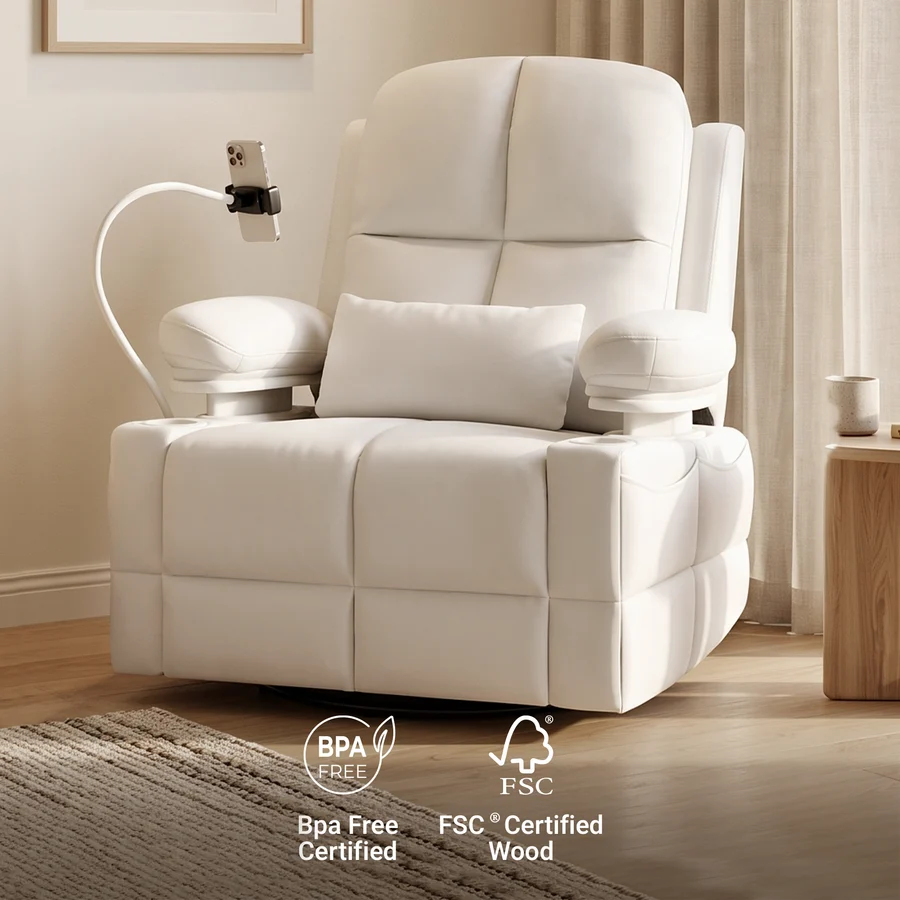
The way a parent sits during feeding, soothing, or reading can influence how comfortable those everyday moments feel. Some parents prefer to remain upright so they can hold their baby close and adjust their position easily. Others appreciate being able to lean back after a feed or change their posture during a longer period of sitting. The most suitable chair depends on these habits, along with the parent's body, the baby's needs, and the space available in the nursery Mamazing nursery seating can be compared by testing how gliding, reclining, and stationary positions fit the caregiver’s routine..
When comparing a nursing chair recliner, it helps to look beyond the label and consider how the chair actually moves. A gliding motion, a reclining backrest, and a swivelling base each offer a different experience. Although these functions can appear together in one chair, they serve different purposes and should be evaluated separately before making a decision.
Start With the Difference Between Gliding and Reclining
Gliding and reclining are often discussed together because both can make a chair feel more adaptable. However, they change the sitting experience in different ways. A glider moves gently back and forth, while a recliner changes the angle of the backrest and may provide an extended footrest, depending on the design.
A gliding movement may suit parents who like a gentle, repetitive motion while soothing a baby. It allows the chair to move without requiring the adult to repeatedly push against the floor. The usefulness of this movement depends on its smoothness, the available space, and whether the parent enjoys the sensation.
Reclining is more about changing the body's angle. An upright position may be convenient for feeding or holding a baby close, while a more relaxed position can be useful during a break when the baby is safely settled elsewhere or when an adult is relaxing without holding the child. These are different needs, so the presence of one function should not be treated as a substitute for the other.
Why the Movement Should Match the Activity
A parent who spends most of a feeding session upright may not need a chair that reclines extensively. Someone who also uses the seat for quiet relaxation may value a backrest that adjusts to several positions. Likewise, a gliding motion may be welcome for soothing but less important to a person who prefers a stationary seat.
It is useful to imagine specific daily activities before comparing models. Think about feeding, burping, standing up with the baby, reading a story, and relaxing after the baby has been placed safely in a cot. Considering these situations gives each feature a practical purpose instead of making the decision depend on a long list of specifications.
Upright Sitting and the Demands of Feeding
An upright position can make it easier for a parent to remain attentive to the baby and adjust their hold during feeding. The adult should be able to keep their back supported, relax their shoulders, and bring the baby close without leaning forward excessively. A chair that encourages awkward reaching can make a routine feel tiring even if its cushioning initially feels soft.
Seat height plays a role here. If the seat is too high, a shorter parent may struggle to place both feet comfortably on the floor. If it is too low, standing up may require more effort. Seat depth also affects how easily the adult can sit back while maintaining a comfortable position for their legs.
Armrests are equally important. Their height should allow the parent to support their arms without lifting their shoulders. The distance between them should provide enough room to hold the baby comfortably without forcing the elbows outward. A feeding pillow may help some parents, but it should complement a suitable seating position rather than compensate for a chair that does not fit.
When a Reclined Position Becomes Useful
Feeding is not the only activity that happens in a nursery chair. Parents may use the seat to soothe a child after feeding, sit quietly during a bedtime routine, or take a break between caregiving tasks. Being able to adjust the backrest can provide an alternative to remaining upright for every activity.
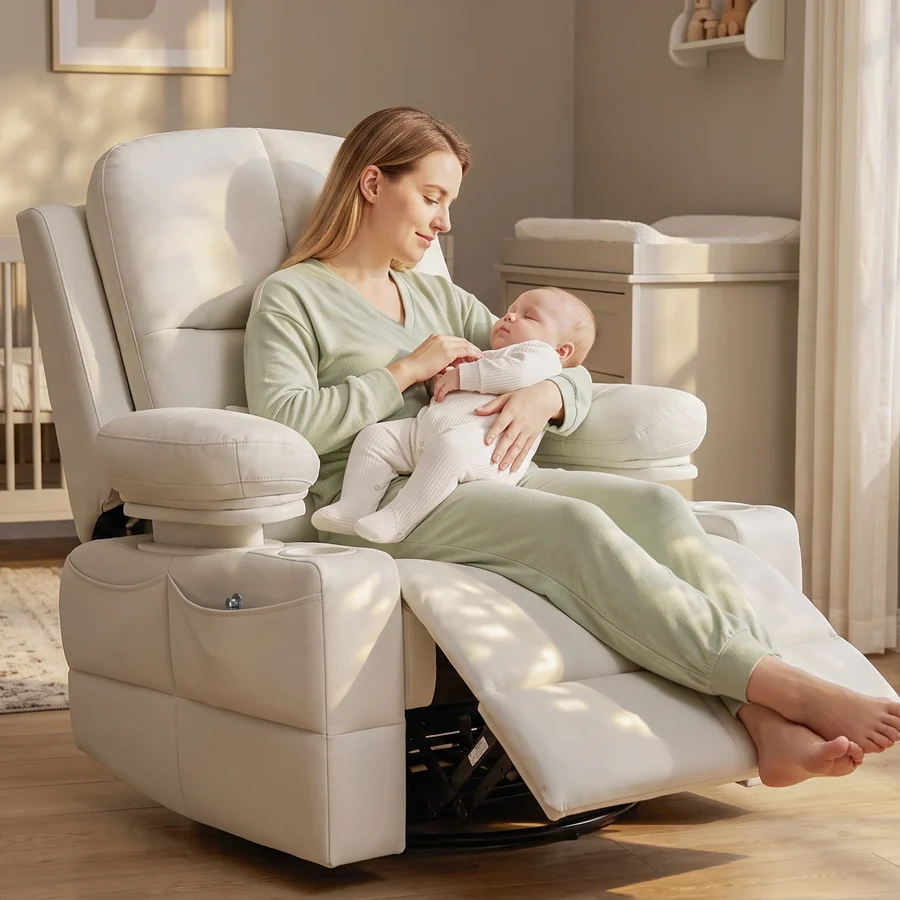
The important question is whether the reclined position feels controlled and comfortable. The backrest should move according to the chair's design, and the adult should have enough room to use it without striking a wall or nearby furniture. If a footrest extends outward, the additional depth needs to be included when planning the layout.
A reclined posture is not always the best choice for every task. During feeding, parents may prefer a more upright position that helps them remain attentive and hold the baby close. A more relaxed angle may suit a different part of the day, but it should never encourage an adult to fall asleep while holding an infant. If drowsiness develops, the baby should be placed in a separate, safe sleep space.
How the Lullapod Nursery Recliner Fits Into the Comparison
The Lullapod Nursery Recliner with Adjustable Swivel Lift-Up Armrests is worth considering for parents who want several ways to position themselves in a nursery chair. Its adjustable armrests, reclining backrest, and swivel function offer different kinds of flexibility. These functions should be assessed in relation to the parent's preferred sitting position and the space in which the chair will be used.
For feeding, the armrests may be especially relevant because they can help parents find a more comfortable place for their arms. The reclining function allows a change in backrest angle, while the swivel feature can help the user turn toward another part of the room. Parents should check the product details and dimensions to confirm how these features operate and how much clearance the chair requires.
No single feature guarantees a comfortable fit. The chair's seat dimensions, overall size, and ease of use still matter. Before choosing it, consider whether the chair allows the main caregivers to sit naturally, reach nearby essentials, and get up without unnecessary effort.
What to Consider in a Nursery Glider Recliner
A nursery glider recliner may appeal to parents who want the combination of gentle movement and an adjustable sitting position. However, the term can describe different configurations, so it is important to confirm which functions a particular model actually includes. Not every chair labelled a glider has the same reclining range, and not every recliner provides a gliding motion.
Start by checking the movement itself. A gliding chair should move smoothly and feel controlled rather than loose or uneven. The motion should suit the parent's preferences and remain practical within the room. If the chair also reclines, review how the two functions interact and whether the chair needs additional clearance when adjusted.
Consider the noise level if the chair will be used during naps or overnight routines. Mechanical movement can vary between designs, and a product description may not provide enough detail to judge how quiet a chair will be in practice. Where possible, testing the movement can be more informative than relying on appearance alone.
Swivelling Is a Separate Feature With Its Own Benefits
A swivel function allows the chair to turn from side to side. This can be useful when a nursery has a nearby table, storage unit, or reading corner and the adult wants to change direction without dragging the chair across the floor. It may also help a caregiver turn toward another person in the room.
However, swivelling does not automatically make a chair more comfortable. Its value depends on the layout and the way the family uses the space. In a small room, the chair needs enough clearance to turn without bumping into a cot, wardrobe, or table. Parents should measure the available area and check the product's movement requirements before buying.
The base should also feel stable during normal use. Follow the manufacturer's instructions for operating the chair, and keep children's hands and feet away from moving mechanisms. The combination of reclining, gliding, or swivelling features should make daily use more convenient without introducing avoidable obstacles.
Compare Comfort Across More Than One Position
A chair can feel comfortable when upright but less suitable after the backrest is adjusted. This is why it helps to assess several positions instead of judging a model from a single sitting test. If possible, sit upright, lean back, rest your arms naturally, and check how easily you can return to a standing position.
Pay attention to the support provided by the backrest and the relationship between the seat and armrests. Your shoulders should not be forced upward, and the seat should not make it difficult to keep your back supported. Taller and shorter users may experience the same chair differently, so a shared household should consider the needs of its main caregivers.
If an in-person trial is not available, compare the seat height, depth, width, and overall dimensions with a chair you already find comfortable. Read the operating instructions and care information as well. These details provide a more useful basis for comparison than the number of advertised features alone.
Plan the Chair Around the Nursery Layout
The space available can determine whether a glider, recliner, or combined design is practical. Measure the chair's upright footprint, then check the extra room required for reclining, gliding, or swivelling. A chair that fits neatly against a wall in its resting position may need to sit farther away to operate correctly.
Nearby furniture should be included in the measurements. A side table may be easy to reach when the chair is upright but become an obstacle when a footrest extends. Curtains, drawers, doors, and the main walking path also need enough clearance. Leaving room to carry a baby through the nursery is more important than filling every available corner with furniture.
Consider how the room may change over time. A nursery may eventually need more floor space for books, toys, and play. A chair that can be moved to a bedroom or reading corner may remain useful after feeding routines become less frequent, provided it fits comfortably in the new location.
Make the Final Choice Around Your Routine
Choosing between a glider and a recliner is easier when the decision begins with everyday habits. Parents who value gentle movement may place more importance on a smooth gliding action. Those who want to adjust their sitting angle may focus on the reclining mechanism, while families who need to turn toward different areas of the room may appreciate a swivel base.
Some chairs combine several functions, but more movement options are not automatically better. Each function should have a clear purpose, and the chair must remain comfortable in the positions that matter most to the family. Upholstery care, stability, ease of operation, and the available floor space also deserve attention.
Ultimately, the best chair is one that supports the way parents actually sit and care for their baby. By comparing upright comfort, arm support, movement, reclining clearance, and the needs of the room, families can make a more informed choice. The goal is not to select the chair with the longest feature list, but to find a practical seat that remains comfortable throughout feeding, soothing, and the many quieter moments of family life.