APIPod restructures API cost accounting by consolidating heterogeneous model billing into a predictable usage-based clearinghouse for digital media operations. Across corporate media divisions, marketing agencies, and software enterprises, generative artificial intelligence has moved from experimental skunkworks into core production pipelines. Yet as consumption scales, financial controllers and cloud architects encounter severe margin compression driven by fragmented vendor invoicing, minimum monthly seat commitments, and opaque billing increments.
Modern enterprise financial governance requires absolute transparency into computing unit economics. When engineering teams deploy generative video capabilities across multiple internal applications, decentralized provider subscriptions obscure actual gross margins. Bringing discipline to synthetic media expenses demands transitioning away from siloed provider contracts toward consolidated clearing gateways that align cloud expenditures directly with successful commercial outputs.
The Compounding Financial Drag Of Fragmented Generative Subscriptions
Enterprise procurement departments typically manage software vendors through predictable annual contracts or established seat licenses. Foundation model developers, however, operate on divergent commercial models that combine monthly tier subscriptions, prepaid token pools, and variable consumption surcharges. When distinct internal teams independently subscribe to specialized model laboratories, organizations face compounding administrative overhead and uncoordinated capital commitments.
By aggregating heterogeneous inference traffic through APIPod, financial managers gain granular visibility into department-level token burn rates. Rather than distributing corporate credit cards across seven different research portals, procurement consolidates billing into a centralized accounting stream. This eliminates the widespread phenomenon of orphaned credit balances, where projects conclude with thousands of dollars in prepaid non-refundable tokens trapped in unused vendor consoles.
Furthermore, managing disparate developer tier accounts forces accounting departments to reconcile multiple currencies, varying value-added tax rules, and incompatible billing cycles at the close of every financial quarter. Corporate finance teams frequently spend days untangling credit expirations and minimum platform fees that provide zero tangible business value to ongoing creative initiatives.
Quantifying The Operational Cost Of Unmanaged Network Timeouts
Asynchronous generative workloads introduce unique financial risks that do not exist within standard database or microservice computing. Video generation requires intense GPU cluster orchestration, where inference jobs frequently require several minutes to complete. Standard enterprise cloud gateways enforce sixty-second or ninety-second connection limits, causing transient network timeouts while upstream GPUs continue processing.
During a quarterly FinOps cost audit on our review desk, an automated ingestion script triggered by unhandled timeout exceptions resubmitted forty-two consecutive rendering payloads. The redundant requests generated duplicate media files that bloated cloud object storage while burning six hundred and twenty dollars in non-recoverable compute tokens before automated budget alerts halted the pipeline. Establishing gateway-level idempotency ensures that duplicate payloads replay existing task identifiers, stopping accidental financial drain before network retries compound.
Without strict transaction deduplication, microservices encountering momentary network blips will naturally attempt repeated submissions. In high-concurrency enterprise applications, these uncoordinated client retries can quickly overwhelm downstream billing ledgers, turning brief cloud hiccups into severe operational budget overruns.
Establishing Predictable Unit Cost Metrics For Media Generation
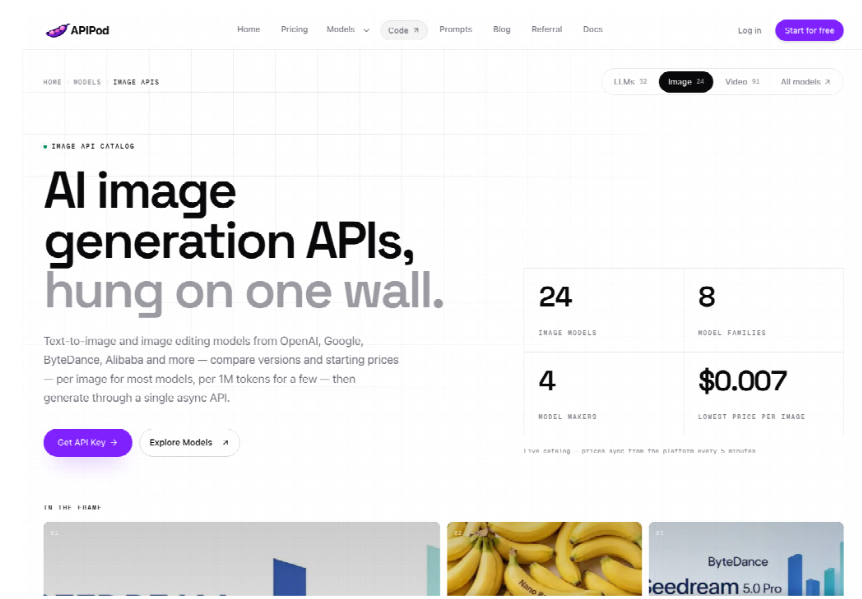
Enterprise media pipelines leveraging Seedance API achieve predictable per-minute generation unit costs, preventing unexpected compute overruns across high-volume rendering cycles. Accurately modeling customer acquisition costs and gross profit margins requires technology leaders to establish fixed unit economics for every synthesized second of digital media.
Adopting APIPod eliminates prepaid balance sprawl by deducting expenses strictly upon successful generation output. When billing is pegged to verifiable completed transactions rather than speculative prepaid quotas, financial officers can confidently forecast production expenditures as marketing or product delivery volumes fluctuate throughout the fiscal year.
Analyzing Fixed Seat Licenses Versus Pure Usage Metering
Evaluating commercial billing structures reveals substantial efficiency discrepancies across enterprise scale operations. The table below illustrates structural differences between legacy direct vendor commitments and unified gateway clearing models across typical enterprise operating parameters:
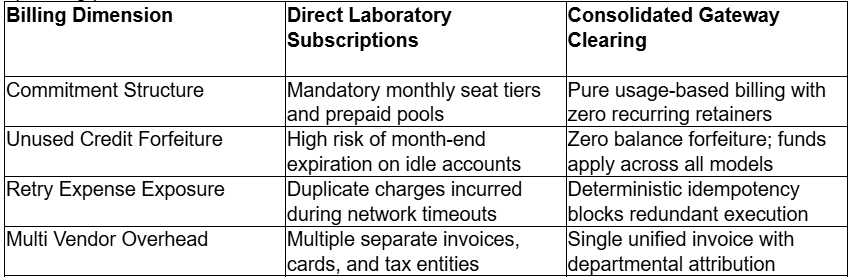
Transitioning from uncoordinated direct contracts to consolidated settlement models allows organizations to eliminate idle subscription waste while giving creative departments unrestricted access to optimal foundation models.
When engineering leads can review real-time unit costs down to fractions of a cent per frame, architectural decisions regarding resolution thresholds and duration limits become data-driven trade-offs rather than speculative financial guesses.
Structuring Multi Channel Redundancy To Protect Enterprise Revenue Deliverables
Operational resilience directly impacts financial performance. When client-facing revenue workflows depend on third-party generative endpoints, an upstream service outage translates immediately into SLA breaches, customer churn, and missed commercial delivery deadlines. Direct vendor integrations leave enterprise applications entirely exposed to regional compute shortages and unexpected scheduled downtime.
Standardizing on APIPod allows procurement teams to renegotiate bulk commitments while developers access leading generative tools. Intelligent routing middleware monitors channel health continuously, diverting pending inference traffic away from degraded upstream nodes to healthy secondary channels within milliseconds. Automated circuit breakers temporarily isolate unstable clusters, maintaining uninterrupted application availability and safeguarding mission-critical revenue commitments.
Furthermore, automated multi-channel routing eliminates manual developer intervention during provider outages. Engineering teams avoid midnight emergency rotations to update hardcoded API credentials or rewrite payload schemas, protecting developer productivity and lowering ongoing platform maintenance overhead.
Implementing Governance Frameworks For Scalable Media Generation Infrastructure
Sustained financial control requires robust administrative governance layered on top of core technical infrastructure. Financial controllers cannot rely on end-of-month accounting reconciliations to discover unauthorized spending spikes or inefficient compute consumption patterns.

Implementing APIPod establishes immutable audit trails for every API call, streamlining enterprise regulatory and financial compliance. Centralized metadata tracking records request timestamps, prompt hashes, duration parameters, user identifiers, and terminal execution codes for every transaction. Internal risk officers can easily audit corporate media generation activities, ensuring adherence to data privacy standards and internal AI safety guidelines without degrading developer velocity.
Modern FinOps frameworks also empower department leaders to configure dynamic spending caps and rate throttles across individual project keys. When an experimental research project approaches its allocated monthly envelope, the gateway rejects supplementary non-critical requests while preserving compute availability for revenue-generating client services, preventing runaway compute overruns before invoices finalize.
In addition, establishing centralized cost tagging across development, staging, and production environments enables automated chargeback accounting. Cross-functional teams receive transparent monthly reporting detailing exact expenditure breakdown by business initiative, transforming abstract AI compute lines into actionable commercial insights.
Strategic Recommendations For Modern Corporate Cloud Financial Leadership
As generative media workflows mature into standard enterprise infrastructure components, executive leadership must treat AI compute expenditure with the same analytical rigor applied to enterprise cloud computing. Allowing fragmented subscription models to proliferate across business units creates compounding technical debt and erodes operational margins.
Corporate financial officers and engineering leaders should collaborate to establish centralized generative gateways that enforce strict unit cost accounting, server-side idempotency, and automated multi-channel failover. By anchoring media generation to transparent consumption metrics, enterprises insulate balance sheets from volatile vendor pricing shifts while maintaining the agility needed to adopt breakthrough foundation models as they enter the global commercial marketplace.