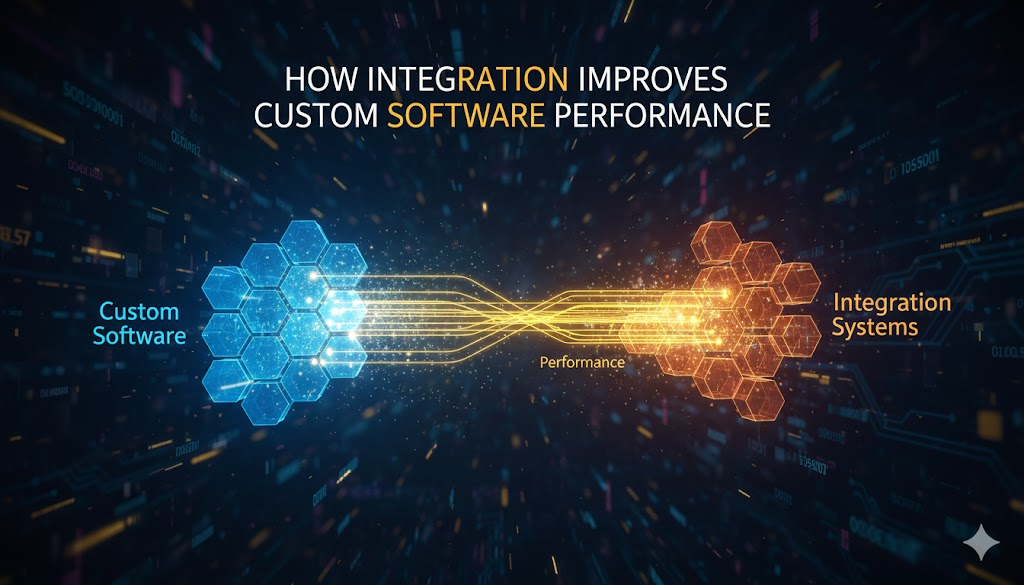
Software is developed to solve a specific problem. Its success is largely determined by its performance. Slow systems frustrate their users and raise costs. Poor communication between systems is a major cause of performance problems. Integration is the solution to this problem.
Software integration is the connection of different databases, applications, and services. It allows different platforms to function as one system, which is particularly vital for companies specializing in Legacy Software Development UK to ensure older frameworks remain compatible with modern environments. Integration that is done properly can improve performance on many levels. Response times become faster. Data accuracy improves. Maintenance is easier.
Businesses today rely on multiple tools. Data must be shared between CRM systems, ERPs, and payment gateways. Each system would be unable to function without integration. Delays and errors can result. Integrating software and data allows for smoother data flow and a more cohesive digital infrastructure.
Custom Software Performance
Performance is more than just speed. Performance includes stability, resource efficiency, and scalability. A high-performing system responds quickly. It can handle more users without crashing. It consumes fewer server resources.
When custom software grows, it often has problems. Manual data processing becomes slower as users increase. As users increase, systems begin to fail. Integration eliminates bottlenecks.
Automatism is achieved when systems are integrated. Data doesn't need to be entered two times. The processes run without any human involvement. This improves performance directly.
Why Poor Integration Slows Software Systems
Disconnected systems create data silos. Data silos are created when systems are disconnected. Software must continually fetch, convert and verify data. The processing time increases.
Another problem is manual synchronisation. Batch jobs are scheduled to run at a fixed time. Between updates, the data is outdated. These delays can negatively impact user experience and decision-making.
Integration problems can also lead to errors. Software must resolve conflicts when systems disagree. Error handling takes up CPU, memory and developers' time. All of these factors reduce performance.
How Integration Improves Data Flow Speed
Integrated systems exchange data in real-time. APIs and event-based communication eliminate delays. System updates are instantaneous, so you don't have to wait hours.
Request cycles are reduced by real-time integration. Software does not check multiple sources. The software only receives data that is verified from a single trusted source. It reduces the response time by a significant amount.
According to research on microservices, efficient integration can reduce the latency by up to 25 per cent. The throughput increases by almost the same amount. Data flow is faster, which means smoother user interaction and applications.
Role of APIs in Performance Optimisation
APIs are at the core of modern integration. They determine how systems interact. APIs that are well-designed are fast and lightweight.
API-first development increases performance, as interfaces are planned and implemented before any coding. It avoids data transfers that are not necessary. APIs only return the data that is required.
The 2025 State of the API shows that companies that use structured API strategies enjoy better system reliability and quicker releases. APIs improve system responsiveness and reduce engineering efforts.
Caching APIs improves performance. Data that is frequently requested is temporarily stored. This reduces the number of database calls and therefore lowers the server load.
Integration and Resource Efficiency
Integration reduces duplicate processing. Each system would perform similar tasks without integration. Integrating systems allows for the sharing of responsibilities.
When redundant processes are eliminated, CPU and memory usage will decrease. Databases receive fewer repeated queries. Servers are more efficient.
Memory consumption has been dramatically reduced in studies comparing integrated frameworks that have been optimised. When integration logic is simplified, CPU usage drops as well. Reduced resource usage reduces cloud costs and increases scalability.
Real-Time Integration and Event-Driven Architecture
The way software reacts to events is now influenced by event-driven integration. Applications react to events instead of polling the system repeatedly.
An event is triggered when a user submits an order. This triggers system updates. Instant inventory adjustments. Notifications arrive instantly. Real-time analytics update.
The performance of the system is improved by eliminating the need for constant checks. The systems remain inactive until an action is needed. This improves the responsiveness of systems and saves resources.
Even though event-driven systems are more flexible, they can also better handle traffic spikes. The events are sorted and queued up. This avoids overloading the system.
Impact of Integration on System Scalability
Scalability is an important performance factor. Integrated systems are more scalable because the components are loosely connected.
Systems are less dependent on one another when they have loose coupling. Each service can be scaled independently. Only the service required scales up if traffic increases.
Platforms for integration manage load-balancing and retries. This prevents slow service from impacting the entire system. This increases uptime and improves user experience.
Software remains as fast as possible even when the business grows, thanks to scalable integration.
Cost Reduction as a Performance Benefit
Performance and cost are closely linked. Operating efficient systems is cheaper.
Integration reduces manual work. Automated workflows eliminate the need for human intervention. Fewer errors mean less reprocessing.
Cloud costs also drop. Infrastructure requirements are reduced by a lower CPU and memory use. Scaling is handled automatically by integration platforms, which prevents over-provisioning.
Cost reductions are often seen within a few months of implementing a proper integration.
Market Growth Confirms Integration Value
In 2024, the global data integration market is expected to reach over $15 billion. The growth rate continues to be strong. This illustrates the importance of integration.
iPaaS is growing rapidly as well. Managed integration solutions are preferred by companies. These platforms are easy to maintain and improve performance.
This growth in the market confirms that integration has become a performance strategy and not just a technological option.
Integration and Data Quality Improvement
Integrated systems provide a single source for truth. Data consistency is improved across all applications.
Clean data reduces processing errors. Validation rules detect bad data earlier. It saves time and computing power.
Reporting speed is also improved by better data quality. Tools for analytics receive accurate data faster. As a result, decisions are improved.
How Berks Technologies Supports Integration in the UK
Berks Technologies offers custom software integration services in the UK. The company connects systems effectively for businesses.
They offer API development, cloud implementation, iPaaS, and performance optimisation. They are focused on secure and scalable architectures.
Berks Technology helps UK companies improve their software performance, lower costs and future-proof systems by working together.
Conclusion: Integration as a Performance Strategy
Integration is now a necessity. Integration is crucial for high-performance custom software, and any leading Software Development Company London would agree that it significantly increases speed, scalability, and reliability. Costs and errors are reduced. It encourages growth and innovation. All three confirm the same thing: research, market data, and real-world outcomes.
Well-integrated software performs better. Businesses that invest in integration have a competitive advantage. Their systems react faster. Their teams are more efficient. They keep their users happy. Integration is more than just a connection. Performance, stability and long-term success are key.