
As of March 23, 2026, the global industrial landscape is undergoing a tectonic shift driven by the dual imperatives of decarbonization and the exponential growth of artificial intelligence. At the heart of this transformation sits Alcoa Corp. (NYSE: AA), a legacy American industrial giant that has spent the last two years reinventing itself. Once viewed as a volatile commodity play tethered to the whims of the London Metal Exchange (LME), Alcoa is emerging in 2026 as a sophisticated provider of "green" metal and a strategic steward of industrial power infrastructure.
With the mid-2024 acquisition of Alumina Limited now fully integrated and a pivot toward monetizing legacy land for the AI data center boom, Alcoa is capturing the attention of both value and growth investors. This article explores Alcoa’s journey from its 19th-century roots to its current status as a linchpin of the 21st-century energy transition.
Historical Background
Alcoa’s story began in 1888 when Charles Martin Hall discovered the electrolytic process for smelting aluminum, a breakthrough that transformed the metal from a luxury more precious than gold into a foundational material of modern civilization. Originally the Pittsburgh Reduction Company, Alcoa dominated the 20th century as a vertically integrated monopoly until antitrust actions and global competition decentralized the industry.
The most significant modern milestone occurred in November 2016, when the "old" Alcoa split into two independent companies: Arconic (now private), focusing on high-value engineering and aerospace, and Alcoa Corp., which retained the upstream bauxite, alumina, and aluminum smelting operations. Since then, Alcoa has navigated a turbulent decade of commodity cycles, culminating in the 2024 acquisition of its long-time joint venture partner, Alumina Limited, which consolidated its control over the world’s largest third-party alumina business.
Business Model
Alcoa’s business model in 2026 is leaner and more vertically integrated than at any point in its post-split history. The company operates across three primary segments:
- Bauxite Mining: Alcoa maintains a global portfolio of mines, providing the raw ore necessary for alumina production.
- Alumina Refining: Following the Alumina Limited merger, Alcoa now owns 100% of the Alcoa World Alumina and Chemicals (AWAC) venture. This makes it the world’s largest third-party seller of alumina, the white powder refined from bauxite that serves as the precursor to aluminum.
- Aluminum Smelting: The company operates a network of smelters that convert alumina into finished aluminum.
Crucially, Alcoa has shifted its focus toward "Value-Add" products. While generic ingots remain a staple, the company’s revenue is increasingly driven by specialized alloys for the automotive and packaging industries, where "green" certification allows for premium pricing.
Stock Performance Overview
Alcoa’s stock (NYSE: AA) remains a barometer for global industrial health, though its 2025-2026 performance has shown a decoupling from purely cyclical trends.
- 1-Year Performance: Over the past 12 months, Alcoa has returned approximately 28%, significantly outperforming the broader materials sector. This was driven by the successful integration of Alumina Limited and the announcement of a "site monetization" strategy for idled facilities.
- 5-Year Performance: Since 2021, the stock has lived through extreme volatility. After peaking at over $90 in March 2022 following the Russian invasion of Ukraine, it plummeted to the low $20s in late 2023. By March 2026, the stock has recovered to the $60-$65 range, representing a 5-year total return of roughly 115%.
- 10-Year Performance: Since the 2016 split, Alcoa has delivered a total return of approximately 140%, though the path has been anything but linear. Investors who held through the 2020 pandemic lows and the 2023 slump have been rewarded by the company's aggressive deleveraging and portfolio cleanup.
Financial Performance
Alcoa’s 2025 fiscal year results, reported earlier this year, underscored a significant turnaround.
- Revenue: FY 2025 revenue hit $12.83 billion, an 8% increase year-over-year, supported by LME aluminum prices averaging $2,850/mt.
- Profitability: Net income for 2025 surged to $1.17 billion ($4.42 per share), a stark contrast to the modest profits of 2024.
- Margins: Adjusted EBITDA stood at $2.0 billion, with margins benefiting from the $150 million in overhead synergies realized from the Alumina Limited acquisition.
- Balance Sheet: Alcoa ended 2025 with $1.4 billion in cash and a significantly reduced debt profile. The sale of its 25% stake in the Ma’aden joint venture in Saudi Arabia for $1.1 billion in 2025 provided the liquidity needed to fund its re-ramping efforts in Spain.
Leadership and Management
CEO William Oplinger, who took the helm in late 2023, has been credited with a "fast-paced execution" strategy. Unlike his predecessors, who often took a wait-and-see approach to high-cost assets, Oplinger has been decisive. In his first 24 months, he oversaw the closure of the high-cost Kwinana refinery in Australia, the completion of the Alumina Limited merger, and the launch of the "Ten Sites" monetization plan.
The management team’s reputation has evolved from "industrial survivors" to "strategic capital allocators." The board of directors has also been refreshed to include expertise in renewable energy and digital infrastructure, reflecting the company's new focus on power-asset monetization.
Products, Services, and Innovations
Alcoa’s competitive edge in 2026 lies in its Sustana line of low-carbon products:
- EcoSource: The world’s first and only low-carbon alumina.
- EcoLum: Aluminum produced with less than 4.0 kg of CO2e per kg of metal (compared to a global average of ~12 kg).
The "holy grail" of Alcoa’s innovation pipeline remains ELYSIS. This joint venture with Rio Tinto (NYSE: RIO) utilizes a proprietary carbon-free smelting technology that emits pure oxygen as a byproduct rather than CO2. By early 2026, the technology has moved into its "extended validation" phase at a commercial scale, with industrial retrofits expected to begin by 2028. This technology positions Alcoa as the future technology licensor for the entire global smelting industry.
Competitive Landscape
Alcoa operates in a bifurcated market. In the West, its primary rivals are Rio Tinto (NYSE: RIO) and Century Aluminum (NASDAQ: CENX).
- Rio Tinto: While a partner in ELYSIS, Rio is a formidable competitor with a lower energy-cost profile due to its extensive Canadian hydropower assets.
- Century Aluminum: Much smaller and more exposed to spot-market electricity prices, Century lacks Alcoa’s vertical integration in alumina.
- Chinese Producers: Giants like Aluminum Corporation of China (NYSE: ACH / Chalco) dominate global volume but face increasing hurdles in Western markets due to high carbon footprints and the implementation of carbon border adjustment taxes.
Alcoa’s strength is its "Western-centric" supply chain, which appeals to European and American manufacturers looking to "de-risk" from Chinese dependencies.
Industry and Market Trends
Three macro trends are defining the aluminum market in 2026:
- The Green Premium: Manufacturers in the EV and solar sectors are increasingly willing to pay a premium (estimated at $10-$20/mt) for certified low-carbon aluminum to meet their scope 3 emissions targets.
- AI Cooling Infrastructure: Aluminum is becoming a critical material for high-performance liquid cooling systems and heat sinks in AI data centers.
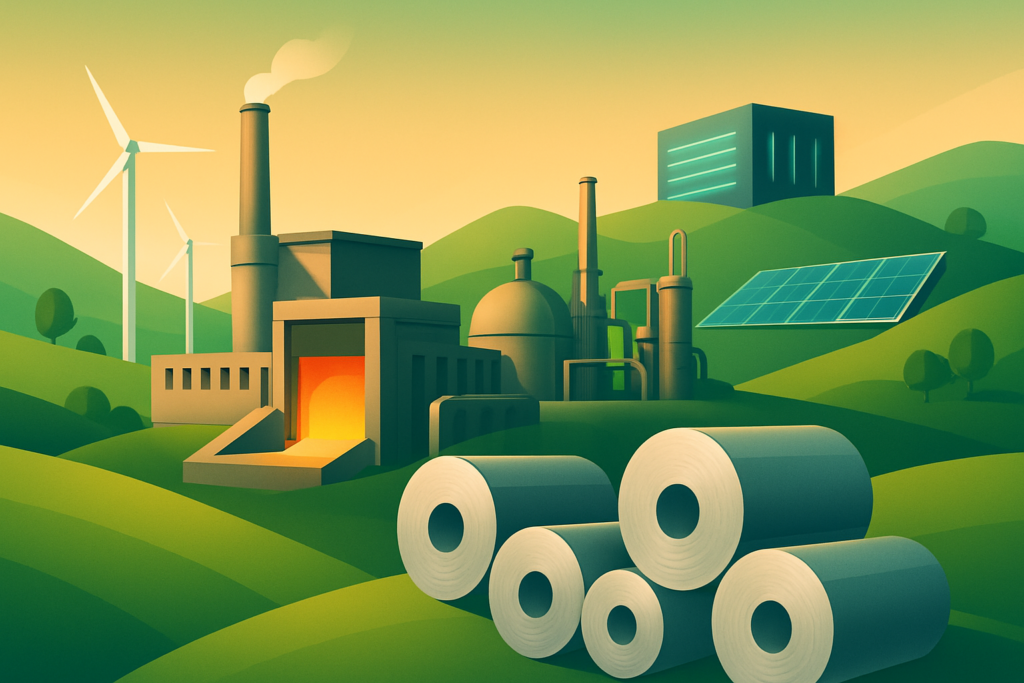
- Energy Scarcity: As electricity prices remain volatile, Alcoa’s ownership of power assets and "behind-the-meter" infrastructure is becoming more valuable than the metal itself. This has led to the "site monetization" trend where idled smelters are converted into data center campuses.
Risks and Challenges
Despite the positive momentum, Alcoa faces significant headwinds:
- Operational Instability: The San Ciprián complex in Spain remains a challenge. While the smelter is ramping back toward 90% capacity, the refinery continues to be a drag on EBITDA, highlighting the difficulty of operating in high-cost energy environments.
- Commodity Price Volatility: Despite its efforts to diversify, Alcoa remains highly sensitive to LME prices. A global recession in 2026 or 2027 could see aluminum prices retreat, squeezing margins.
- Regulatory Uncertainty: While carbon taxes benefit Alcoa today, future changes to trade policy or environmental mandates could increase compliance costs for its older Australian refineries.
Opportunities and Catalysts
The primary catalyst for 2026 is the "Ten Sites" Monetization Strategy. Alcoa is in active negotiations to sell or lease ten idled or curtailed industrial sites—including the recently closed Kwinana site—to data center operators. Analysts estimate these sales could generate between $500 million and $1 billion in non-core proceeds by the end of 2026.
Additionally, the continued expansion of the EV market remains a tailwind. Aluminum content in electric vehicles is roughly 30-40% higher than in internal combustion engines, primarily due to battery enclosures and lightweighting requirements.
Investor Sentiment and Analyst Coverage
Wall Street sentiment toward Alcoa has shifted from "Hold" to a cautious "Buy" in early 2026.
- Analyst Views: Of the 15 major analysts covering the stock, 9 have a "Buy" or "Strong Buy" rating, with a median price target of $68.00.
- Institutional Moves: There has been a notable increase in "Green" and ESG-focused fund inflows into AA, as the company’s Sustana line helps these funds meet their sustainability mandates.
- Retail Sentiment: On social media platforms like X and Reddit, Alcoa is increasingly discussed as a "sneaky AI play" due to its power assets, moving it beyond the traditional "boring materials" category.
Regulatory, Policy, and Geopolitical Factors
Geopolitics are a net positive for Alcoa in 2026. The U.S. and EU have tightened restrictions on "dirty" aluminum imports, particularly from regions with coal-fired grids.
- CBAM: The European Union’s Carbon Border Adjustment Mechanism (CBAM), which enters its full implementation phase in 2026, essentially acts as a tariff on high-carbon competitors, providing Alcoa’s low-carbon Spanish and Icelandic production with a significant competitive advantage.
- U.S. Policy: Continued incentives under the Inflation Reduction Act (IRA) for domestic mineral processing provide a safety net for Alcoa’s remaining U.S. operations, such as the Warrick smelter.
Conclusion
Alcoa (NYSE: AA) has successfully transitioned from a struggling commodity producer into a strategic industrial player positioned at the intersection of the energy transition and the AI revolution. By March 2026, the company has proven that it can manage its portfolio aggressively, integrate large-scale acquisitions, and innovate through its ELYSIS partnership.
While risks remain—specifically regarding energy costs in Europe and the inherent volatility of the aluminum market—Alcoa’s balance sheet is the strongest it has been in a decade. For investors, Alcoa represents a unique hybrid: a cyclical play on global growth and a structural play on the greening of the industrial world. The coming year will be defined by how effectively Alcoa can monetize its "legacy" land and whether it can finally achieve cash-neutrality at its challenging European sites.
This content is intended for informational purposes only and is not financial advice.