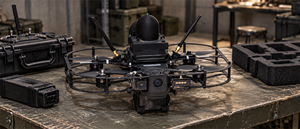
Autonomous aerial surveying is becoming an essential tool for energy companies looking to boost efficiency and lower operating costs.
New York, NY – July 30, 2026 – Market News Updates News Commentary – For years, surveying an oil field or inspecting miles of pipeline meant sending large crews into the field, renting helicopters, and spending days—or even weeks—collecting data. That’s changing fast. Today, drones equipped with AI, LiDAR, thermal cameras, and high-resolution imaging can do the same work in a fraction of the time while delivering far more detailed information. They’re helping oil and gas companies map drilling sites, monitor pipelines, detect methane leaks, inspect refineries, and keep projects moving without putting workers in unnecessary danger. Simply put, drones are becoming one of the smartest investments energy companies can make. Companies adopting drone technologies include ZenaTech, Inc. (NASDAQ: ZENA), Chevron Corporation (NYSE: CVX), Halliburton (NYSE: HAL), ExxonMobil Holdings Corporation (NYSE: XOM), Occidental Petroleum (NYSE: OXY).
The numbers back up the story. The global commercial drone market is expected to grow from about $41 billion in 2025 to more than $95 billion by 2030, with some long-range forecasts topping $160 billion by 2034. The drone surveying and mapping market is also on a steep growth curve, projected to climb from roughly $2.5 billion to more than $8 billion by 2033. As energy companies continue modernizing their operations, drones are becoming a standard part of the workflow—not just for exploration, but for pipeline inspections, environmental compliance, construction monitoring, maintenance planning, and day-to-day asset management. What was once considered cutting-edge technology is quickly becoming standard operating procedure.
For investors, that’s where the opportunity starts to get interesting. The energy industry isn’t simply buying more drones—it’s investing in an entirely new way of operating. Companies that provide drone hardware, AI-powered software, data analytics, and Drone-as-a-Service (DaaS) solutions are positioned to benefit as adoption continues to spread across the industry. Every new pipeline, drilling project, storage facility, refinery expansion, or infrastructure upgrade creates another opportunity for drone technology to replace slower, more expensive inspection methods. As oil and gas companies look for ways to improve efficiency, lower operating costs, and strengthen safety while meeting tougher environmental standards, the demand for intelligent drone solutions looks poised to keep climbing for years to come.
ZenaTech (NASDAQ: ZENA) DaaS Oil and Gas Business Enters a Strengthened Market with Higher Oil Prices and More Than US$500 Billion in Expected Canadian Energy Investment Over the Next Decade – ZenaTech, Inc. ($ZENA) (FSE: 49Q) (BMV: ZENA) (“ZenaTech”), a technology solution provider specializing in AI (Artificial Intelligence) drone, Drone as a Service (DaaS), enterprise SaaS, and Quantum Computing solutions, provides an update on its energy sector field services operations in Western Canada. The Company’s recent acquisition, Velocity Geomatics, providing drone-based regulatory and environmental surveys to oil and gas producers, is entering a strengthened market with recent oil price increases of over 45% in the second quarter versus the same period last year, alongside Canada’s oil and gas industry expected to attract more than US$500 billion in investment over the next decade.
“Our Drone as a Service business is a field services business that follows customer activity–when producers in Alberta, British Columbia, and Saskatchewan have more cash flow, they drill more wells,” said Shaun Passley, Ph.D., Chairman and Chief Executive Officer of ZenaTech. “Higher oil prices are improving cash flow for producers today, supporting drilling, infrastructure, reclamation and environmental compliance work that drives demand for our surveying and inspection services. Looking ahead, we also believe current trends and strong forecasts for continued investment in Canada’s energy sector will provide a long-term tailwind to expand our Drone as a Service business in Canada as well as globally. Approximately 80% of Velocity’s current projects already utilize drone-based workflows, providing an established platform along with an established customer base to further scale our drone-enabled services.”
In July 2026, ZenaTech completed the acquisition of Velocity Geomatics, known as the Velocity Group, based in Grande Prairie, Alberta. It is the Company’s first acquisition focused specifically on geomatics for environmental and regulatory compliance in oil and gas. Velocity operates from four offices across Alberta, British Columbia, and Saskatchewan. It serves leading regional and international oil and gas producers.
Publicly reported industry data shows that cash flow available to Western Canadian producers has increased materially year-over-year. According to Oil Sands Magazine, average WTI and Western Canadian Select crude prices during the second quarter of 2026 were approximately 45% higher than the same period a year earlier, supporting stronger cash flow across Western Canadian energy producers.
Western Canada’s energy sector represents a significant growth opportunity for Drone as a Service. According to Royal Bank of Canada (RBC), Canada’s oil and gas industry is expected to attract more than US$500 billion in investment over the next decade, driven by growing energy demand, expanded export capacity, and continued infrastructure and environmental investment. While higher oil prices are supporting increased customer activity today, these long-term trends are expected to drive sustained demand for drone-enabled surveying, inspection, mapping, and environmental monitoring services, potentially supporting the continued expansion of ZenaTech’s DaaS business.
Oil and gas producer investment can directly translate into demand for Drone as a Service offerings due to new drilling, enhanced recovery, infrastructure expansion, and environmental programs require recurring surveying, mapping, inspection, monitoring, and regulatory compliance services. Asset retirement and reclamation projects are particularly attractive because they are driven by regulatory requirements rather than discretionary spending, creating resilient demand across commodity cycles. Continued… Read this full release and additional news for ZENA by visiting: https://www.zenatech.com/newsroom/
Why investors are paying attention to this market:
- Oil and gas companies are rapidly replacing slower, more expensive surveying methods with AI-powered drones.
- The commercial drone market is projected to exceed $95 billion by 2030, with long-term forecasts reaching more than $160 billion.
- Drone surveying improves safety while reducing inspection time and operating costs.
- AI, LiDAR, thermal imaging, and digital mapping are becoming standard tools across the energy sector.
- Growing environmental regulations are increasing demand for methane detection and infrastructure monitoring.
- Drone-as-a-Service (DaaS) is creating recurring revenue opportunities through ongoing inspections, mapping, analytics, and compliance services.
- The combination of energy infrastructure, automation, and artificial intelligence is creating one of the fastest-growing technology markets serving the oil and gas industry.
Leading Companies that are positioned to benefit from drone adoption in oil & gas operations:
Chevron Corporation (NYSE: CVX) utilizes drone technology for automated aerial inspections, thermal monitoring, methane and emissions detection, and pipeline surveillance. By integrating autonomous “drone-in-a-box” systems and AI analytics, Chevron has cut high-risk worker hours and improved operational efficiency across global facilities.
Chevron uses drones for a variety of tasks, including performing visual and thermal inspections, and detecting emissions. The company is working to develop its drone-in-a-box system. It aims to use autonomous drones to perform remote inspections, reducing the need for worker-led field visits.
Company (KOC) awarded Halliburton (NYSE: HAL) a multi-year agreement to support the development of the Ahmadi Innovation Valley (AIV), a flagship initiative that advances Kuwait’s energy sector transformation.
The research and development (R&D) center will support KOC to deliver solutions in brownfield, greenfield, and unconventional fields, address higher operational complexity, and build technology designed for Kuwait’s upstream challenges. The center embeds applied research as a permanent capability from concept through prototyping, piloting, and commercialization.
Halliburton uses drone technology primarily for remote asset monitoring, aerial inspections of oil and gas infrastructure, and site maintenance. The company stands as an industry leader in patent filings and application diversity for tethered drones, deploying them to minimize the need for field personnel in hazardous environments.
ExxonMobil Holdings Corporation (NYSE: XOM) global operations encompass a staggering amount of physical infrastructure, from towering flare stacks and complex pipe racks in refineries to massive storage tanks and the internal chambers of process vessels. Inspecting this infrastructure is critical for ensuring operational integrity and safety, but it is also fraught with challenges. Traditional inspection methods often require personnel to work at dangerous heights, utilizing costly scaffolding or rope access, or to enter hazardous confined spaces, posing significant safety risks. These manual inspections are also time-consuming and can lead to extended operational downtime. The strategic goal is to leverage robotics and AI to conduct these inspections more safely, more efficiently, and with a higher degree of data fidelity.
ExxonMobil utilizes aerial drones and robotic systems globally—such as through its Global Aerial Visual Inspection Service (GAVIS) program—to inspect high-altitude infrastructure, monitor offshore operations, and detect methane emissions, cutting inspection times by up to 60% while improving worker safety.
Occidental Petroleum (NYSE: OXY) operates an extensive internal unmanned aircraft system (UAS) program. It utilizes dozens of part-time and full-time pilots deploying DJI hardware for site inspections, asset monitoring, safety surveillance, and emission tracking across active oil and gas fields like the DJ Basin.
Key Uses of Drones at OxyAsset Inspections: Checking flare stacks, pipelines, and hard-to-reach equipment without putting workers at physical risk.Methane & Emissions Tracking: Scanning facilities to detect leaks and support environmental compliance goals.
About FN Media Group:
At FN Media Group, via our top-rated online news portal at http://www.financialnewsmedia.com and http://www.marketnewsupdates.com, we are one of the very few select firms providing top tier one syndicated news distribution, targeted ticker tag press releases and stock market news coverage for today’s emerging companies. #tickertagpressreleases #pressreleases
Follow us on Facebook to receive the latest news updates: https://www.facebook.com/financialnewsmedia
Follow us on Twitter for real time Market News: https://twitter.com/FNMgroup
Follow us on Linkedin: https://www.linkedin.com/in/financialnewsmedia/
DISCLAIMER: MarketNewsUpdates.com (MNU) is a third party publisher and news dissemination service provider, which disseminates electronic information through multiple online media channels. MNU is NOT affiliated in any manner with any company mentioned herein. MNU and its affiliated companies are a news dissemination solutions provider and are NOT a registered broker/dealer/analyst/adviser, holds no investment licenses and may NOT sell, offer to sell or offer to buy any security. MNU’S market updates, news alerts and corporate profiles are NOT a solicitation or recommendation to buy, sell or hold securities. The material in this release is intended to be strictly informational and is NEVER to be construed or interpreted as research material. All readers are strongly urged to perform research and due diligence on their own and consult a licensed financial professional before considering any level of investing in stocks. All material included herein is republished content and details which were previously disseminated by the companies mentioned in this release. MNU is not liable for any investment decisions by its readers or subscribers. Investors are cautioned that they may lose all or a portion of their investment when investing in stocks. This press release was distributed on behalf of ZenaTech, Inc. For current services performed MNU was compensated forty six hundred dollars for news coverage of the current press releases issued by ZenaTech, Inc. by the company. MNU HOLDS NO SHARES OF ANY COMPANY NAMED IN THIS RELEASE
This release contains “forward-looking statements” within the meaning of Section 27A of the Securities Act of 1933, as amended, and Section 21E the Securities Exchange Act of 1934, as amended and such forward-looking statements are made pursuant to the safe harbor provisions of the Private Securities Litigation Reform Act of 1995. “Forward-looking statements” describe future expectations, plans, results, or strategies and are generally preceded by words such as “may”, “future”, “plan” or “planned”, “will” or “should”, “expected,” “anticipates”, “draft”, “eventually” or “projected”. You are cautioned that such statements are subject to a multitude of risks and uncertainties that could cause future circumstances, events, or results to differ materially from those projected in the forward-looking statements, including the risks that actual results may differ materially from those projected in the forward-looking statements as a result of various factors, and other risks identified in a company’s annual report on Form 10-K or 10-KSB and other filings made by such company with the Securities and Exchange Commission. You should consider these factors in evaluating the forward-looking statements included herein, and not place undue reliance on such statements. The forward-looking statements in this release are made as of the date hereof and MNU undertakes no obligation to update such statements.
Contact Information:
Media Contact email: editor@marketnewsupdates.com – +1(561)486-1799
SOURCE: Market News Updates
The post Explosive Growth of Drone Technology in Oil & Gas is The Next Wave of Expansion Happening from The Sky appeared first on Financial News Media.