- 2025 annual financial report showed that the Company’s stockholders’ equity turned from negative to positive.
- The EAI robotics business achieved a positive gross margin on products in its very first quarter of delivery this year and has set a target of over 1,000 units shipment by the end of 2026.
Faraday Future Intelligent Electric Inc. (NASDAQ: FFAI) (“Faraday Future”, “FF” or the “Company”), a California-based global Embodied AI (EAI) ecosystem company, today shared a weekly business update from YT Jia, Founder and Global Co-CEO of FF. This week’s update will be in the form of a Q&A session with YT.
This press release features multimedia. View the full release here: https://www.businesswire.com/news/home/20260405923626/en/
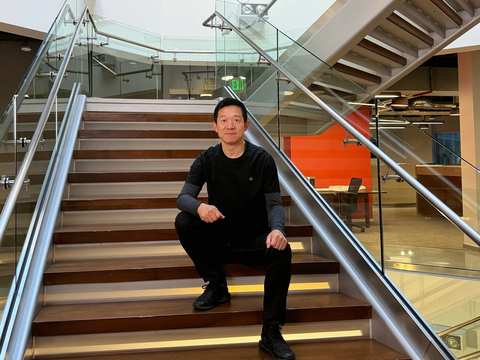
Faraday Future Founder and Co-CEO YT Jia Shares Weekly Investor Update: FF to Establish the First Scaled EAI Education System in the United States with Deployment of its EAI Robotics Products and Technology
“Q1: YT, you mentioned that, in your opinion, the most important highlight of this annual financial report is that the Company’s net equity turned from negative to positive. What happened behind the scenes? Why is it so important?
A1: Actually, there’s quite a story behind this. Last year, two days before the release of our third-quarter financial report, we were dealt with a severe blow. Based on what we believe were extremely conservative accounting principles, the audit firm recorded a one-time, large impairment of approximately $130 million related to equipment and tooling for the FF 91, given the lower-than-expected utilization in the near term. This amount accounted for nearly two-thirds of the Company’s total loss for the period and directly contributing to the Company’s net equity turning negative, as well as a two-day delay in the release of the third-quarter financial report. At the time, in order to file the financial report, we had no choice but to accept this outcome. We were deeply frustrated and we sympathize with our investors about that.
After that, we conducted deep internal reflection and quickly initiated debt optimization and a series of remedial measures. Through ongoing communications with creditors like suppliers, the company gained their understanding for its strategic direction. The company successfully completed approximately $100 million in debt optimization and reduction, which made restoring net equity to a positive position possible. We are truly grateful for their support.
Q2: The EAI robotics business achieved a positive gross margin on products in its very first quarter of delivery and has set a target of over 1,000 units shipment by the end of 2026. What does this mean for the company overall? In which areas will you focus on your main efforts?
A2: This is the first time since FF was founded that we achieved positive product gross margin on products, which is indeed a significant milestone. First, going from zero to one is critical, as it validates the feasibility of FF EAI’s business model of ‘Launch is sales, sales is delivery, and delivery equals positive gross margin.’ Second, it brings us closer to achieving positive operating cash flow more quickly and ultimately moving toward profitability. This is also extremely helpful for the financing initiatives we are currently advancing. Third, FF’s unique Online Direct Sales and Co-creation Ecosystem is proving to be a powerful driver in accelerating the execution of our strategic goals. Fourth, it is accelerating the rollout of the ‘Device revenue + Skills revenue + Data revenue’ ecosystem-based revenue model, while continuously amplifying our ‘Device–Data–Brain’ flywheel effect as the first company in the U.S. to deliver both humanoid and biomimetic robots. Our goal is to replicate, in the EAI robotics industry, the same kind of flywheel effect that Tesla has achieved across EVs, data, and FSD.
Moving forward, to meet this year’s shipment target of over 1,000 units as soon as possible, we will implement the ‘6-3-3’ strategy in phases and step-by-step. The core scenarios of the first phase will be divided into two main areas: B2B and B2C. We have already provided a systematic introduction to the key B2B use cases before, so I will not go into detail again today. On the B2C side, family education will become our first core use case, with a strong focus on education, learning, and growth companionship in the AI era, helping children become leaders of the AI age. We have already started discussions with relevant departments of the California government. Starting from California, we hope to work together with school districts to build AI robotics labs across K–12 education and the UC public university system, including UCLA and UC Berkeley, and to establish the first scaled EAI education system in the United States.
Q3: You mentioned Tesla. Recent commentary suggests that revenue from FSD and robotics is expected to account for more than half of the company’s total revenue for the first time in 2027. What is your view on that?
A3: That is a very good question. We believe that competition among technology companies, both today and in the future, will be a competition of AI, data, and ecosystem capabilities. We believe that whoever moves first in completing the transition from simply ‘selling hardware’ to ‘selling AI, services, data, and ecosystem value’ will emerge as the winner and help define the landscape of the industry in the next generation. At the same time, from the perspective of industry scale, EAI industry will eventually surpass the automotive industry in total output value. Perhaps one day in the future, all 7 billion people in the world will have their own EAI agent. If and when that happens, this industry will enter a period of explosive growth very quickly.
Q4: That brings us to your son. He was recently admitted to Stanford’s CS program, and the news even became a top trending topic on social media. A lot of people are curious—how did he get into so many world-class universities? Could you share your formula with other parents?
A4: I wouldn’t say there’s any magic formula. To be honest, I actually feel a little guilty, because over the years I have done relatively little to support my children’s growth, especially in daily life. He earned offers from many top universities through his own hard work and outstanding performance. If there is anything I may have contributed, it is probably this: from a very early age, he became genuinely interested in computers and AI, and he found his direction early. That matters a lot. More importantly, throughout his K–12 years, he tried to spend every school break interning at AI companies like FF whenever he could. Those experiences gave him a much clearer understanding of what he wanted to learn and why it mattered, while also helping him build meaningful hands-on experience in AI. I believe that was likely one of the factors that helped him earn admission to schools like Stanford.
Very soon, I plan to purchase several FF robots for my children to use for learning, secondary development projects for universities, and exploration in K–12 education settings. I hope our experience can offer some useful inspiration to parents. This is also why we have chosen education and growth companionship as the first core use case in our initial phase. We hope to create more AI and EAI-powered learning environments and hands-on opportunities for parents and children, both at school and at home. That is all for today. Next week, I will take questions on Super One, capital markets, and our upgraded Ten-Punch Combo. Stay tuned.”
ABOUT FARADAY FUTURE
Faraday Future is a California-based global intelligent Company founded in 2014 and is dedicated to reshaping the future of mobility through vehicle electrification, intelligent technologies, and AI innovation. Its flagship vehicle, the FF 91, began deliveries in 2023 and reflects the brand’s pursuit of ultra-luxury, cutting-edge technology, and high performance. FF’s second brand, FX, targets the high-volume mainstream vehicle market. Its first model, Super One, is positioned as a first-class EAI-MPV, with deliveries planned to begin in 2026. FF recently announced its entry into the Embodied AI Robotics business with sales beginning this year, connecting its future strategy of bringing a new era of EAI vehicles and EAI robotics. For more information, please visit https://www.ff.com/
FORWARD LOOKING STATEMENTS
This press release includes “forward looking statements” within the meaning of the safe harbor provisions of the United States Private Securities Litigation Reform Act of 1995. When used in this press release, the words “plan to,” “can,” “will,” “should,” “future,” “potential,” and variations of these words or similar expressions (or the negative versions of such words or expressions) are intended to identify forward-looking statements. These forward-looking statements, which include statements regarding potential future legal actions against alleged illegal market manipulation or similar improper activities, and FF’s entry into the embodied AI robotics market and robotics deliveries and development, involve a number of known and unknown risks, uncertainties, assumptions and other important factors, many of which are outside the Company’s control, which could cause actual results or outcomes to differ materially from those discussed in the forward-looking statements. Important factors, that may affect actual results or outcomes include, among others: the Company’s ability to timely regain compliance with Nasdaq’s minimum bid requirement; the Company’s common stock will be suspended from trading on Nasdaq if its closing price is $0.10 or less for 10 consecutive trading days; the Company’s ability to continue as a going concern and improve its liquidity and financial position; the Company’s ability to pay its outstanding obligations, which it currently lacks; the availability of sufficient share capital to meet its current obligations and execute on its strategy, which the Company currently lacks; the agreement of stockholders to substantially increase the Company’s share capital, which could result in substantial additional dilution; the willingness of convertible debt investors to fund the Company while it lacks sufficient share capital for conversions; demand for the Company’s robotics products; the ability of B2B preorder companies to locate customers to purchase our robotics products, on which their nonbinding preorders substantially depend; competition in the robotics industry, which includes companies with far superior experience, funding and name recognition; the Company’s reliance on a single OEM for most of its robotics products; the Company’s ability to get the planned robotics products to comply with all applicable U.S. rules and regulations; the ability of the robotics OEM to timely supply robotics to the Company; tariff uncertainty for imported products, particularly from China; demand from automobile dealers for robotics products; the Company’s ability to homologate FX vehicles for sale; the Company’s ability to secure the necessary funding to execute on the FX strategy, which is substantial; the Company’s ability to secure an occupancy certificate covering all of its Hanford facility; the Company’s ability to remediate its material weaknesses in internal control over financial reporting and the risks related to the restatement of previously issued consolidated financial statements; the Company’s limited operating history and the significant barriers to growth it faces; the Company’s history of substantial losses and expectation of continued losses; the success of the Company’s payroll expense reduction plan; the Company’s ability to execute on its plans to develop and market its vehicles and the timing of these development programs; the Company’s estimates of the size of the markets for its vehicles and cost to bring those vehicles to market; the rate and degree of market acceptance of the Company’s vehicles; the Company’s ability to cover future warranty claims; the success of other competing manufacturers; the performance and security of the Company’s vehicles; current and potential litigation involving the Company; the Company’s ability to receive funds from, satisfy the conditions precedent of and close on the various financings described elsewhere by the Company; the result of future financing efforts, the failure of any of which could result in the Company seeking protection under the Bankruptcy Code; the Company’s indebtedness; the Company’s ability to use its “at-the-market” program; insurance coverage; general economic and market conditions impacting demand for the Company’s products; potential negative impacts of a reverse stock split; potential cost, headcount and salary reduction actions may not be sufficient or may not achieve their expected results; circumstances outside of the Company’s control, such as natural disasters, climate change, health epidemics and pandemics, terrorist attacks, and civil unrest; risks related to the Company’s operations in China; the success of the Company’s remedial measures taken in response to the Special Committee findings; the Company’s dependence on its suppliers and contract manufacturer; the Company’s ability to develop and protect its technologies; the Company’s ability to protect against cybersecurity risks; and the ability of the Company to attract and retain employees, any adverse developments in existing legal proceedings or the initiation of new legal proceedings, and volatility of the Company’s stock price. You should carefully consider the foregoing factors and the other risks and uncertainties described in the “Risk Factors” section of the Company’s Form 10-K filed with the SEC on March 31, 2025, and Form 10-Qs for the quarters ended June 30, 2025 and September 30, 2025 filed with the SEC on May 9, 2025, August 19, 2025 and November 21, 2025, respectively, and other documents filed by the Company from time to time with the SEC.
View source version on businesswire.com: https://www.businesswire.com/news/home/20260405923626/en/
Contacts
Investors (English): ir@ff.com
Investors (Chinese): cn-ir@faradayfuture.com
Media: john.schilling@ff.com