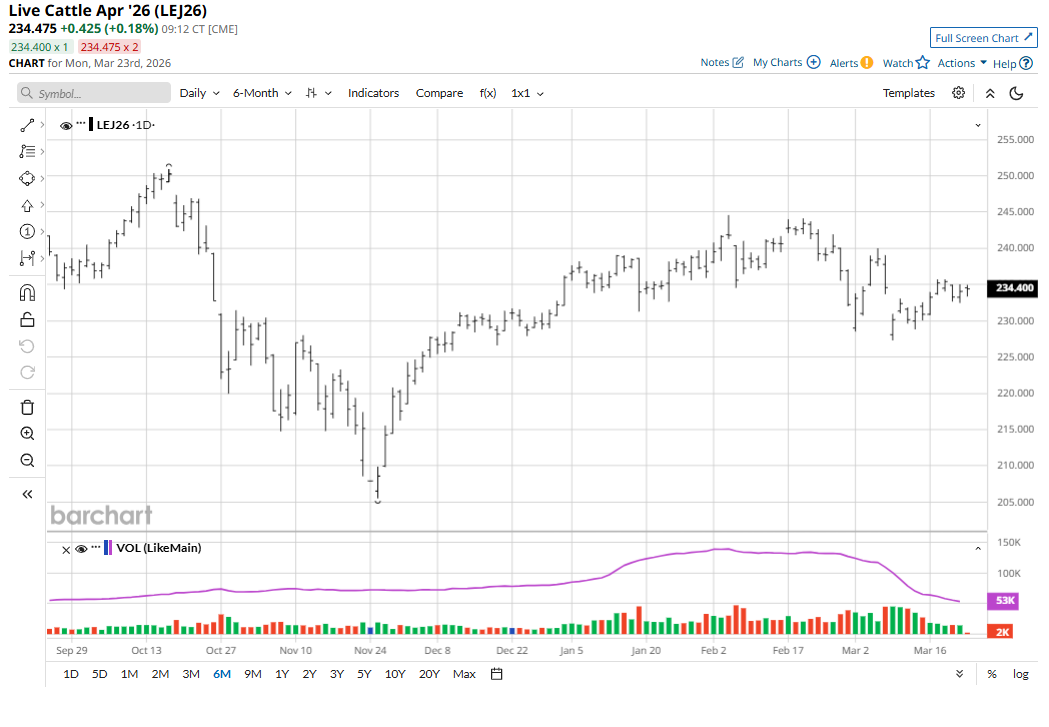
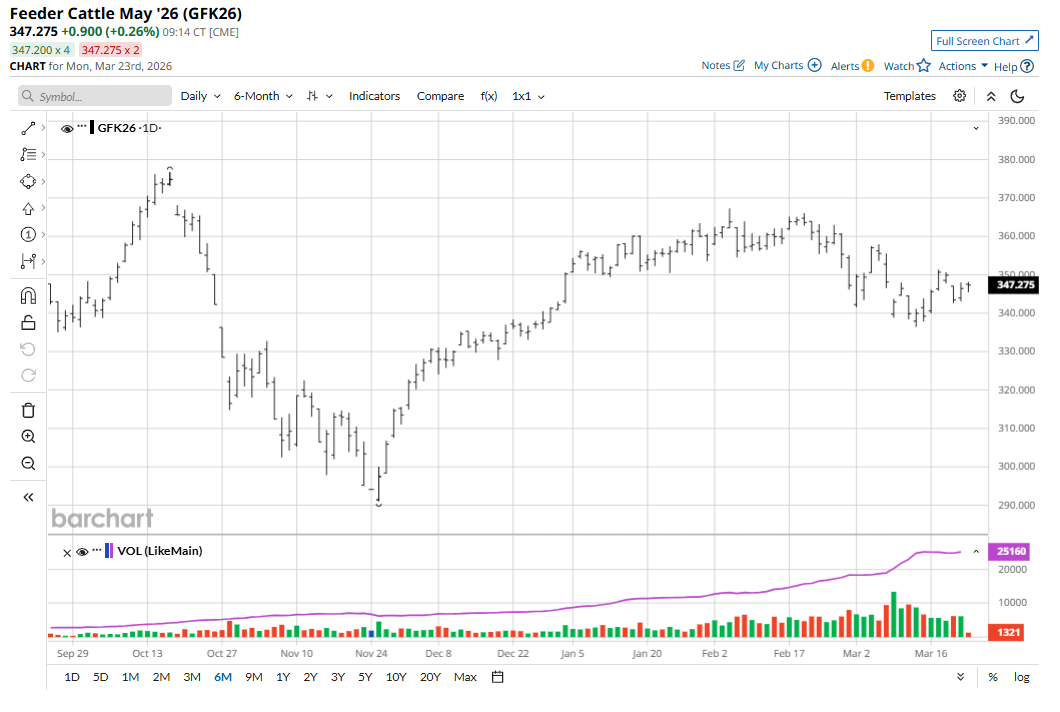
April live cattle (LEJ26) futures on Friday rose $0.775 to $234.05 and for the week were up $4.00. May feeder cattle (GFK26) futures gained $2.95 to $346.375 and for the week were up $7.20.
The live cattle and feeder cattle futures markets bulls had a decent week, which gives them some momentum heading into trading early this week. Traders will also begin to digest Friday’s monthly USDA cattle-on-feed report that was not quite so price-bullish.
USDA Monthly Cattle-on-Feed Report Not as Bullish
On Friday afternoon, the USDA reported cattle and calves on feed for the slaughter market in the U.S. for feedlots with capacity of 1,000 or more head totaled 11.5 million head on March 1. The inventory was slightly below that of March 1, 2025. However, placements in feedlots during February totaled 1.61 million head, 4% above 2025. Traders expected a steady number, to slight rise, in placements in this report.
Net placements were 1.56 million head. During February, placements of cattle and calves weighing less than 600 pounds were 305,000 head, 600-699 pounds were 280,000 head, 700-799 pounds were 445,000 head, 800-899 pounds were 396,000 head, 900-999 pounds were 130,000 head, and 1,000 pounds and greater were 55,000 head.
Marketings of fed cattle during February totaled 1.52 million head, 7% below 2025 and close to trader expectations. Marketings were the second lowest for February since the series began in 1996. Other disappearances totaled 50,000 head during February, 17% below 2025.
In the meantime, workers remain on strike at the JBS-owned meatpacking plant in Greeley, Colorado, which still has the cattle market bulls uneasy.
More active cash cattle was reported by the USDA, with the agency saying steer prices averaged $234.05 and heifer prices averaged $234.41. Last Monday, the USDA reported average cash cattle trading at $234.83, down $5.11 from the week prior
Weakening cash cattle trade and firming boxed beef values recently have led to improved packer margins, which is incentivizing packing plants to absorb cattle from plant closures and adding Saturday kills. However, recent wildfires in Nebraska and extreme temperatures throughout the Plains are likely to hand feedlots extra bargaining power in cash negotiations in the coming weeks, as supply uncertainties grow.
War in Iran a Potential Bearish Element for Cattle Markets
The Middle East war and its economic impact on consumers — namely higher gasoline prices — may play a key role in demand for beef at the meat counter over the next few months. Outdoor grilling season is getting closer, but if gasoline prices at the pump are close to or above $4.00 a gallon, many consumers will be looking to buy more economical protein in the grocery store.
Still, longer-term supply and demand fundamentals remain sound for the cattle and beef markets. While cash cattle prices have declined recently, boxed beef values have firmed. Historically tight cattle supplies on feedlots will continue to limit the downside in futures prices.
Lean Hog Futures See Charts Turn More Bearish
April lean hog (HEJ26) futures on Friday fell $0.775 to $91.275, near the daily low, hit a nine-week low, and for the week were down $2.175. The hog futures market saw another technically bearish weekly low close Friday, which sets the stage for follow-through selling pressure from the chart-based speculators early this week.
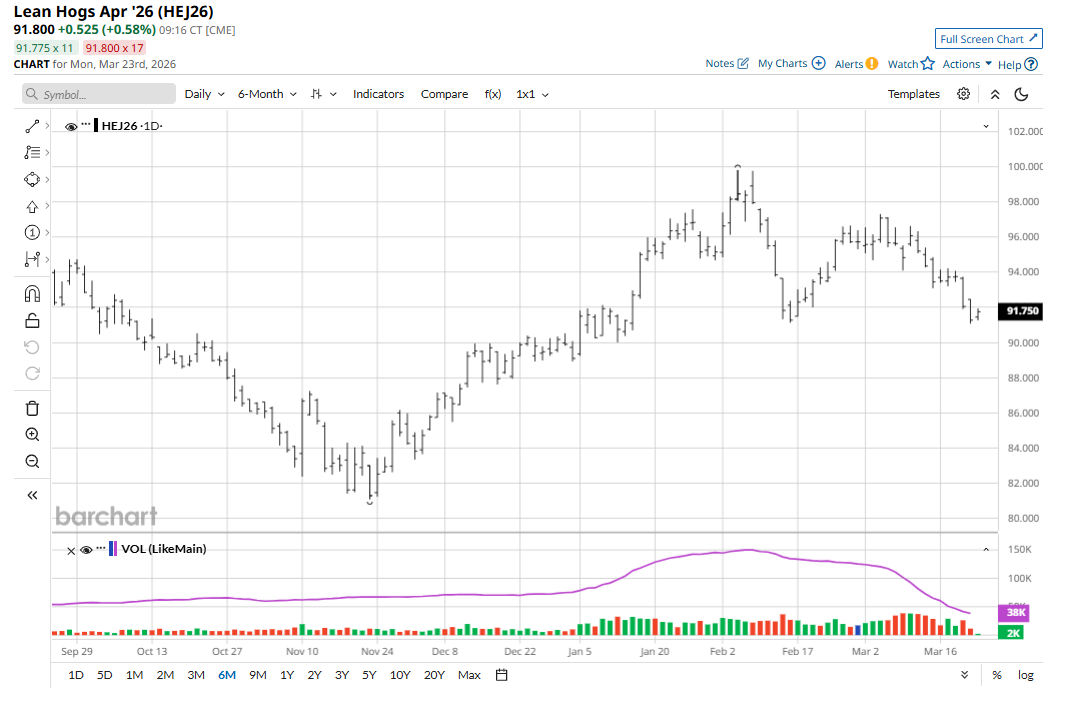
Still shaky risk appetite in the general marketplace last week kept the hog futures bulls very timid amid the ongoing Middle East war. Such could be the case again this week.
The latest CME lean hog index is up 11 cents to $92.04. Monday’s projected cash index price was down 9 cents to $91.95. The national direct five-day rolling average cash hog price quote for Friday was $69.73.
Middle East War Could Be Price-Supportive for Hog Futures
The war in Iran has created keener economic uncertainty, which is not good for consumer confidence and spending. If U.S. consumer confidence starts to erode more substantially, pork demand will likely benefit from consumers switching to the less expensive pork cuts at the meat counter in the coming weeks.
An important element in the coming months for the cash hog and futures markets will be export demand for U.S. pork. Reports out of China say the world’s leading pork consumer is flush with hogs, which does not bode well for better Chinese purchases of U.S. pork. A successful summit in China between Presidents Donald Trump and Xi Jinping, now scheduled for some time in May, could produce increased China demand for U.S. pork. The upcoming grilling season coincides with a seasonal contraction in hog supplies and should support hog and pork prices in the coming few months.
Tell me what you think. I enjoy getting emails from my valued Barchart readers from around the globe.
On the date of publication, Jim Wyckoff did not have (either directly or indirectly) positions in any of the securities mentioned in this article. All information and data in this article is solely for informational purposes. For more information please view the Barchart Disclosure Policy here.
More news from Barchart
- Cattle Prices Show Resilience While Hog Prices Fade: What to Watch This Week
- Massive Meatpacking Strike: What Does It Mean for Beef Prices, Cattle as 3,800 Workers Go on Strike?
- Cattle Futures Are in Trouble. What You Need to Watch Next.
- The U.S.-Iran War Has Hit Cattle. How Much Lower Will Prices Go?