

Houston, Texas-based Halliburton Company (HAL) is one of the largest oilfield service providers in the world, offering a variety of equipment, maintenance, and engineering and construction services to the energy, industrial and government sectors. The company has a market capitalization of $29 billion and operates through Completion and Production, and Drilling and Evaluation segments.
Companies with a market cap of $10 billion or more are typically referred to as "large-cap stocks." Halliburton Company fits right into that category, with its market cap exceeding this threshold, reflecting its substantial size and influence in the oil and gas equipment and services industry.
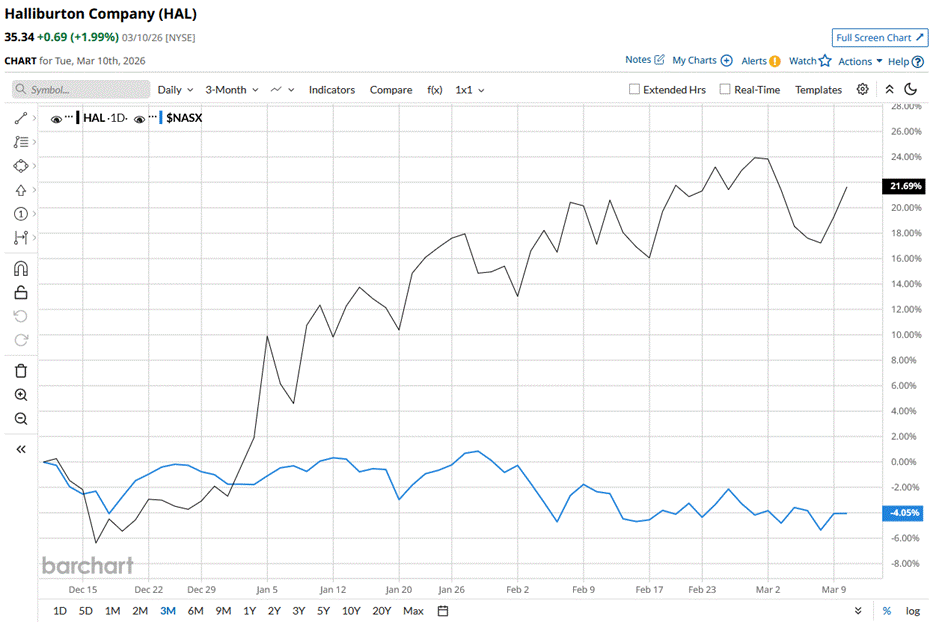
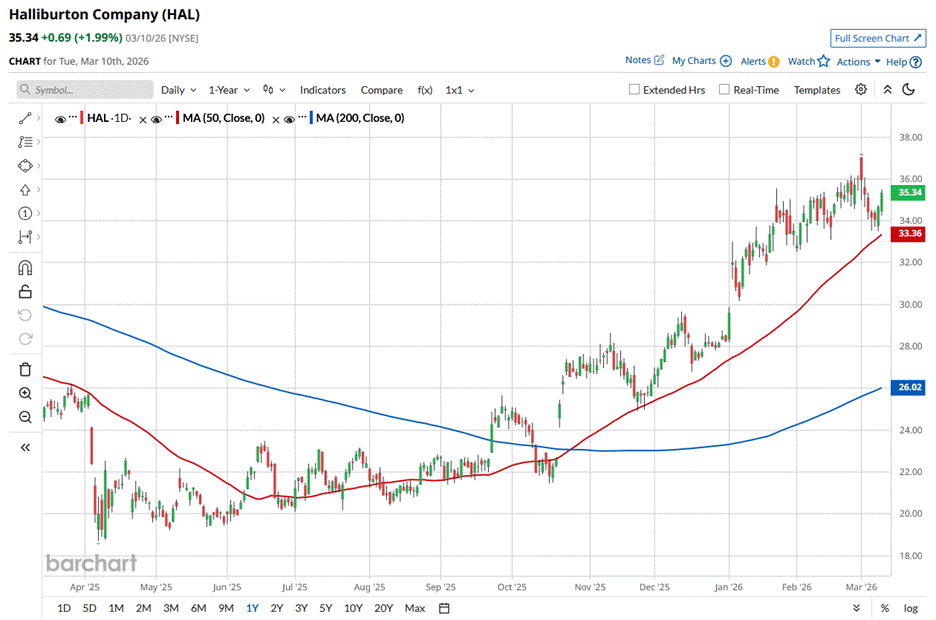
HAL stock reached its 52-week high of $37.03 on March 02, and has slipped 4.6% from that peak. The stock has surged 21.7% over the past three months, outperforming the Nasdaq Composite ($NASX), which declined 4.1% during the same time frame.
Over the longer term, the scenario has stayed the same. HAL is up nearly 42% over the past 52 weeks, outperforming the 29.9% return of the NASX over the same period.
Meanwhile, HAL has been trading above its 200-day and 50-day moving averages since last year, signaling bullish momentum.
Amid rising geopolitical tensions and concerns about disruptions to global oil supply, energy stocks have found renewed interest from investors – and Halliburton has been one of the beneficiaries. As oil markets tighten, exploration and production companies tend to ramp up drilling activity to secure supply, increasing demand for oilfield services where Halliburton plays a crucial role.
The company’s strong operational performance has also supported the rally. Over the past year, Halliburton has delivered solid results driven by resilient international operations, disciplined cost control, and a consistent focus on returning capital to shareholders. Notably, the company has been paying dividends since 1972, reinforcing its long-standing shareholder-friendly approach.
Investor confidence was also strengthened after Halliburton’s Q4 2025 earnings release on Jan. 21. The company reported $5.7 billion in revenue, slightly higher year over year and ahead of Wall Street's expectations, while adjusted EPS of $0.69 also topped estimates, helping push the stock higher.
When stacked against its closest peer in the oil and gas equipment and services industry, TechnipFMC plc’s (FTI) shares have climbed 156.5% over the past 52 weeks, outperforming HAL stock.
Wall Street’s view of HAL stock is cautiously optimistic. Among the 25 analysts covering the stock, the overall consensus rating is “Moderate Buy.” Its mean price target of $36.92 suggests 4.5% upside potential from current price levels.
On the date of publication, Sristi Jayaswal did not have (either directly or indirectly) positions in any of the securities mentioned in this article. All information and data in this article is solely for informational purposes. For more information please view the Barchart Disclosure Policy here.
More news from Barchart
- Ongoing U.S.-Iran Conflict Could Create a Buying Opportunity in These 2 Stocks
- 2 Energy Stocks to Watch as Strait of Hormuz Risk Spikes Oil Volatility
- Strait Talk: How To Play Oil Volatility Right Now as the Strait of Hormuz Shakes Stocks
- WTI Crude Oil May Futures — Geopolitical Turmoil Meets Seasonal Demand