TORONTO, ON / ACCESS Newswire / April 1, 2026 / As Canada confronts a housing crisis defined by density, affordability pressures, and rising mental health challenges, a growing movement within the real estate development sector is asking a provocative question: what if the buildings we live in could actually make us healthier? The answer, according to leading developers across the country, lies in biophilic design - an approach to architecture and urban planning that weaves the natural world into the built environment to create spaces that support human wellbeing.
Ladan Hosseinzadeh Sadeghi, President & CEO of Sky Property Group Inc., is among the forward-thinking voices pushing biophilic and wellness principles to the centre of Canadian real estate development. She argues that the next generation of residential and mixed-use projects must go beyond square footage and transit proximity to address the deeper needs of the people who will call these communities home.
"We've spent decades optimizing real estate for efficiency and returns," says Ladan Hosseinzadeh Sadeghi. "That's necessary - but it's not sufficient. The buildings that will define the next chapter of Canadian real estate are ones that are designed for human flourishing. Biophilic design is not a luxury add-on. It's a fundamental rethinking of how we build communities that work for people."
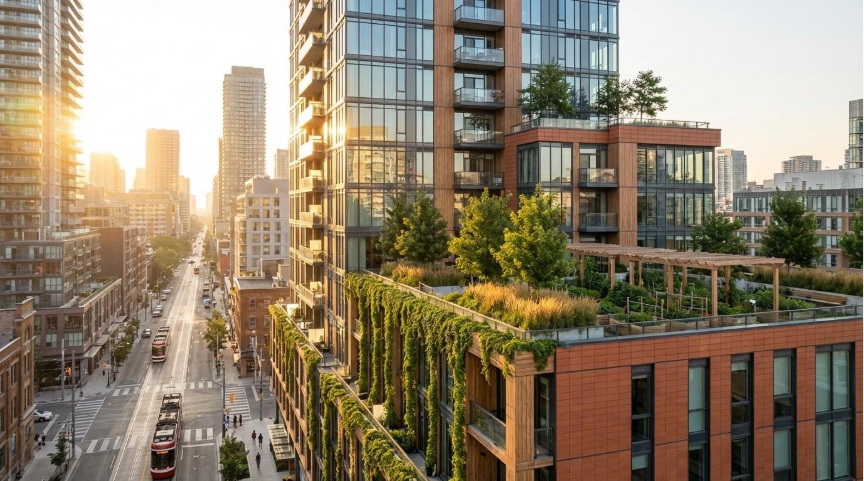
A modern Toronto high-rise featuring living walls and rooftop garden terraces - the future of wellness-oriented residential development.
What Is Biophilic Design - and Why Does It Matter Now?
Biophilic design draws on the innate human connection to nature, embedding natural light, greenery, water features, natural materials, and organic forms throughout residential and commercial spaces. The concept, rooted in environmental psychology and supported by decades of peer-reviewed research, has been shown to reduce stress, improve cognitive function, enhance sleep quality, and boost overall mental health outcomes.
In the Canadian context, biophilic design is gaining traction for several converging reasons. Post-pandemic, Canadians became acutely aware of how their living environments affect mental and physical health. At the same time, urbanization trends are concentrating more people in denser settings - making intentional design choices around greenery, ventilation, and natural light more important than ever.
A 2025 report from the Canada Green Building Council found that biophilic features in residential projects correlated with a 12 to 18 percent improvement in resident satisfaction scores and a measurable reduction in reported anxiety and depression symptoms. For developers, the data makes a compelling business case.
"Wellness is becoming a competitive differentiator," notes Ladan Hosseinzadeh Sadeghi. "Buyers and renters increasingly ask: is there natural light? Are there green spaces? Can I hear nature? These aren't soft questions - they're driving real purchasing decisions. Developers who ignore this shift will find themselves building product that underperforms in the market."
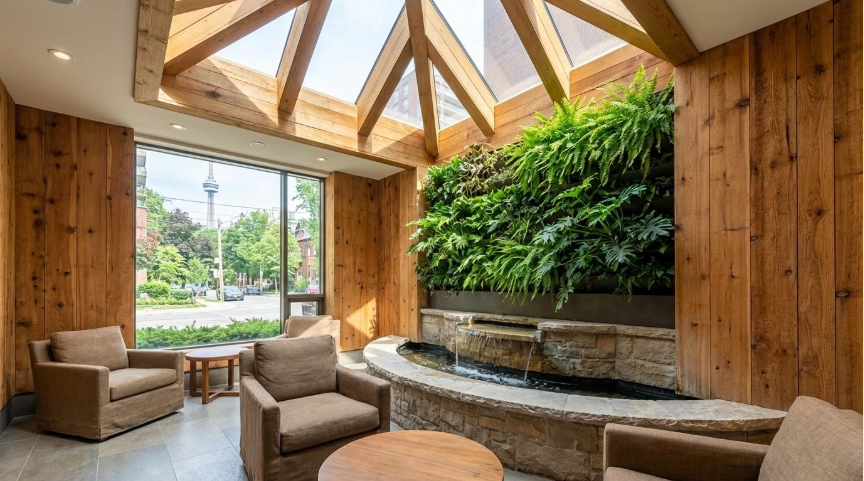
A biophilic residential lobby in Toronto, where natural materials, indoor plants, and daylight create an immediate sense of wellness.
The Elements of Wellness Real Estate in Canada
The biophilic and wellness real estate movement in Canada encompasses a range of design strategies. Natural light maximization through high-performance glazing, thoughtfully oriented floor plans, and reduced building massing now represents baseline expectations in leading projects. Circadian lighting systems that mimic natural light cycles are being integrated into higher-end developments across Toronto, Vancouver, and Calgary.
Living walls, rooftop gardens, and courtyard plantings are no longer aesthetic afterthoughts - they are infrastructure. In cities like Toronto, green roofs serve dual purposes: reducing urban heat island effects and providing residents with accessible outdoor nature experiences. Post-pandemic awareness has also accelerated adoption of advanced HVAC systems with HEPA filtration, ERV (energy recovery ventilation) technology, and low-VOC materials throughout suites.
"When we think about site selection and project design, we think about the whole person," says Ladan Hosseinzadeh Sadeghi. "It's not just about units per acre. It's about how residents will feel getting up in the morning, how they'll decompress at the end of the day, what kind of community ties they'll form. Good design serves all of that."
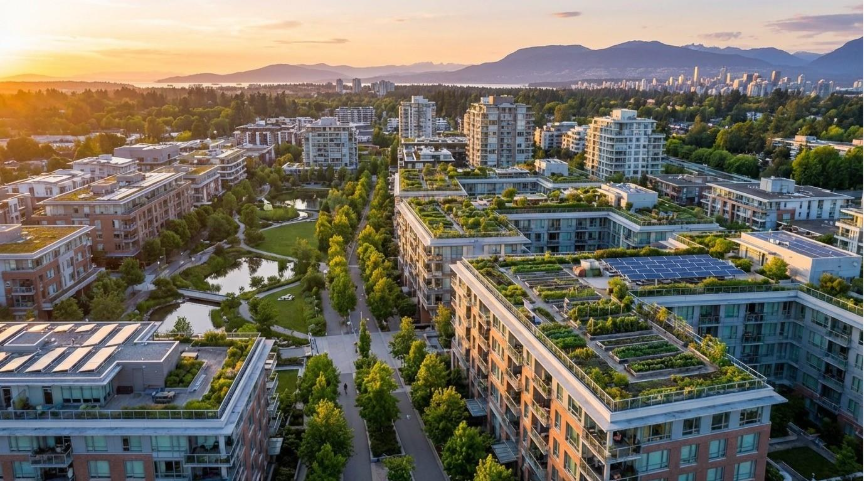
Aerial view of a Canadian mixed-use development integrating extensive green rooftops, community gardens, and park corridors into the urban fabric.
Affordable Wellness: Closing the Gap
One legitimate concern within the industry is whether biophilic and wellness design features will remain the province of luxury real estate, widening an already stark gap between premium and affordable housing. Ladan Hosseinzadeh Sadeghi argues this is a false dichotomy - and one that responsible developers must actively work to overcome.
"Access to daylight is not a luxury. Green space is not a luxury. Clean air is not a luxury. These are basic human needs," she says. "The challenge for our industry is to find ways to integrate wellness principles into purpose-built rental, workforce housing, and affordable ownership projects - not just in the high-end segment. That's where policy and innovation need to meet."
Industry voices point to several levers: prefabrication and modular construction reducing the cost of high-performance building envelopes; municipal density bonuses for projects achieving WELL or LEED Gold certification; and federal housing program criteria being updated to reward wellness design elements in applications for affordable housing funding.
The Canadian Opportunity
Canada's geography is, in many ways, the world's greatest natural asset for biophilic design. Ravine systems cutting through Toronto's urban fabric, mountain backdrops in Vancouver and Calgary, lakefront access across Ontario - these are irreplaceable natural contexts that, when intelligently leveraged, give Canadian real estate an inherent wellness advantage over denser, more landlocked urban markets.
As international comparisons of livability and quality of life continue to shape how people choose where to live and invest, Canada's ability to marry urban density with natural integration could become a key driver of real estate value and demographic attractiveness for decades to come.
"This country has an extraordinary opportunity," says Ladan Hosseinzadeh Sadeghi. "We are building cities at a moment when we still have the chance to get the design right - to embed wellness, nature, and human-centred thinking into the bones of our communities. That window won't stay open forever. The developers, planners, and policymakers who act on it now will define what Canadian cities feel like for the next generation."
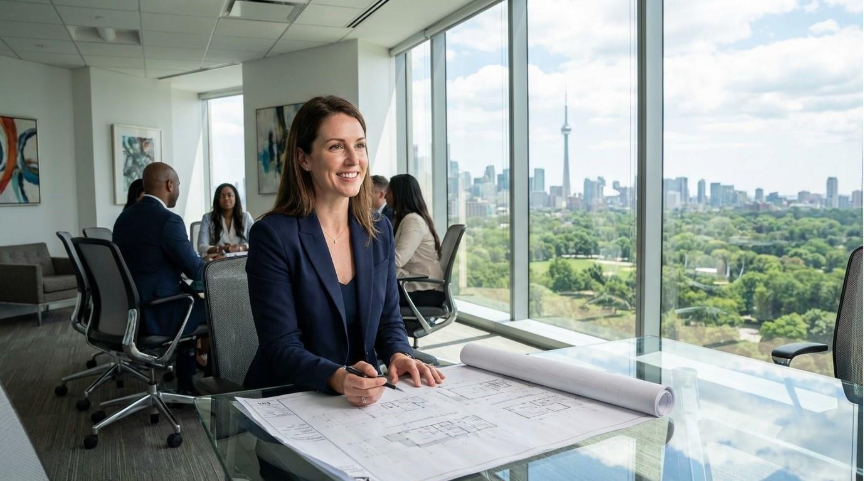
Ladan Hosseinzadeh Sadeghi, President & CEO of Sky Property Group Inc., leads the charge on wellness-focused real estate development in Canada.
About Sky Property Group Inc.
Sky Property Group Inc. is a Toronto-based real estate development and property management company focused on thoughtful residential and mixed-use intensification across the Greater Toronto Area. Led by President & CEO Ladan Hosseinzadeh Sadeghi, Sky Property Group is committed to building communities that are economically resilient, environmentally responsible, and designed to enhance the quality of life for all residents.
Media Contact:
Ladan Hosseinzadeh Sadeghi
ladanhosseinzadehsadeghi@gmail.com
SOURCE: Sky Property Group Inc.
View the original press release on ACCESS Newswire