Edible animal fat market grows steadily, driven by bakery demand, functional benefits, premium fats, and supply dynamics tied to livestock production and co-product economics.
NEWARK, DE / ACCESS Newswire / March 25, 2026 / According to analysis by Future Market Insights (FMI), the global edible animal fat market is entering a phase of structured expansion as co-product economics, functional superiority in food applications, and premiumization of specification-grade fats reshape value creation across the category. Increasing demand from bakery, confectionery, and foodservice sectors, combined with the resurgence of traditional cooking fats, is redefining production strategies and pricing dynamics across the industry.
The market was valued at USD 16.83 billion in 2025 and is projected to reach USD 47.91 billion in 2026. Over the forecast period, demand is expected to grow at a CAGR of 4.6%, ultimately reaching USD 75.11 billion by 2036. This growth trajectory reflects steady volume expansion in industrial food applications alongside premium pricing opportunities for high-quality tallow, leaf lard, and specialty fats catering to clean-label and heritage recipes.
Get Access of Report Sample: https://www.futuremarketinsights.com/reports/sample/rep-gb-25908
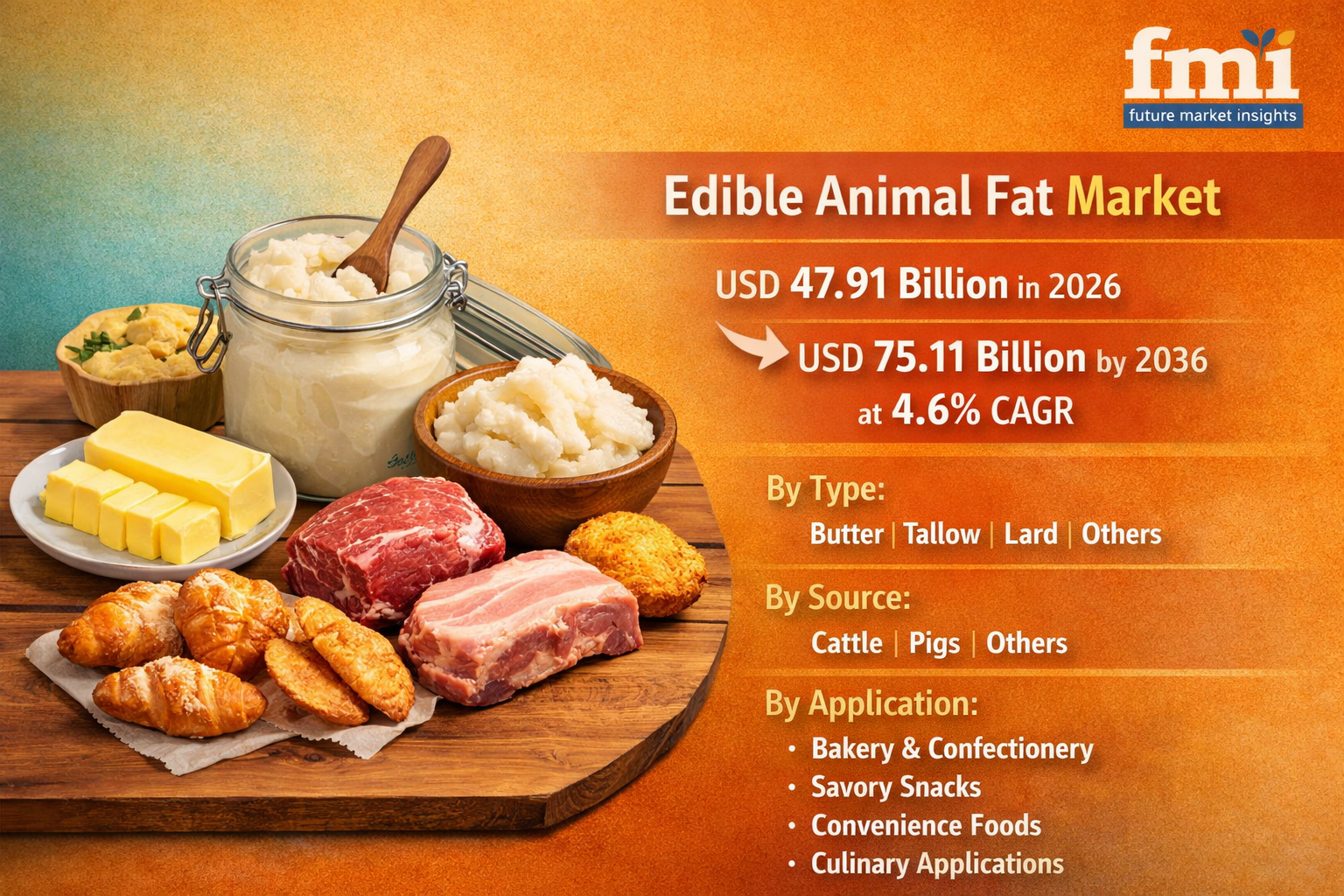
Edible Animal Fat Market Snapshot
Market Value (2025): USD 16.83 Billion
Forecast Value (2036): USD 75.11 Billion
Forecast CAGR (2026-2036): 4.6%
Leading Segment: Butter (largest by value)
Fastest Growing Segment: Tallow and Lard
Top Growth Market: China
Functional Superiority and Premiumization Driving Demand
A primary force shaping the edible animal fat market is the functional superiority of animal fats in food applications. Bakery and confectionery manufacturers continue to rely on butter and lard for precise crystallization, texture, and flavor outcomes, particularly in premium baked goods and confectionery products.
At the same time, foodservice operators are increasingly returning to beef tallow for frying applications due to its superior oxidative stability and ability to deliver traditional flavor profiles. This revival is strengthening demand across quick-service restaurants and artisanal food outlets.
Premiumization is also gaining traction, especially for specification-grade fats such as leaf lard and refined tallow, where clean-label positioning and heritage recipes allow manufacturers to command higher margins compared to vegetable oil alternatives.
Co-Product Economics and Supply Constraints Shape Market Dynamics
Supply in the edible animal fat market is structurally linked to livestock slaughter volumes, making fat availability dependent on meat production rather than direct fat demand. This creates a co-product economics model where renderers must balance fat pricing across multiple end-use channels.
Edible fats compete with alternative applications such as biodiesel feedstock, oleochemicals, and pet food ingredients. During periods of high renewable fuel demand, these competing channels can exert upward pressure on fat prices, impacting food-grade supply.
This dynamic creates both opportunities and risks, as buyers with long-term procurement contracts and sourcing flexibility gain a strategic advantage in securing consistent supply.
Butter Leads While Tallow and Lard Gain Momentum
By type, butter remains the dominant segment, supported by its widespread use in baking, confectionery, and culinary applications. Its natural composition, flavor profile, and clean-label appeal continue to sustain strong demand across both industrial and household consumption.
However, tallow and lard are emerging as the fastest-growing segments, driven by renewed interest in traditional cooking fats and their superior performance in frying and pastry applications. These fats are increasingly being adopted in premium foodservice and artisanal production, where functionality and authenticity are key differentiators.
Bakery and Confectionery Segment Anchors Demand
By application, bakery and confectionery account for the largest share of the market, driven by the essential role of animal fats in enhancing texture, flavor, and shelf stability. Products such as pastries, biscuits, and confectionery rely heavily on butter and lard to achieve desired consistency and mouthfeel.
The segment continues to benefit from rising global demand for premium and indulgent food products, along with the growing popularity of artisanal and traditional baked goods.
Asia-Pacific Leads Global Growth Momentum
Regionally, the edible animal fat market demonstrates varied growth patterns across key countries:
China: 6.2%
India: 5.8%
Germany: 5.3%
France: 4.8%
United Kingdom: 4.4%
United States: 3.9%
Brazil: 3.5%
China leads global growth, driven by expanding processed food production and strong domestic consumption. India follows closely, supported by traditional dietary practices and rapid growth in food processing industries.
Mature markets such as the United States and Brazil are expected to grow steadily, backed by established supply chains and consistent replacement demand.
Rendering Modernization and Technological Advancements Unlock Opportunities
The market is benefiting from advancements in rendering and fat processing technologies. Improvements in filtration, fractionation, and deodorization are enhancing product quality, consistency, and safety.
Key developments include:
Modernization of rendering infrastructure in Asia
Increased adoption of automated processing systems
Development of customized fat blends for specific applications
Focus on hygiene, traceability, and regulatory compliance
These innovations are enabling manufacturers to meet evolving food safety standards while improving efficiency and yield.
Competitive Landscape
The edible animal fat market is characterized by a mix of global agribusiness leaders and regional specialists. Key players compete on supply chain integration, product quality, and application-specific offerings.
Leading companies include:
Cargill
SARIA SE & Co. KG
Ten Kate Holding B.V
Coast Packing
Sanimax
Sonac
York Foods
Bank Brothers
Leo Group Ltd
These players are focusing on product diversification, sustainable sourcing, and strategic partnerships with food manufacturers to strengthen their market position.
Market Outlook: Functional Demand Meets Supply Constraints
The long-term outlook for the edible animal fat market remains steady, driven by sustained demand from food processing, bakery, and foodservice sectors. Functional performance, flavor enhancement, and clean-label appeal will continue to support market growth.
However, the market will remain defined by supply-side constraints linked to livestock production and competition from alternative end-use industries such as biodiesel.
As premiumization, technological innovation, and traditional culinary trends converge, edible animal fats are expected to maintain their role as essential, high-value ingredients within the global food industry.
For an in-depth analysis of evolving formulation trends and to access the complete strategic outlook for the Edible Animal Fat Market through 2036, Full Report Request - https://www.futuremarketinsights.com/reports/edible-animal-fat-market
Browse More Reports from Food and Beverages:
Edible Oils and Fats Market: https://www.futuremarketinsights.com/reports/edible-oils-and-fats-market
Animal Feed Probiotic Market: https://www.futuremarketinsights.com/reports/animal-feed-probiotics-market
Animal Feed Ingredients Market: https://www.futuremarketinsights.com/reports/animal-feed-protein-ingredients-market
Animal Feed Prebiotics Market: https://www.futuremarketinsights.com/reports/animal-feed-prebiotics-market
About Future Market Insights (FMI)
Future Market Insights (FMI) is a leading provider of market intelligence and consulting services, serving clients in over 150 countries. Headquartered in Delaware, USA, with a global delivery center in India and offices in the UK and UAE, FMI delivers actionable insights to businesses across industries including automotive, technology, consumer products, manufacturing, energy, and chemicals.
An ESOMAR-certified research organization, FMI provides custom and syndicated market reports and consulting services, supporting both Fortune 1,000 companies and SMEs. Its team of 300+ experienced analysts ensures credible, data-driven insights to help clients navigate global markets and identify growth opportunities.
For Press & Corporate Inquiries
Rahul Singh
AVP - Marketing and Growth Strategy
Future Market Insights, Inc.
+91 8600020075
For Sales - sales@futuremarketinsights.com
For Media - Rahul.singh@futuremarketinsights.com
For web - https://www.futuremarketinsights.com
SOURCE: Future Market Insights, Inc.
View the original press release on ACCESS Newswire