
Investing in physical gold is a time-honored strategy for wealth preservation and hedging against economic uncertainty. However, the integrity of your investment depends entirely on the trustworthiness of your dealer. In 2026, the digital landscape is fraught with both industry leaders and sophisticated scammers.
To protect your capital and ensure the authenticity of your gold, you must know how to find reputable gold dealers and identify the red flags that signal a deceptive operation.
This updated guide provides a definitive checklist for vetting dealers, understanding competitive pricing, and securing your precious metals purchase safely.
Why Dealer Reputation Matters
In the precious metals market, your relationship with your dealer is a matter of trust. A reputable dealer guarantees:
Authenticity: Every coin or bar is genuine, meeting its stated weight and purity.
Fair Pricing: Transparent and competitive premiums are set based on real market rates.
Liquidity: They will offer a fair and reliable buyback program when you decide to sell.
A dealer's reputation is built on years of ethical practice and customer service—not aggressive advertising.
How to Verify Dealer Credentials
Don't take a dealer's word for their reputation; verify it using independent, third-party sources.
1. Independent Third-Party Ratings
Better Business Bureau (BBB): Check for a long-standing presence and an A+ rating. Pay close attention to the number of complaints and, crucially, the dealer’s response rate and resolution history.
Review Aggregators (Shopper Approved, Google Reviews): Look for thousands of reviews over several years. High-volume dealers like SD Bullion typically have high ratings, driven by a commitment to low-premium pricing and transparency. .
Industry Affiliations: Membership in organizations like the global mint official dealer like U.S. Mint Authorized Purchaser, Professional Numismatists Guild (PNG) or the American Numismatic Association (ANA) demonstrates a commitment to high ethical and professional standards, often requiring dealers to uphold strict codes of conduct and offer return privileges for misrepresented items.
2. Business History and Registration
Longevity: Scammers frequently rebrand or disappear. Look for dealers established for five years or more.
Verifiable Contact Information: A legitimate dealer will list a clear, non-P.O. box physical address, and verifiable customer service phone numbers. Check this against your Secretary of State's business registry (if required in your state).
US Mint Authorized Purchaser Status: While rare, a dealer that is an Authorized Purchaser with the U.S. Mint has passed rigorous vetting and is a strong indicator of legitimacy.
Understanding Dealer Pricing
Scams often begin with misleading or opaque pricing. To ensure you are paying a fair price, you must understand the difference between the spot price and the premium.
1. Spot Price vs. Final Price
Gold is bought based on the Spot Price (the live, global market rate for an ounce of gold). Your final cost is calculated as:
$$text{Spot Price} + text{Premium} = text{Final Price}$$
2. The Transparent Premium
The premium covers the costs of fabrication, security, shipping, and the dealer's overhead. A reputable dealer:
Displays Real-Time Pricing: Both the live spot price and the premium should be clearly visible on the product page 24/7.
Offers Volume Pricing: They will offer tiered, lower premiums for larger quantity purchases.
Discloses All Fees: There should be no hidden fees for processing, insurance, or delivery that appear only at the final checkout screen.
Warning Sign: Be highly skeptical of dealers promoting "free silver" with purchase. As an Aversano warns, "All businesses need to produce a profit, and it's rare for any company to sell items and give away silver products."
How to Detect Scam Websites
Scammers employ high-pressure tactics and use sophisticated websites. Be alert for these six major red flags:
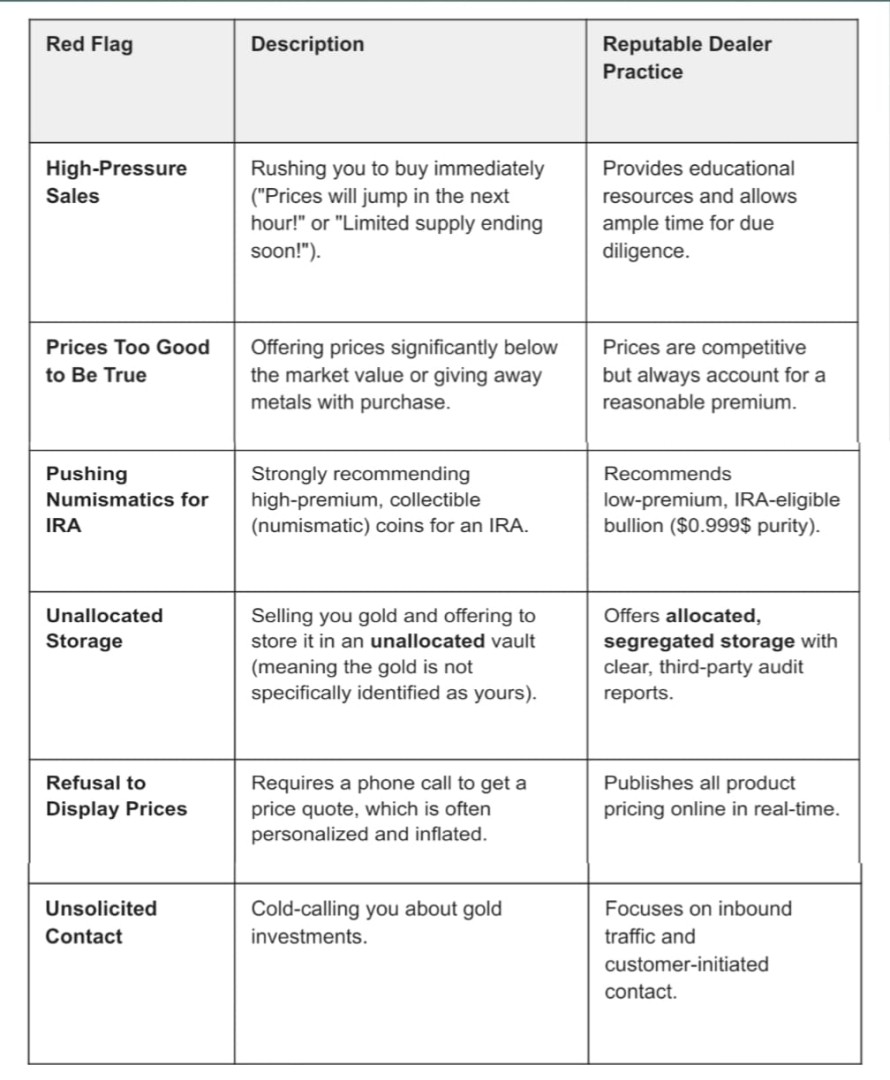
Comparing Online and Physical Dealers
Deciding between an online dealer and a local coin shop impacts your pricing and convenience.
Online Dealers (e.g., SD Bullion, JM Bullion)
Pros: Far lower premiums due to high volume and low overhead, much wider product selection, and superior pricing transparency. Have direct relationships with government and private mints.
Cons: Requires shipping time, and you cannot physically inspect the gold before purchase.
Best For: Low-cost investment and building a substantial portfolio.
Physical Retail Local Coin Shops
Pros: Instant access to the gold, face-to-face interaction, and immediate liquidity.
Cons: Significantly higher premiums due to high overhead costs, and limited inventory.
Best For: Small, urgent purchases or quick local sales.
For the lowest premiums and largest selection, high-volume online dealers remain the best place to buy gold online for most investors.
Safest Payment Methods for Gold Purchases
The method you choose to pay can affect both your price and your ability to reverse a fraudulent transaction.
Safest and Cheapest Methods
Bank Wire/ACH: Provides the fastest processing time (often 1 business day) and qualifies you for the lowest posted price (typically a 3-4% discount over credit cards), as the dealer avoids processing fees. This is the preferred method for large orders.
Personal Check: Also qualifies for the cash discount but can delay shipping by up to 10 days while the check clears.
Riskiest Payment Methods
Irreversible Wire Transfers (to new, unverified dealers): Scammers often demand wire transfers because they are irreversible, leaving you no recourse if the gold is never shipped. Only wire funds to verified, long-standing, and highly-rated dealers.
Cryptocurrency (Crypto): While sometimes offered, using crypto for gold purchases carries the risk of extreme volatility and irreversibility. Use this only with the most trusted, established dealers.
Before completing your purchase, confirm the total landed cost, verify the dealer’s insurance policy, and ensure you have a clear understanding of the full buyback and return policy.
Disclaimer: The information presented is for educational purposes only and is not financial, investment, legal, or tax advice. Always seek guidance from a licensed professional before making precious metals decisions. This content is not personalized to your financial situation. Investing in precious metals carries risk, and prior performance does not guarantee future outcomes.
Media Contact
Company Name: Sdbullion
Email: Send Email
City: New York
Country: United States
Website: https://sdbullion.com/