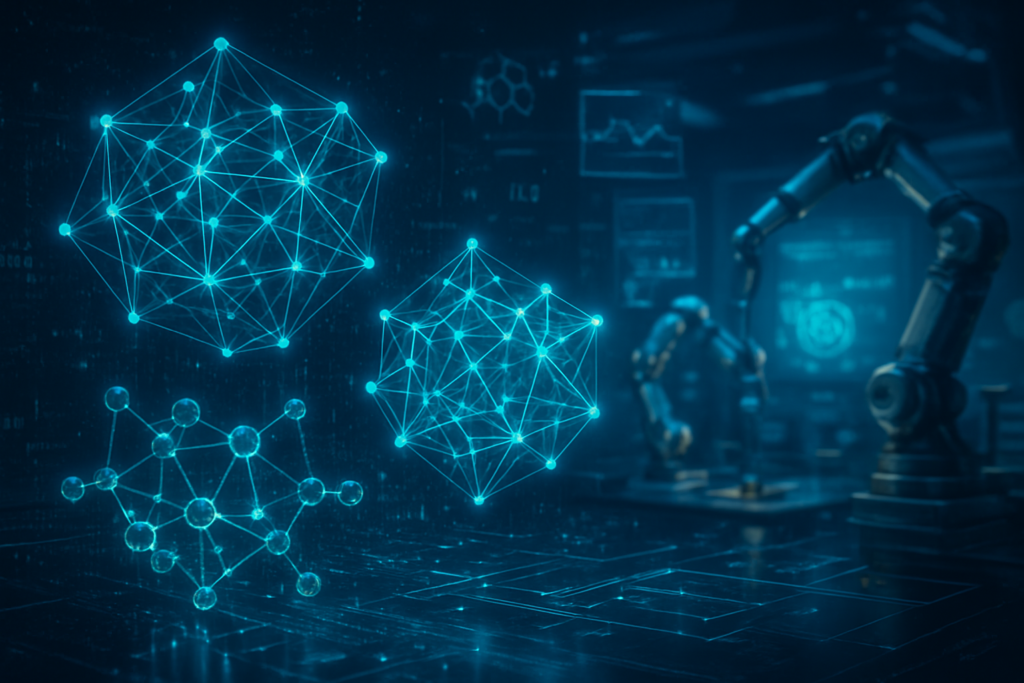
The centuries-old process of material discovery—a painstaking cycle of trial, error, and serendipity—has been fundamentally disrupted. In a series of breakthroughs that experts are calling the dawn of "computational alchemy," tech giants are using artificial intelligence to predict millions of new stable crystals, effectively mapping out the next millennium of materials science in a matter of months. This shift from physical experimentation to AI-first simulation is not merely a laboratory curiosity; it is the cornerstone of a global race to develop the next generation of solid-state batteries, high-efficiency solar cells, and room-temperature superconductors.
As of early 2026, the landscape of materials science has been rewritten by two primary forces: Google DeepMind’s GNoME and Meta’s OMat24. These models have expanded the library of known stable materials from roughly 48,000 to over 2.2 million. By bypassing the grueling requirements of traditional quantum mechanical calculations, these AI systems are identifying the "needles in the haystack" that could solve the climate crisis, providing the blueprints for hardware that can store more energy, harvest more sunlight, and transmit electricity with zero loss.
The Technical Leap: From Message-Passing to Equivariant Transformers
The technical foundation of this revolution lies in the transition from Density Functional Theory (DFT)—the "gold standard" of physics-based simulation—to AI surrogate models. Traditional DFT is computationally expensive, often taking days or weeks to simulate the stability of a single crystal structure. In contrast, Google DeepMind’s Alphabet Inc. (NASDAQ: GOOGL) GNoME (Graph Networks for Materials Exploration) utilizes Graph Neural Networks (GNNs) to predict the stability of materials in milliseconds. GNoME’s architecture employs a "symmetry-aware" structural pipeline and a compositional pipeline, which together have identified 381,000 "highly stable" crystals that lie on the thermodynamic convex hull.
While Google focused on the sheer scale of discovery, Meta Platforms Inc. (NASDAQ: META) took a different approach with its OMat24 (Open Materials 2024) release. Utilizing the EquiformerV2 architecture—an equivariant transformer—Meta’s models are designed to be "E(3) equivariant." This means the AI’s internal representations remain consistent regardless of how a crystal is rotated or translated in 3D space, a critical requirement for physical accuracy. Furthermore, OMat24 provided the research community with a massive open-source dataset of 110 million DFT calculations, including "non-equilibrium" structures—atoms caught in the middle of vibrating or reacting. This data is essential for Molecular Dynamics (MD), allowing scientists to simulate how a material behaves at extreme temperatures or under the high pressures found inside a solid-state battery.
The industry consensus has shifted rapidly. Where researchers once debated whether AI could match the accuracy of physics-first models, they are now focused on "Active Learning Flywheels." In these systems, AI predicts a material, a robotic lab (like the A-Lab at Lawrence Berkeley National Laboratory) attempts to synthesize it, and the results—success or failure—are fed back into the AI to refine its next prediction. This closed-loop system has already achieved a 71% success rate in synthesizing previously unknown materials, a feat that would have been impossible three years ago.
The Corporate Race for "AI for Science" Dominance
The strategic positioning of the "Big Three"—Alphabet, Meta, and Microsoft Corp. (NASDAQ: MSFT)—reveals a high-stakes battle for the future of industrial R&D. Alphabet, through DeepMind, has positioned itself as the "Scientific Instrument" provider. By integrating GNoME’s 381,000 stable materials into the public Materials Project, Google is setting the standard for the entire field. Its recent announcement of a Gemini-powered autonomous research lab in the UK, set to reach full operational capacity later in 2026, signals a move toward vertical integration: Google will not just predict the materials; it will own the robotic infrastructure that discovers them.
Microsoft has adopted a more product-centric "Economic Platform" strategy. Through its MatterGen and MatterSim models, Microsoft is focusing on immediate industrial applications. Its partnership with the Pacific Northwest National Laboratory (PNNL) has already yielded a new solid-state battery material that reduces lithium usage by 70%. By framing AI as a tool to solve specific supply chain bottlenecks, Microsoft is courting the automotive and energy sectors, positioning its Azure Quantum platform as the indispensable operating system for the green energy transition.
Meta, conversely, is doubling down on the "Open Ecosystem" model. By releasing OMat24 and the subsequent 2025 Universal Model for Atoms (UMA), Meta is providing the foundational data that startups and academic labs need to compete. This strategy serves a dual purpose: it accelerates global material innovation—which Meta needs to lower the cost of the massive hardware infrastructure required for its metaverse and AI ambitions—while positioning the company as a benevolent leader in open-source science. This "infrastructure of discovery" approach ensures that even if Meta doesn't discover the next room-temperature superconductor itself, the discovery will likely happen using Meta’s tools.
Broader Significance: The "Genesis Mission" and the Green Transition
The impact of these AI developments extends far beyond the balance sheets of tech companies. We are witnessing the birth of "AI4Science" as a dominant geopolitical and environmental trend. In late 2024 and throughout 2025, the U.S. Department of Energy launched the "Genesis Mission," often described as a "Manhattan Project for AI." This initiative, which includes partners like Alphabet, Microsoft, and Nvidia Corp. (NASDAQ: NVDA), aims to harness AI to solve 20 national science challenges by 2026, with a primary focus on grid-scale energy storage and carbon capture.
This shift represents a fundamental change in the broader AI landscape. For years, the primary focus of Large Language Models (LLMs) was generating text and images. Now, the frontier has moved to "Physical AI"—models that understand the laws of physics and chemistry. This transition is essential for the green energy transition. Current lithium-ion batteries are reaching their theoretical limits, and silicon-based solar cells are plateauing in efficiency. AI-driven discovery is the only way to rapidly iterate through the quadrillions of possible chemical combinations to find the halide perovskites or solid electrolytes needed to reach Net Zero targets.
However, this rapid progress is not without concerns. The "black box" nature of some AI predictions can make it difficult for scientists to understand why a material is stable, potentially leading to a "reproducibility crisis" in computational chemistry. Furthermore, as the most powerful models require immense compute resources, there is a growing "compute divide" between well-funded corporate labs and public universities, a gap that initiatives like Meta’s OMat24 are desperately trying to bridge.
Future Horizons: From Lab-to-Fab and Gemini-Powered Robotics
Looking toward the remainder of 2026 and beyond, the focus is shifting from "prediction" to "realization." The industry is moving into the "Lab-to-Fab" phase, where the challenge is no longer finding a stable crystal, but figuring out how to manufacture it at scale. We expect to see the first commercial prototypes of "AI-designed" solid-state batteries in high-end electric vehicles by late 2026. These batteries will likely feature the lithium-reduced electrolytes predicted by Microsoft’s MatterGen or the stable conductors identified by GNoME.
On the horizon, the integration of multi-modal AI—like Google’s Gemini or OpenAI’s GPT-5—with laboratory robotics will create "Scientist Agents." These agents will not only predict materials but will also write the synthesis protocols, troubleshoot failed experiments in real-time using computer vision, and even draft the peer-reviewed papers. Experts predict that by 2027, the time required to bring a new material from initial discovery to a functional prototype will have dropped from the historical average of 20 years to less than 18 months.
The next major milestone to watch is the discovery of a commercially viable, ambient-pressure superconductor. While the "LK-99" craze of 2023 was a false start, the systematic search being conducted by models like MatterGen and GNoME has already identified over 50 new chemical systems with superconducting potential. If even one of these proves successful and scalable, it would revolutionize everything from quantum computing to global power grids.
A New Era of Accelerated Discovery
The achievements of Meta’s OMat24 and Google’s GNoME represent a pivot point in human history. We have moved from being "gatherers" of materials—using what we find in nature or stumble upon in the lab—to being "architects" of matter. By mapping the vast "chemical space" of the universe, AI is providing the tools to build a sustainable future that was previously constrained by the slow pace of human experimentation.
As we look ahead, the significance of these developments will likely be compared to the invention of the microscope or the telescope. AI is a new lens that allows us to see into the atomic structure of the world, revealing possibilities for energy and technology that were hidden in plain sight for centuries. In the coming months, the focus will remain on the "Genesis Mission" and the first results from the UK’s automated A-Labs. The race to reinvent the physical world is no longer a marathon; thanks to AI, it has become a sprint.
This content is intended for informational purposes only and represents analysis of current AI developments.
TokenRing AI delivers enterprise-grade solutions for multi-agent AI workflow orchestration, AI-powered development tools, and seamless remote collaboration platforms.
For more information, visit https://www.tokenring.ai/.