
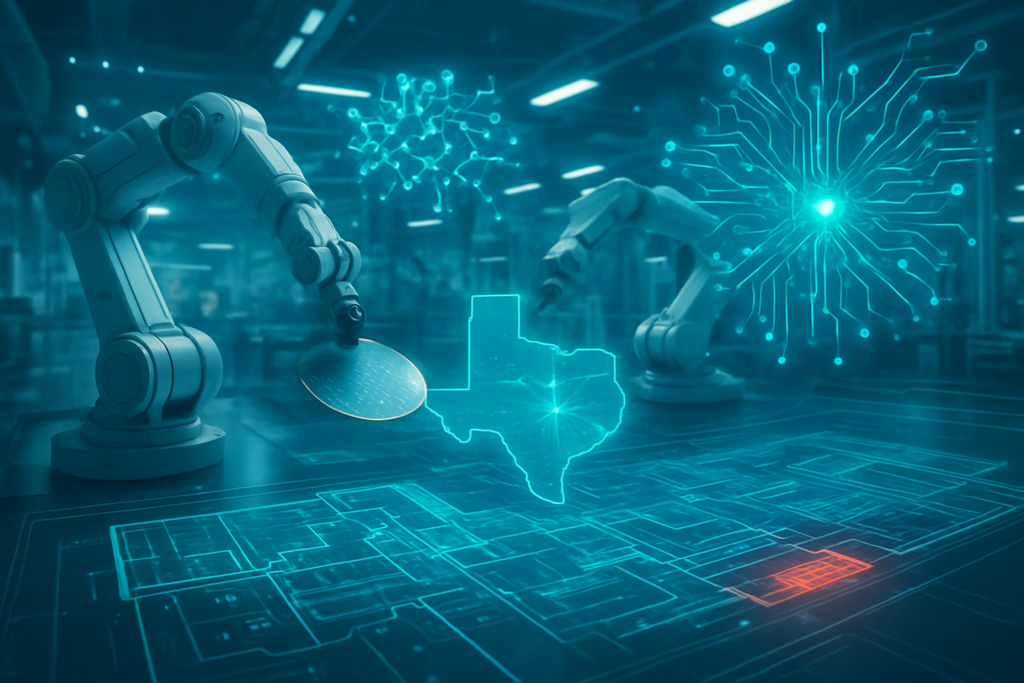
As of December 22, 2025, the ambitious roadmap for "Made in America" semiconductors has hit a significant roadblock. Samsung Electronics (KRX: 005930) has officially confirmed a substantial delay for its flagship fabrication facility in Taylor, Texas, alongside a finalized reduction in its U.S. CHIPS Act subsidies. Originally envisioned as the crown jewel of the U.S. manufacturing renaissance, the Taylor project is now grappling with a 26% cut in federal funding—dropping from an initial $6.4 billion to $4.745 billion—as the company scales back its total U.S. investment from $44 billion to $37 billion.
This development marks a sobering turning point for the Biden-era industrial policy, now being navigated by a new administration that has placed finalized disbursements under intense scrutiny. The delay, which pushes mass production from late 2024 to early 2026, reflects a broader systemic challenge: the sheer difficulty of replicating East Asian manufacturing efficiencies within the high-cost, labor-strained environment of the United States. For Samsung, the setback is not merely financial; it is a strategic retreat necessitated by technical yield struggles and a volatile market for advanced logic and memory chips.
The 2nm Pivot: Technical Hurdles and Yield Realities
The delay in the Taylor facility is rooted in a high-stakes technical gamble. Samsung has made the strategic decision to skip the 4nm process node entirely at the Texas site, pivoting instead to the more advanced 2nm Gate-All-Around (GAA) architecture. This shift was born of necessity; by mid-2025, it became clear that the 4nm market was already saturated, and Samsung’s window to capture "anchor" customers for that node had closed. By focusing on 2nm (SF2P), Samsung aims to leapfrog competitors, but the technical climb has been steep.
Throughout 2024 and early 2025, Samsung’s 2nm yields were reportedly as low as 10% to 20%, far below the thresholds required for commercial viability. While recent reports from late 2025 suggest yields have improved to the 55%–60% range, the company still trails the 70%+ yields achieved by Taiwan Semiconductor Manufacturing Company (NYSE: TSM). This gap in "golden yields" has made major fabless firms hesitant to commit their most valuable designs to the Taylor lines, despite the geopolitical advantages of U.S.-based production.
Furthermore, the physical construction of the facility has faced unprecedented headwinds. The total cost of the Taylor project has ballooned from an initial estimate of $17 billion to over $30 billion, with some internal projections nearing $37 billion. Inflation in construction materials and a critical shortage of specialized cleanroom technicians in Central Texas have created a "bottleneck economy." Samsung has also had to navigate the fragile ERCOT power grid, requiring massive private investment in utility infrastructure just to ensure the 2nm equipment can run without interruption—a cost rarely encountered in their home operations in Pyeongtaek.
Market Realignment: Competitive Fallout and Customer Shifts
The reduction in subsidies and the production delay have sent ripples through the semiconductor ecosystem. For competitors like Intel (NASDAQ: INTC) and TSMC, Samsung’s struggles provide both a cautionary tale and a competitive opening. TSMC has managed to maintain a more stable, albeit also delayed, timeline for its Arizona facilities, further cementing its dominance in the foundry market. Intel, meanwhile, is racing to prove its "18A" node is ready for mass production, hoping to capture the U.S. customers that Samsung is currently unable to serve.
Despite these challenges, Samsung has managed to secure key design wins that provide a glimmer of hope. Tesla (NASDAQ: TSLA) has reportedly finalized a $16.5 billion deal for next-generation Full Self-Driving (FSD) AI chips to be produced at the Taylor plant once it goes online in 2026. Similarly, Advanced Micro Devices (NASDAQ: AMD) is in advanced negotiations for a "dual-foundry" strategy, seeking to use Samsung’s 2nm process for its upcoming EPYC Venice server CPUs to mitigate the supply chain risks of relying solely on TSMC.
However, the market for High Bandwidth Memory (HBM)—the lifeblood of the AI revolution—remains a double-edged sword for Samsung. While the company is a leader in traditional DRAM, it has struggled to keep pace with SK Hynix in the HBM3e and HBM4 segments. The delay in the Taylor fab prevents Samsung from offering a tightly integrated "one-stop shop" for AI chips, where logic and HBM are manufactured and packaged in close proximity on U.S. soil. This lack of domestic integration gives a strategic advantage to competitors who can offer more streamlined advanced packaging solutions.
The Geopolitical and Economic Toll of U.S. Manufacturing
The reduction in Samsung’s subsidy highlights the shifting political winds in Washington. As of late 2025, the U.S. Department of Commerce has adopted a more transactional approach to CHIPS Act funding. The move to reduce Samsung’s grant was tied to the company’s reduced capital expenditure, but it also reflects a new "equity-for-subsidy" model being floated by policymakers. This model suggests the U.S. government may take small equity stakes in foreign chipmakers in exchange for federal support—a prospect that has caused friction between the U.S. and South Korean trade ministries.
Beyond politics, the "Texas Triangle" (Austin, Dallas, Houston) is experiencing a labor crisis that threatens the viability of the entire U.S. semiconductor push. With multiple data centers and chip fabs under construction simultaneously, the demand for electricians, pipefitters, and specialized engineers has driven wages to record highs. This labor inflation, combined with the absence of a robust local supply chain for the specialized chemicals and gases required for 2nm production, means that chips produced in Taylor will likely carry a "U.S. premium" of 20% to 30% over those made in Asia.
This situation mirrors the challenges faced by previous industrial milestones, such as the early days of the U.S. steel or automotive industries, but with the added complexity of the nanometer-scale precision required for modern AI. The "AI gold rush" has created an insatiable demand for compute power, but the physical reality of building the machines that create that power is proving to be a multi-year, multi-billion-dollar grind that transcends simple policy goals.
The Road to 2026: What Lies Ahead
Looking forward, the success of the Taylor facility hinges on Samsung’s ability to stabilize its 2nm GAA process by the new 2026 deadline. The company is expected to begin equipment move-in for its "Phase 1" cleanrooms in early 2026, with a focus on internal chips like the Exynos 2600 to "prime the pump" and prove yield stability before moving to high-volume external customer orders. If Samsung can achieve 65% yield by the end of 2026, it may yet recover its position as a viable alternative to TSMC for AI hardware.
In the near term, we expect to see Samsung focus on "Advanced Packaging" as a way to add value. By 2027, the Taylor site may expand to include 3D packaging facilities, allowing for the domestic assembly of HBM4 with 2nm logic dies. This would be a game-changer for U.S. hyperscalers like Google and Amazon, who are desperate to reduce their reliance on overseas shipping and assembly. However, the immediate challenge remains the "talent war"—Samsung will need to relocate hundreds of engineers from Korea to Texas to oversee the 2nm ramp-up, a move that carries its own set of cultural and logistical hurdles.
A Precarious Path for Global Silicon
The reduction in Samsung’s U.S. subsidy and the delay of the Taylor fab serve as a stark reminder that money alone cannot build a semiconductor industry. The $4.745 billion in federal support, while substantial, is a fraction of the total cost required to overcome the structural disadvantages of manufacturing in the U.S. This development is a significant moment in AI history, representing the first major "reality check" for the domestic chip manufacturing movement.
As we move into 2026, the industry will be watching closely to see if Samsung can translate its recent yield improvements into a commercial success story. The long-term impact of this delay will likely be a more cautious approach from other international tech giants considering U.S. expansion. For now, the dream of a self-sufficient U.S. AI supply chain remains on the horizon—visible, but further away than many had hoped.
This content is intended for informational purposes only and represents analysis of current AI developments.
TokenRing AI delivers enterprise-grade solutions for multi-agent AI workflow orchestration, AI-powered development tools, and seamless remote collaboration platforms.
For more information, visit https://www.tokenring.ai/.