Food distribution giant Sysco (NYSE: SYY) reported Q2 CY2026 results beating Wall Street’s revenue expectations, with sales up 4.7% year on year to $22.12 billion. Its non-GAAP profit of $1.53 per share was 1.2% above analysts’ consensus estimates.
Is now the time to buy Sysco? Find out by accessing our full research report, it’s free.
Sysco (SYY) Q2 CY2026 Highlights:
- Revenue: $22.12 billion vs analyst estimates of $21.94 billion (4.7% year-on-year growth, 0.8% beat)
- Adjusted EPS: $1.53 vs analyst estimates of $1.51 (1.2% beat)
- Adjusted EBITDA: $1.35 billion vs analyst estimates of $1.38 billion (6.1% margin, 2.2% miss)
- Operating Margin: 4.4%, in line with the same quarter last year
- Free Cash Flow Margin: 4.2%, similar to the same quarter last year
- Sales Volumes rose 2.5% year on year (-0.3% in the same quarter last year)
- Market Capitalization: $40.64 billion
“Sysco delivered strong results in the fourth quarter of fiscal year 2026, including positive case growth across our local, national, and international businesses. This included local volume growth of 2.6% in our USFS segment, as well as local volume growth of 4.5% in our International segment. Continued productivity gains from our supply chain enabled year over year profit growth across each of our four business segments,” said Kevin Hourican, Sysco’s Chair of the Board and Chief Executive Officer.
Company Overview
Powering more than 730,000 commercial kitchens across North America and Europe, Sysco (NYSE: SYY) is a global food distributor that supplies restaurants, healthcare facilities, schools, hotels, and other foodservice establishments with food products and related services.
Revenue Growth
A company’s long-term sales performance can indicate its overall quality. Any business can put up a good quarter or two, but the best consistently grow over the long haul. Over the last five years, Sysco grew its sales at a 10.5% compounded annual growth rate. Though this growth is acceptable on an absolute basis, we need to see more than just topline growth for the consumer discretionary sector, which can display significant earnings volatility. This means our bar for the sector is particularly high, reflecting the non-essential and hit-driven nature of the products and services offered. Additionally, five-year CAGR starts around Covid, when revenue was depressed then rebounded.
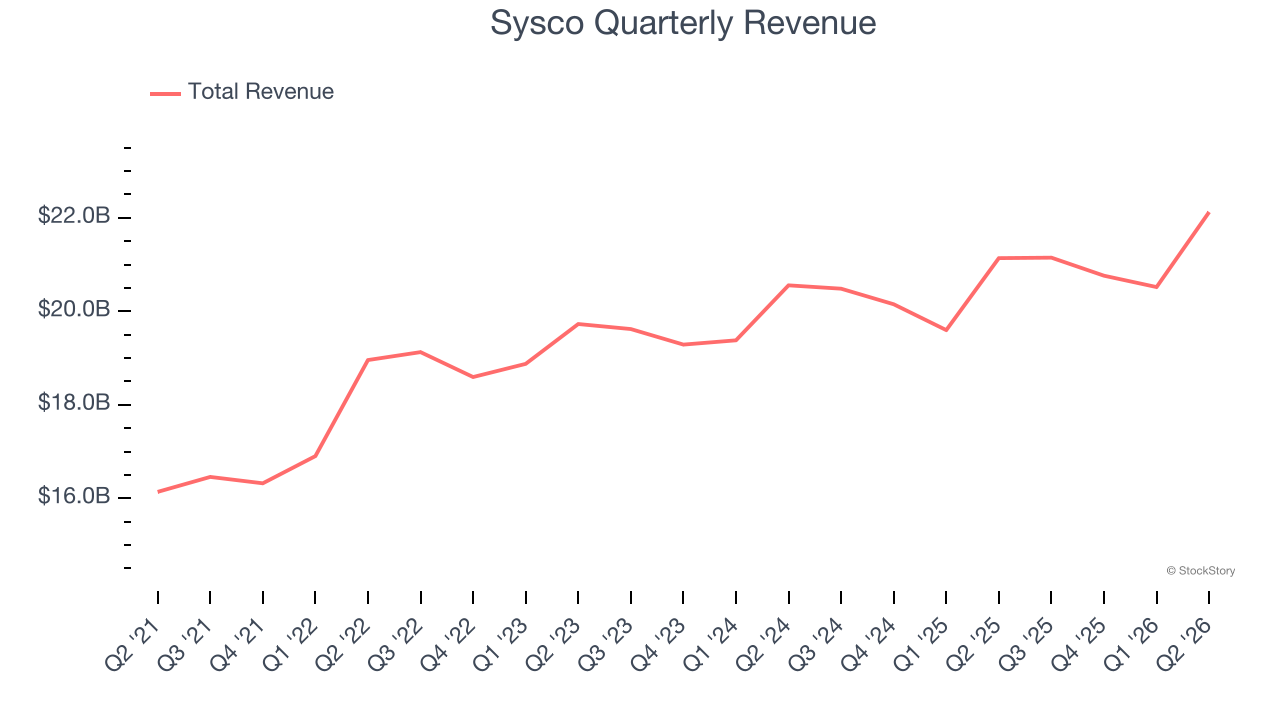
We at StockStory place the most emphasis on long-term growth, but within consumer discretionary, a stretched historical view may miss a company riding a successful new product or trend. Sysco’s recent performance shows its demand has slowed as its annualized revenue growth of 3.6% over the last two years was below its five-year trend. We’re wary when companies in the sector see decelerations in revenue growth, as it could signal changing consumer tastes aided by low switching costs. 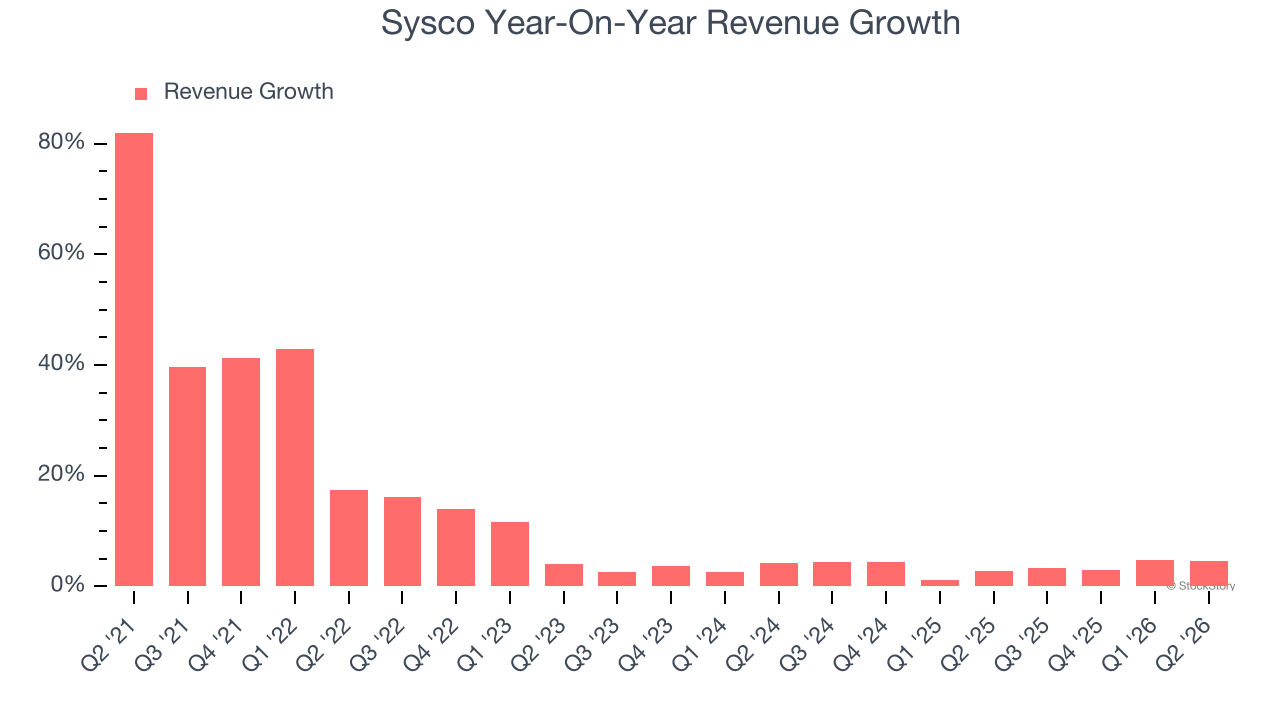
We can dig further into the company’s revenue dynamics by analyzing its number of units sold. Over the last two years, Sysco’s units sold were flat. Because this number is lower than its revenue growth, we can see the company benefited from price increases. 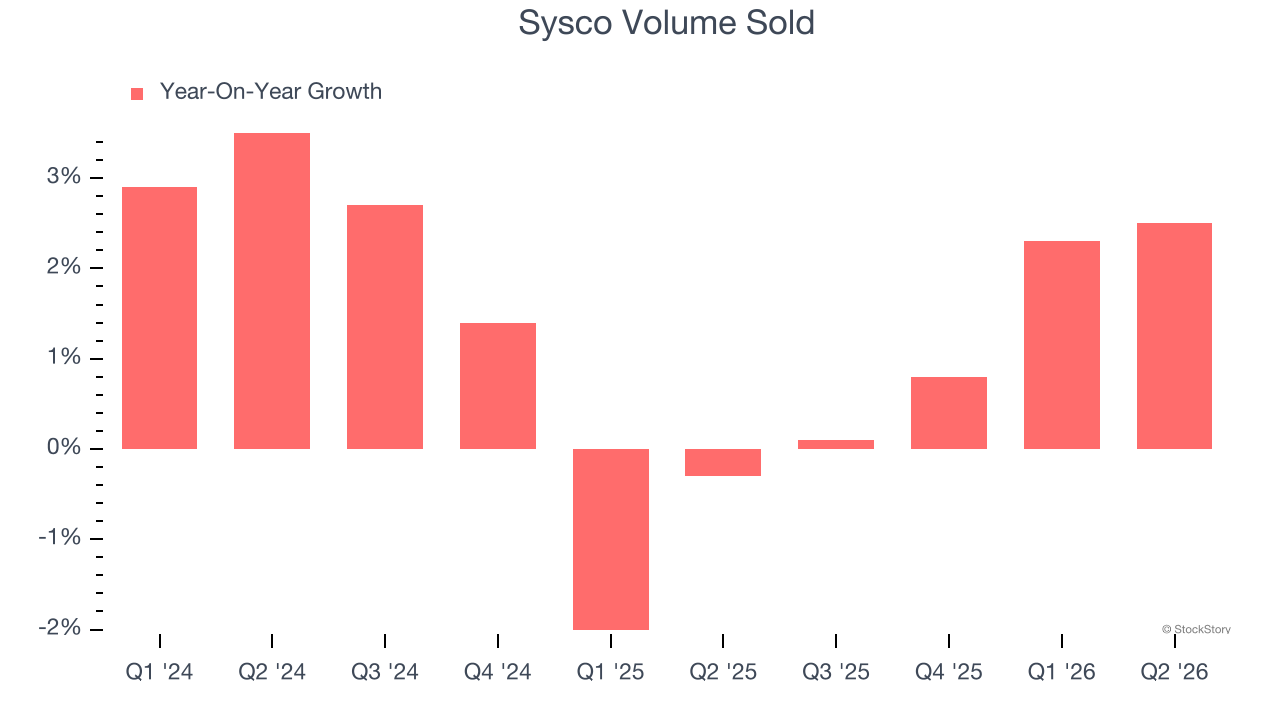
This quarter, Sysco reported modest year-on-year revenue growth of 4.7% but beat Wall Street’s estimates by 0.8%.
Looking ahead, sell-side analysts expect revenue to grow 4.6% over the next 12 months, similar to its two-year rate. Although this projection implies its newer products and services will spur better top-line performance, it is still below average for the sector.
ONE MORE THING: The $21 AI Application Stock Wall Street Forgot. While Wall Street obsesses over who’s building AI, one company is already using it to print money. And nobody’s paying attention.
AI chip stocks trade at ridiculous valuations. This company processes a trillion consumer signals monthly using AI and trades at a third of the price. The gap won’t last. The institutions will figure it out. You need to see this first. Read the FREE Report Before They Notice.
Operating Margin
Sysco’s operating margin has generally stayed the same over the last 12 months, and we generally like to see margin increases due to economies of scale and cost efficiency over time.
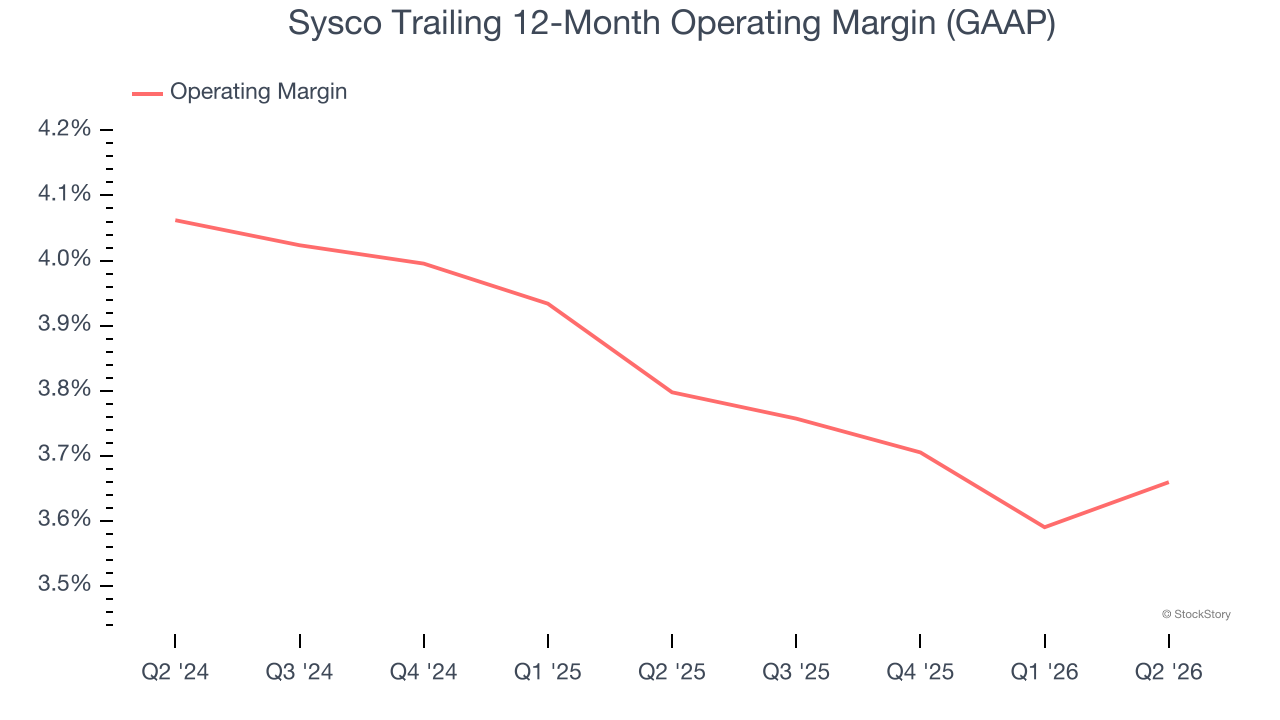
In Q2, Sysco generated an operating margin profit margin of 4.4%, in line with the same quarter last year. This indicates the company’s overall cost structure has been relatively stable.
Earnings Per Share
Revenue trends explain a company’s historical growth, but the long-term change in earnings per share (EPS) points to the profitability of that growth — for example, a company could inflate its sales through excessive spending on advertising and promotions.
Sysco’s EPS grew at 26.2% compounded annual growth rate over the last five years. This performance was better than its revenue growth but doesn’t tell us much about its business quality because its operating margin improvement was less than peers.
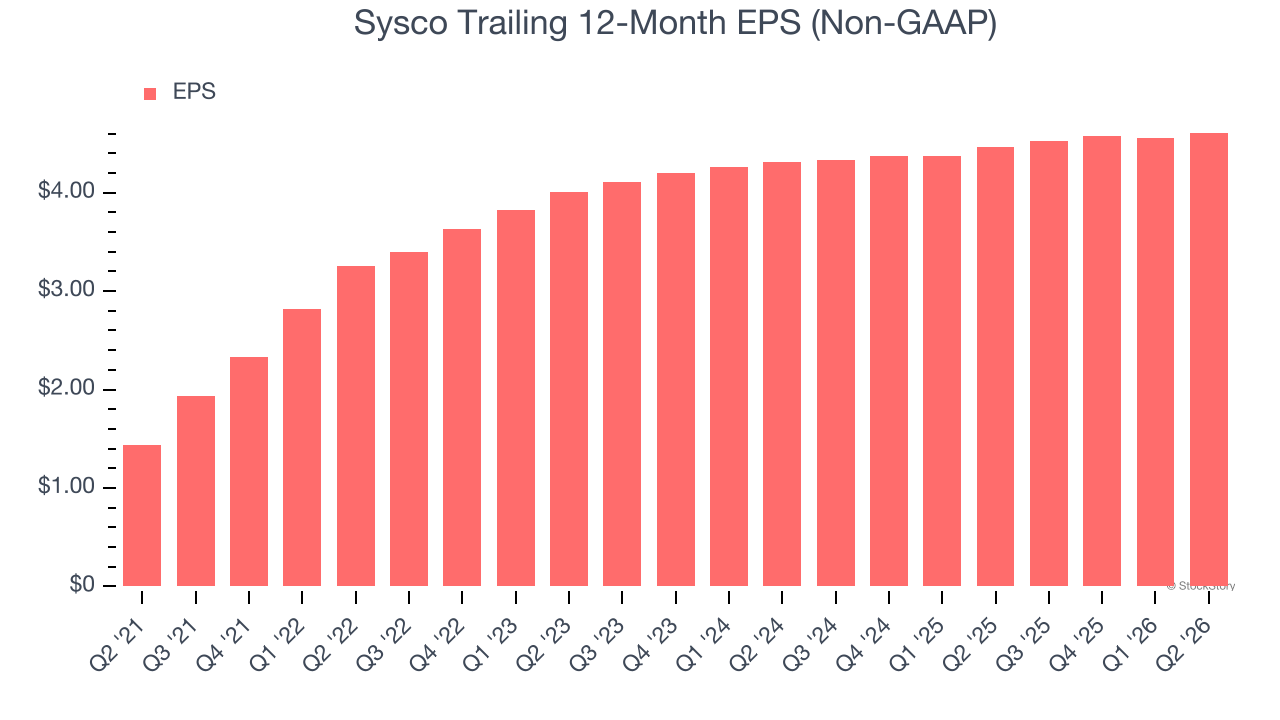
In Q2, Sysco reported adjusted EPS of $1.53, up from $1.48 in the same quarter last year. This print beat analysts’ estimates by 1.2%. Over the next 12 months, Wall Street expects Sysco’s full-year EPS to grow 6.8% from $4.61 to $4.92.
Key Takeaways from Sysco’s Q2 Results
It was good to see Sysco narrowly top analysts’ revenue expectations this quarter. Zooming out, we think this was a decent quarter. The stock remained flat at $85.45 immediately after reporting.
So do we think Sysco is an attractive buy at the current price? The latest quarter does matter, but not nearly as much as longer-term fundamentals and valuation, when deciding if the stock is a buy. We cover that in our actionable full research report which you can read here (it’s free).