Fast-food chain McDonald’s (NYSE: MCD) met Wall Street’s revenue expectations in Q2 CY2026, with sales up 3.7% year on year to $7.10 billion. Its GAAP profit of $3.32 per share was in line with analysts’ consensus estimates.
Is now the time to buy McDonald's? Find out by accessing our full research report, it’s free.
McDonald's (MCD) Q2 CY2026 Highlights:
- Revenue: $7.10 billion vs analyst estimates of $7.13 billion (3.7% year-on-year growth, in line)
- EPS (GAAP): $3.32 vs analyst expectations of $3.34 (in line)
- Operating Margin: 47%, in line with the same quarter last year
- Same-Store Sales rose 1.3% year on year (3.8% in the same quarter last year)
- Market Capitalization: $188.4 billion
"This quarter McDonald's delivered positive comparable sales growth across every segment and acted decisively to strengthen execution as we prime McDonald's for the next era of long-term growth," said Chris Kempczinski, Chairman and CEO.
Company Overview
With nicknames spanning Mickey D's in the U.S. to Makku in Japan, McDonald’s (NYSE: MCD) is a fast-food behemoth known for its convenience and broken ice cream machines.
Revenue Growth
Examining a company’s long-term performance can provide clues about its quality. Any business can put up a good quarter or two, but many enduring ones grow for years.
With $27.7 billion in revenue over the past 12 months, McDonald's is one of the most widely recognized restaurant chains and benefits from customer loyalty, a luxury many don’t have. Its scale also gives it negotiating leverage with suppliers, enabling it to source its ingredients at a lower cost. However, its scale is a double-edged sword because it’s harder to find incremental growth when your existing restaurant banners have penetrated most of the market. For McDonald's to boost its sales, it likely needs to adjust its prices, launch new chains, or lean into foreign markets.
As you can see below, McDonald’s sales grew at a sluggish 4.2% compounded annual growth rate over the last seven years, but to its credit, it opened new restaurants and increased sales at existing, established dining locations.
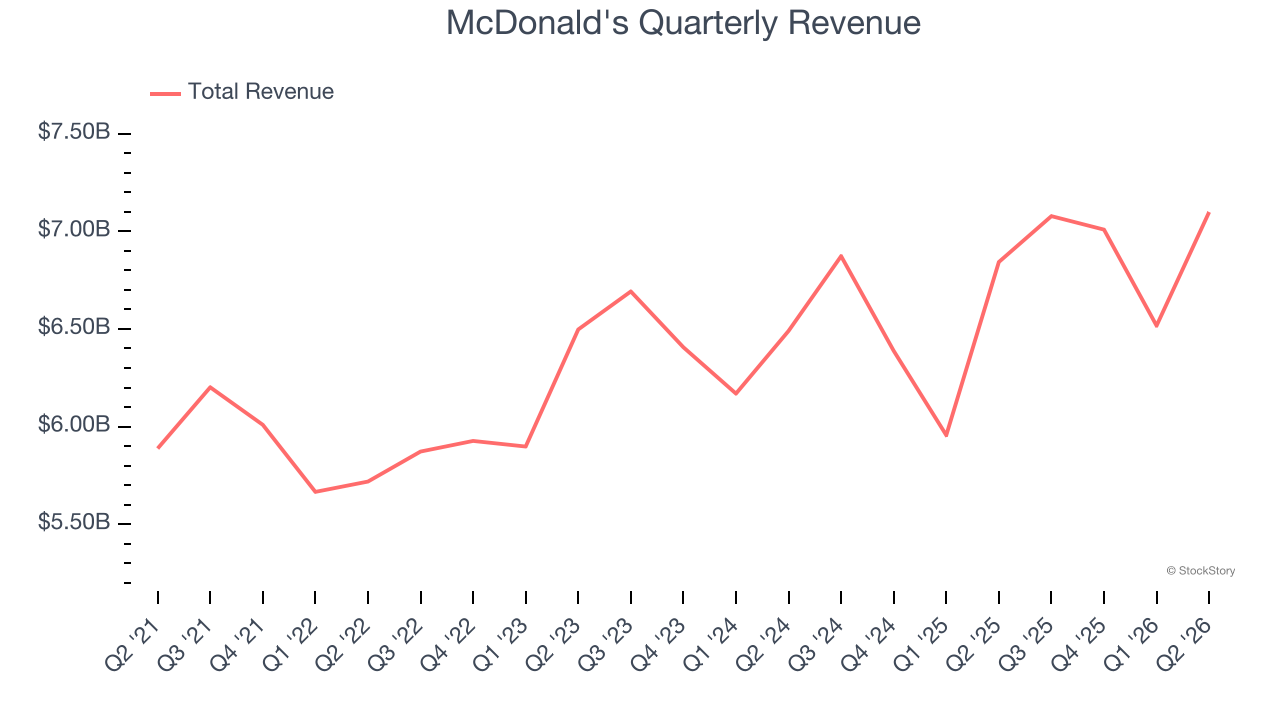
This quarter, McDonald's grew its revenue by 3.7% year on year, and its $7.10 billion of revenue was in line with Wall Street’s estimates.
Looking ahead, sell-side analysts expect revenue to grow 5.2% over the next 12 months, similar to its seven-year rate. Although this projection suggests its newer menu offerings will fuel better top-line performance, it is still below the sector average. At least the company is tracking well in other measures of financial health.
ONE MORE THING: The $21 AI Application Stock Wall Street Forgot. While Wall Street obsesses over who’s building AI, one company is already using it to print money. And nobody’s paying attention.
AI chip stocks trade at ridiculous valuations. This company processes a trillion consumer signals monthly using AI and trades at a third of the price. The gap won’t last. The institutions will figure it out. You need to see this first. Read the FREE Report Before They Notice.
Restaurant Performance
Number of Restaurants
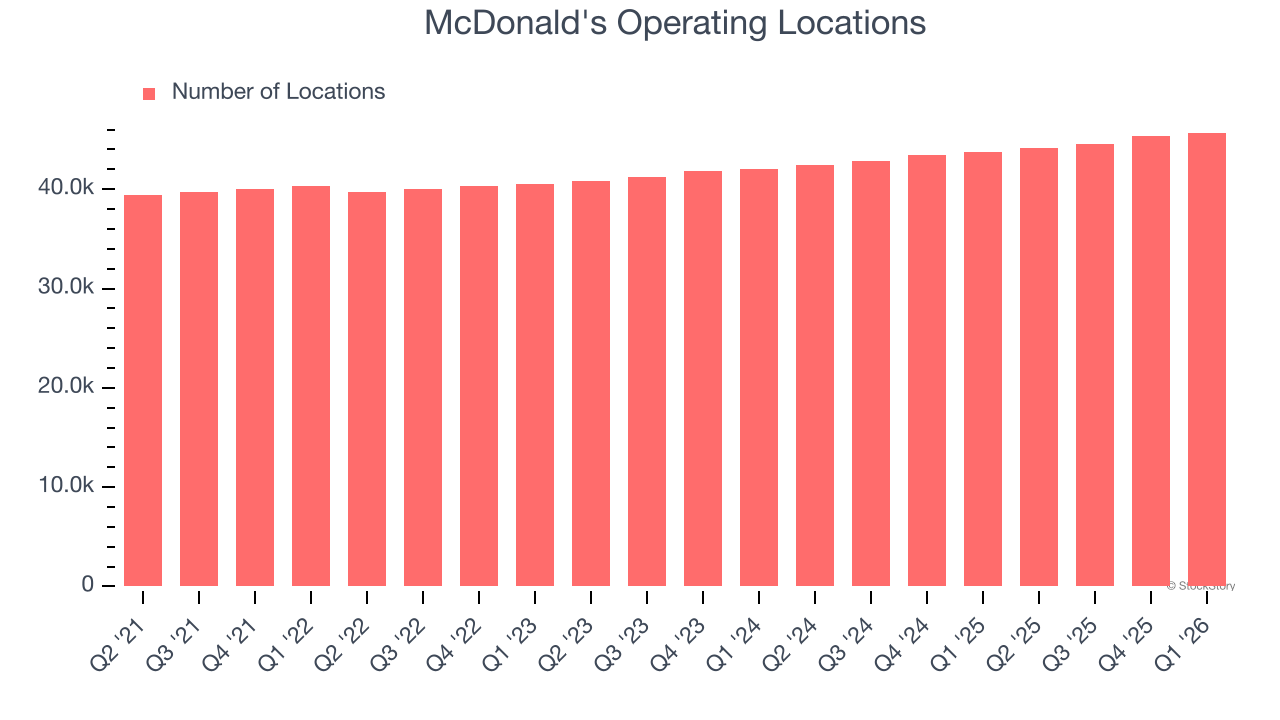
McDonald's opened new restaurants at a rapid clip over the last two years, averaging 4.1% annual growth, much faster than the broader restaurant sector. Furthermore, one dynamic making expansion more seamless is the company’s franchise model, where franchisees are primarily responsible for opening new restaurants while McDonald's provides support.
When a chain opens new restaurants, it usually means it’s investing for growth because there’s healthy demand for its meals and there are markets where its concepts have few or no locations.
Note that McDonald's reports its restaurant count intermittently, so some data points are missing in the chart below.
Same-Store Sales
A company’s restaurant base only paints one part of the picture. When demand is high, it makes sense to open more. But when demand is low, it’s prudent to close some locations and use the money in other ways. Same-store sales is an industry measure of whether revenue is growing at those existing restaurants and is driven by customer visits (often called traffic) and the average spending per customer (ticket).
McDonald’s demand rose over the last two years and slightly outpaced the industry. On average, the company’s same-store sales have grown by 2% per year. This performance suggests its rollout of new restaurants could be beneficial for shareholders. When a chain has demand, more locations should help it reach more customers and boost revenue growth.
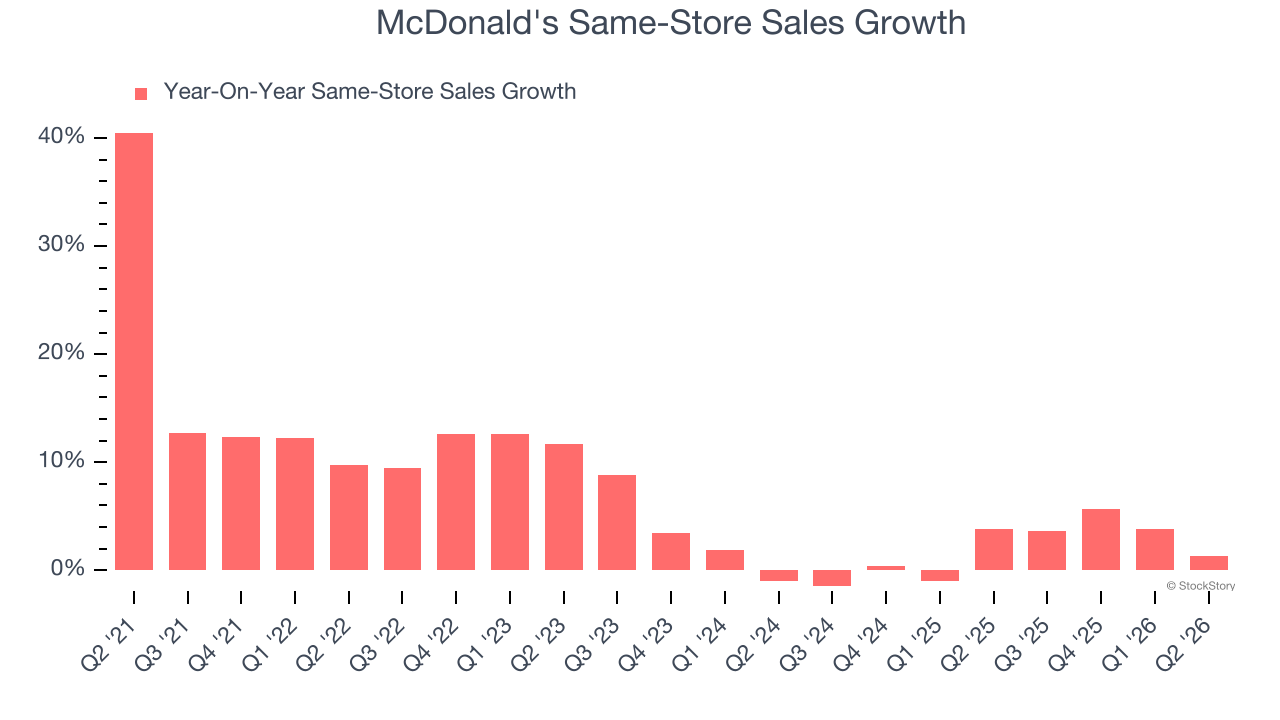
In the latest quarter, McDonald’s same-store sales rose 1.3% year on year. This performance was more or less in line with its historical levels.
Key Takeaways from McDonald’s Q2 Results
Revenue and EPS both met expectations. Overall, this was a quarter that didn't have many surprises, good or bad. The stock remained flat at $265.76 immediately following the results.
Should you buy the stock or not? We think that the latest quarter is only one piece of the longer-term business quality puzzle. Quality, when combined with valuation, can help determine if the stock is a buy. We cover that in our actionable full research report which you can read here (it’s free).