


Looking back on engineered components and systems stocks’ Q4 earnings, we examine this quarter’s best and worst performers, including Graham Corporation (NYSE: GHM) and its peers.
Engineered components and systems companies possess technical know-how in sometimes narrow areas such as metal forming or intelligent robotics. Lately, automation and connected equipment collecting analyzable data have been trending, creating new demand. On the other hand, like the broader industrials sector, engineered components and systems companies are at the whim of economic cycles. Consumer spending and interest rates, for example, can greatly impact the industrial production that drives demand for these companies’ offerings.
The 13 engineered components and systems stocks we track reported a mixed Q4. As a group, revenues beat analysts’ consensus estimates by 2.2% while next quarter’s revenue guidance was 0.5% below.
Amidst this news, share prices of the companies have had a rough stretch. On average, they are down 5.3% since the latest earnings results.
Graham Corporation (NYSE: GHM)
Founded when its founder patented a unique design for a vacuum system used in the sugar refining process, Graham (NYSE: GHM) provides vacuum and heat transfer equipment for the energy, petrochemical, refining, and chemical sectors.
Graham Corporation reported revenues of $56.7 million, up 20.5% year on year. This print exceeded analysts’ expectations by 8.3%. Overall, it was an exceptional quarter for the company with a beat of analysts’ EPS and EBITDA estimates.
Graham’s President and Chief Executive Officer, Matthew J. Malone stated, “Our third quarter results reflect continued strong, disciplined execution across the organization as we progress through the back half of fiscal 2026. Revenue growth and profitability were driven by solid performance across our end markets and supported by a record backlog, which provides meaningful visibility into future demand. Activity in our Defense market remains robust, while the Energy & Process and Space markets continue to perform in line with our expectations.”
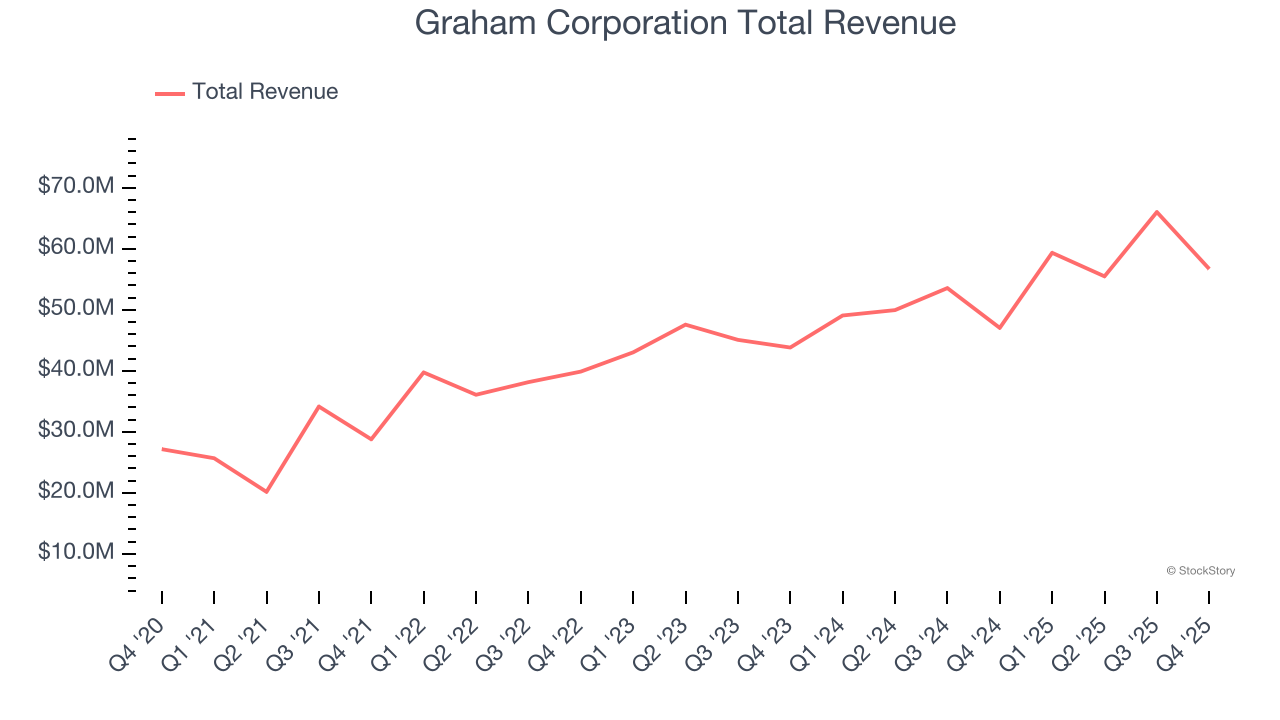
Graham Corporation delivered the weakest full-year guidance update of the whole group. Interestingly, the stock is up 2.2% since reporting and currently trades at $75.37.
Best Q4: Arrow Electronics (NYSE: ARW)
Founded as a single retail store, Arrow Electronics (NYSE: ARW) provides electronic components and enterprise computing solutions to businesses globally.
Arrow Electronics reported revenues of $8.75 billion, up 20.1% year on year, outperforming analysts’ expectations by 6.6%. The business had an incredible quarter with EPS guidance for next quarter exceeding analysts’ expectations and a solid beat of analysts’ EBITDA estimates.
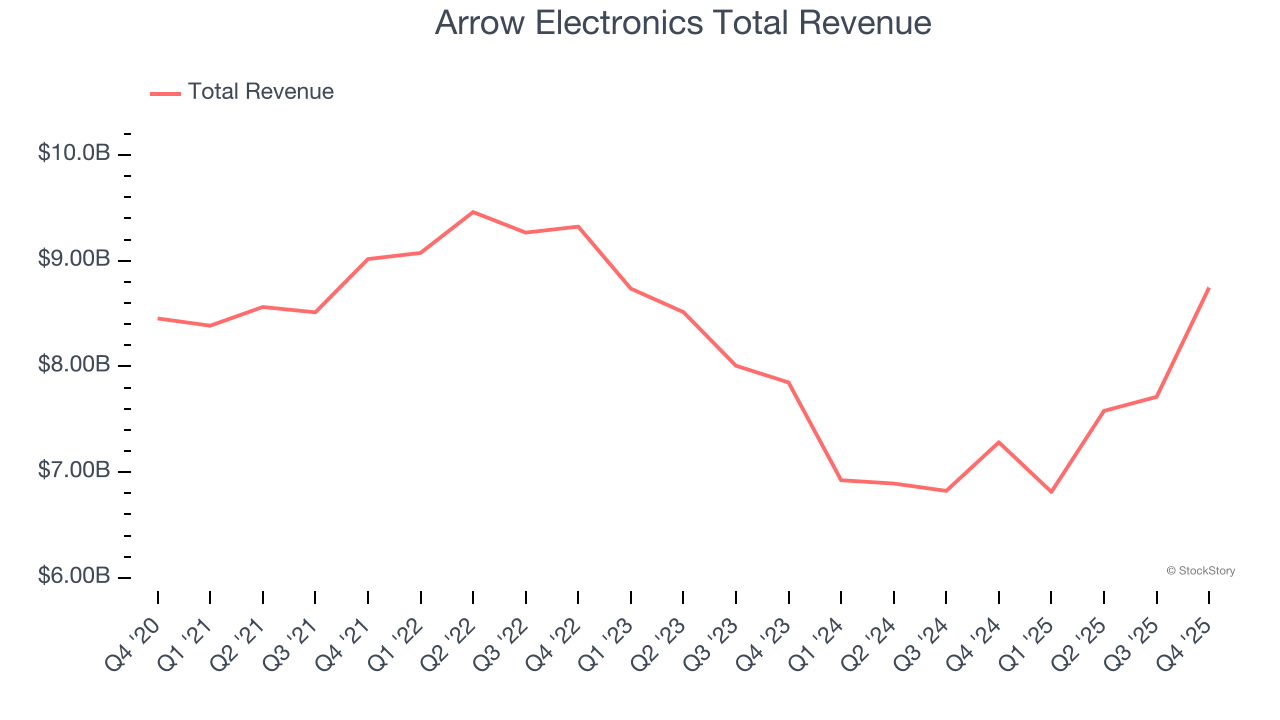
Although it had a fine quarter compared to its peers, the market seems unhappy with the results as the stock is down 3.4% since reporting. It currently trades at $136.27.
Is now the time to buy Arrow Electronics? Access our full analysis of the earnings results here, it’s free.
Weakest Q4: Mayville Engineering (NYSE: MEC)
Originally founded solely on tool and die manufacturing, Mayville Engineering Company (NYSE: MEC) specializes in metal fabrication, tube bending, and welding to be used in various industries.
Mayville Engineering reported revenues of $134.3 million, up 10.7% year on year, in line with analysts’ expectations. It was a disappointing quarter as it posted full-year EBITDA guidance missing analysts’ expectations and a significant miss of analysts’ adjusted operating income estimates.
As expected, the stock is down 17% since the results and currently trades at $17.52.
Read our full analysis of Mayville Engineering’s results here.
RBC Bearings (NYSE: RBC)
With a Guinness World Record for engineering the largest spherical plain bearing, RBC Bearings (NYSE: RBC) is a manufacturer of bearings and related components for the aerospace & defense, industrial, and transportation industries.
RBC Bearings reported revenues of $461.6 million, up 17% year on year. This print was in line with analysts’ expectations. More broadly, it was a mixed quarter as it also recorded a decent beat of analysts’ adjusted operating income estimates but a miss of analysts’ EBITDA estimates.
The stock is up 1.5% since reporting and currently trades at $524.65.
Read our full, actionable report on RBC Bearings here, it’s free.
Applied Industrial (NYSE: AIT)
Formerly called The Ohio Ball Bearing Company, Applied Industrial (NYSE: AIT) distributes industrial products–everything from power tools to industrial valves–and services to a wide variety of industries.
Applied Industrial reported revenues of $1.16 billion, up 8.4% year on year. This result lagged analysts' expectations by 0.7%. Overall, it was a slower quarter as it also logged a miss of analysts’ adjusted operating income and revenue estimates.
The stock is down 8.4% since reporting and currently trades at $257.94.
Read our full, actionable report on Applied Industrial here, it’s free.
Market Update
Late in 2025 into early 2026, there was hand wringing around artificial intelligence. For software companies, the fear was that AI would erode pricing power and compress margins as new tools made it easier to replicate what once required expensive enterprise platforms. Crypto investors had their own version of the same anxiety: if AI agents could trade, allocate capital, and manage wallets autonomously, what exactly was the long-term value of today’s crypto infrastructure?
These concerns triggered a noticeable rotation away from these sectors and into safer havens. But markets rarely dwell on one narrative for long. Spring 2026 came, and the focus shifted abruptly from technological disruption to geopolitical risk. The US’ conflict with Iran became the dominant driver of market psychology, and when geopolitics takes center stage, the script changes quickly. Investors stop debating growth rates and start worrying about oil supply, inflation, and global stability.
Want to invest in winners with rock-solid fundamentals? Check out our 9 Best Market-Beating Stocks and add them to your watchlist. These companies are poised for growth regardless of the political or macroeconomic climate.
StockStory’s analyst team — all seasoned professional investors — uses quantitative analysis and automation to deliver market-beating insights faster and with higher quality.