Kanto Smart Living Cooperative says secondhand clothing is becoming an increasingly popular choice among Japan’s younger generation, as consumers move away from simply “following trends” toward expressing their individuality. Known as “furugi” in Japanese, secondhand fashion combines vintage culture, personal style and sustainable consumption, transforming used clothing from a practical alternative into a lifestyle choice.
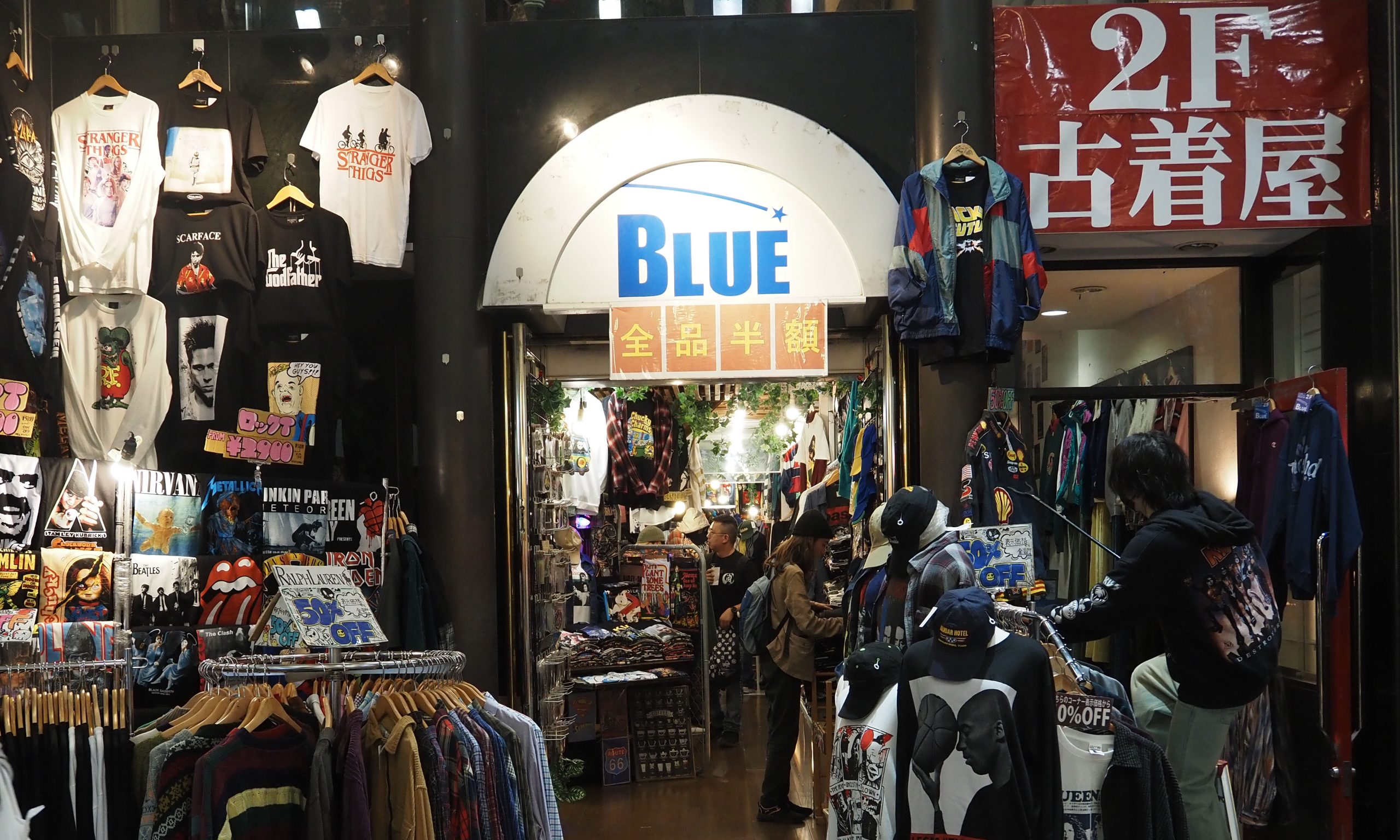
TOKYO, JAPAN (MERXWIRE) – Japan’s younger generation is changing the way it shops for clothing, with secondhand and vintage stores becoming increasingly visible on the streets of major cities. Unlike fast fashion, which focuses on rapidly changing styles and seasonal trends, secondhand clothing offers different designs, cuts, materials and aesthetics from various eras. Each piece can have its own distinctive character, attracting young consumers who place greater value on personal style and individuality.
Kanto Smart Living Cooperative said the growing popularity of secondhand fashion reflects a broader shift in consumption values, from keeping up with trends to developing a distinctive personal style while incorporating elements of sustainable consumption.
According to the Cooperative’s report, “Japan Secondhand Fashion Market Report,” consumption habits among younger Japanese consumers are changing, with secondhand clothing increasingly becoming part of a lifestyle that combines individual fashion, vintage culture and sustainability. Secondhand clothing is not simply replacing fast fashion. Instead, the two represent different consumer choices, as shoppers increasingly look beyond price and the speed of changing trends and place greater importance on uniqueness, history, personal expression and the value of reuse.
Kenta Tanaka, president of Kanto Smart Living Cooperative, said one of the key reasons young consumers are attracted to secondhand clothing is the opportunity to avoid wearing the same clothes as everyone else. Fast-fashion brands can quickly produce affordable items that reflect current trends, making it easy for consumers to keep up with seasonal styles. However, mass production and rapid product turnover can also result in similar styles being worn by large numbers of people.
Secondhand clothing, by contrast, often comes in limited quantities and features a wide range of styles and eras. This gives consumers more opportunities to combine individual pieces and create outfits that reflect their own personality.
Haruna Suzuki, a member of Kanto Smart Living Cooperative, said she began buying secondhand clothing because “it is easier to find clothes that are different from what other people are wearing.” She said fast fashion is affordable and convenient for finding current trends, but the limited availability of secondhand pieces makes it easier to create a personal style. She also enjoys taking time to search for clothing, describing the experience of finding a piece she truly likes as “a treasure hunt.”
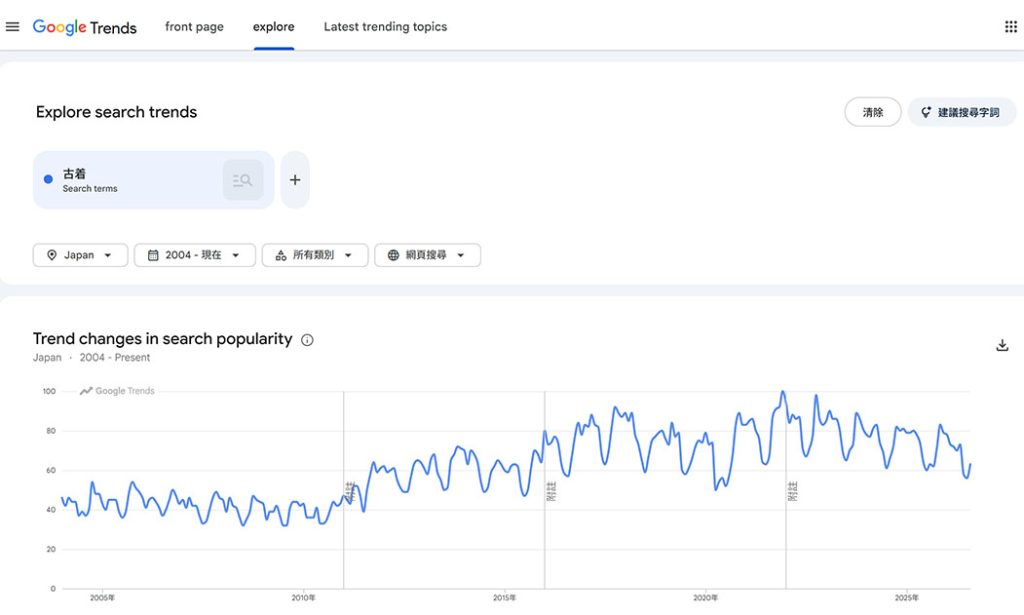
Long-term Google Trends data also points to sustained consumer interest in “古着” (furugi) in Japan. Search interest has fluctuated over time due to seasonal and other factors, but the overall level has remained higher than in the earlier years of the data. From around 2004 to 2010, search interest generally remained in the range of approximately 30 to 50, before gradually increasing after 2011. Since around 2016, interest has frequently remained at relatively high levels of approximately 60 to 90, suggesting that interest in secondhand fashion has developed beyond a short-term trend and become an established part of Japan’s fashion and consumer culture.
Tanaka said the development of social media and fashion-sharing culture has also helped make secondhand clothing part of Japan’s street culture. Areas such as Shimokitazawa and Harajuku in Tokyo, as well as Amerikamura and Shinsaibashi in Osaka, are known for concentrations of secondhand clothing stores. Styles ranging from American casual wear and military clothing to denim and 1990s-inspired fashion have become sources of inspiration for young consumers exploring their individual identities through clothing.
The concentration of secondhand stores has also contributed to distinctive neighborhood cultures. In addition to attracting Japanese consumers, these areas have become destinations for international visitors interested in exploring contemporary Japanese youth culture and urban lifestyles. For travelers, visiting secondhand clothing stores is not simply a shopping experience, but also a way to discover local neighborhoods and gain a closer look at the fashion, culture and aesthetics of Japan’s younger generation.
Media Contacts:
Kanto Smart Living Cooperative
PR Agency:
MERXWIRE INC.
Ada Huang
pr@merxwire.com
SOURCE: Kanto Smart Living Cooperative