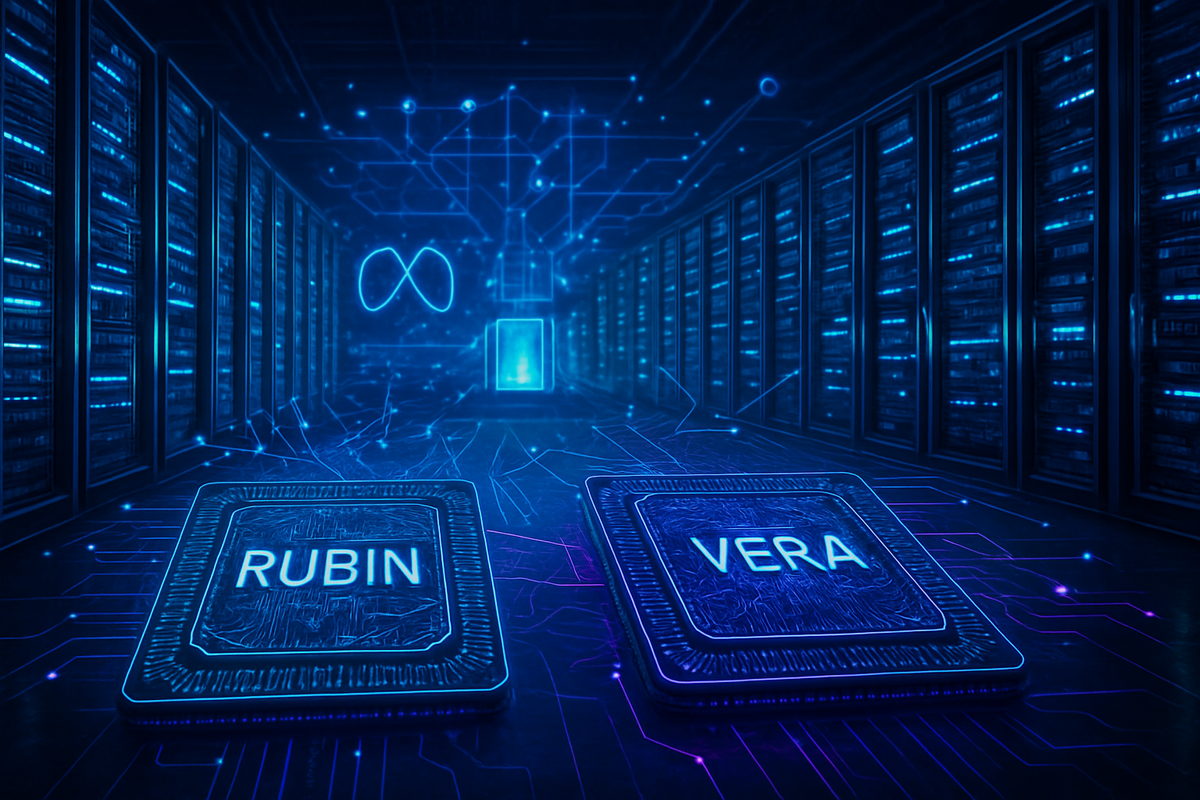
In a move that redefines the scale of corporate infrastructure investment, Meta Platforms (NASDAQ: META) has finalized a landmark, multi-year strategic agreement with Nvidia (NASDAQ: NVDA) to procure millions of state-of-the-art AI chips. The deal, valued by analysts at between $50 billion and $100 billion, cements Nvidia’s position as the foundational architect of the artificial intelligence age while signaling Meta’s intention to own the most powerful "AI factories" on the planet.
This agreement is not merely a purchase order; it represents a fundamental shift in how hyperscalers approach hardware. By locking in a multi-generational supply of both GPUs and specialized CPUs, Meta is moving beyond simple model training and toward a future of "agentic AI"—where billions of autonomous digital entities require constant, low-latency compute to interact with the world and each other.
The Dawn of the Vera Rubin Era
The deal, which was officially codified in mid-February 2026, spans three distinct generations of Nvidia architecture. While Meta continues to deploy massive volumes of the current Blackwell architecture for its Llama 4 model family, the centerpiece of this new partnership is the upcoming "Vera Rubin" platform. Built on Taiwan Semiconductor Manufacturing Company’s (NYSE: TSM) 3nm N3P process, the Rubin GPUs are expected to provide five times the inference compute of their predecessors, featuring a staggering 288GB of HBM4 memory.
A critical evolution in this partnership is Meta’s massive adoption of Nvidia’s standalone CPUs. Moving away from traditional x86 architectures, Meta is deploying the "Vera" CPU—a custom-core processor optimized for AI agents—at an unprecedented scale. These chips are designed to work in a "coherent" environment, where CPUs and GPUs share memory and data with minimal friction via NVLink 6 networking. This level of hardware integration is designed to support Meta’s most ambitious projects, including the "Hyperion" data center in Louisiana—a $10 billion, 5-gigawatt campus powered by a dedicated nuclear power plant.
Winners and Losers in the Silicon Arms Race
The primary winner of this announcement is undoubtedly Nvidia, whose "moat" has shifted from being a provider of chips to a provider of entire integrated systems. By integrating its own Vera CPUs with Rubin GPUs and Spectrum-6 Ethernet networking, Nvidia has created a "full-stack" lock-in that makes it increasingly difficult for customers to swap out individual components. For Meta, the deal ensures they will not be "compute-constrained" as they chase the goal of Artificial General Intelligence (AGI).
However, the ripple effects have created a clear divide in the semiconductor industry. In a surprising strategic pivot, Meta also announced a parallel $60 billion deal with Advanced Micro Devices (NASDAQ: AMD) for their Instinct MI450 GPUs. This "dual-vendor" strategy is a calculated move to prevent a total monopoly by Nvidia and to keep pricing competitive. AMD emerges as a significant winner, proving it can stand alongside Nvidia in the most demanding data center environments.
The most notable casualty of this shift is Intel (NASDAQ: INTC). As Meta moves toward Nvidia’s Vera and AMD’s EPYC "Venice" processors for its primary AI clusters, Intel’s once-dominant Xeon processors are being relegated to legacy and support roles. The displacement of x86 architecture by ARM-based and AI-optimized custom silicon marks a historic turning point for Intel, placing immense pressure on the company to accelerate its own 18A manufacturing process to regain a foothold in the AI data center.
A Broader Trend Toward Vertical Integration
This deal reflects a broader industry trend where the world’s largest technology companies are no longer satisfied with buying off-the-shelf components. The "AI Factory" model—where the data center itself is treated as a single, massive computer—requires a level of synergy between hardware and software that was previously only seen in consumer electronics like the iPhone. Meta is following in the footsteps of Microsoft (NASDAQ: MSFT) and Alphabet (NASDAQ: GOOGL), but at a scale that dwarfs previous infrastructure cycles.
Furthermore, the environmental and regulatory implications are coming into sharp focus. The sheer power requirements of Meta's planned clusters—totaling several gigawatts—have forced the company to become an energy pioneer, investing in nuclear and renewable energy sources. This shift is likely to invite further regulatory scrutiny regarding the environmental impact of AI and the potential for "compute monopolies" where only a handful of trillion-dollar companies can afford to compete at the frontier of intelligence.
The Path to Agentic AI and Beyond
Looking ahead, the next 24 to 36 months will be defined by the rollout of "Agentic AI." Unlike current chatbots that respond to prompts, agentic models are designed to execute complex tasks, manage workflows, and operate autonomously in secure digital "sandboxes." This requires a different kind of compute—one that balances the massive "brute force" of training with the high-speed "reasoning" of inference.
Meta’s investment is a bet that the world is moving toward a "one agent per person" reality. To facilitate this, the company will likely need to continue its pivot toward custom-designed silicon, potentially integrating its own internal "MTIA" (Meta Training and Inference Accelerator) chips alongside Nvidia and AMD hardware. The challenge for Meta will be managing the staggering $115 billion to $135 billion in capital expenditure projected for 2026 without sacrificing the profitability of its core advertising business.
Summary of the Multi-Billion Dollar Stakes
The Meta-Nvidia partnership is a watershed moment for the financial markets, signaling that the AI infrastructure boom is far from over. By securing millions of chips across multiple generations, Meta has placed a massive bet on its ability to lead the next era of computing. For investors, the key takeaways are clear: Nvidia’s ecosystem remains the gold standard, AMD has successfully carved out a high-end alternative, and traditional chipmakers like Intel face an existential challenge to stay relevant.
As we move through the remainder of 2026, the market will be watching for two things: the successful deployment of the Rubin architecture and the first glimpses of Llama 5. If Meta can translate this $100 billion investment into a tangible leap in AI capabilities, it will justify the massive capital outlay. However, if the ROI on these "AI factories" fails to materialize, the entire sector could face a significant valuation reset. For now, the "silicon sovereignty" race is in full swing, and Meta is playing to win.
This content is intended for informational purposes only and is not financial advice