The S&P 500 (NYSEARCA: SPY) is currently navigating a period of intense volatility that has left many investors questioning whether the bull market of 2025 has finally reached its breaking point. As of April 2, 2026, the benchmark index is struggling to reclaim lost ground after a brutal March saw it tumble into "correction" territory—defined as a 10% drop from recent highs. This technical breakdown has been punctuated by a sharp, sentiment-driven "relief rally" sparked by rumors of a ceasefire in the Middle East, though the durability of this bounce remains in serious doubt as the market grapples with a complex web of geopolitical and inflationary pressures.
The immediate implications for the market are stark: the S&P 500 is currently caught in a "no man's land" between its recent correction lows and critical overhead resistance. For active traders and institutional funds, the focus has shifted entirely to technical levels and headline risk. With the index failing to stay above its 200-day moving average, a level many consider the line between a healthy market and a long-term bearish trend, the coming weeks of April will be decisive in determining if this is a "buy the dip" opportunity or the beginning of a more profound structural decline.
The Path to Correction: From 7,000 to the Abyss
The narrative of early 2026 began with a sense of invincibility. Following a robust 16% return in 2025, the S&P 500 opened the new year with a surge that saw it reach a record closing high of 6,965.78 on January 9. Throughout the remainder of January, the index repeatedly tested the psychological 7,000-point milestone, fueled by strong corporate earnings and hopes for further interest rate cuts. However, the optimism proved fragile. By mid-February, the tone shifted as the "Epic Fury" military campaign in the Middle East intensified, sending crude oil prices soaring past the $100-per-barrel mark and reigniting fears of stagflation.
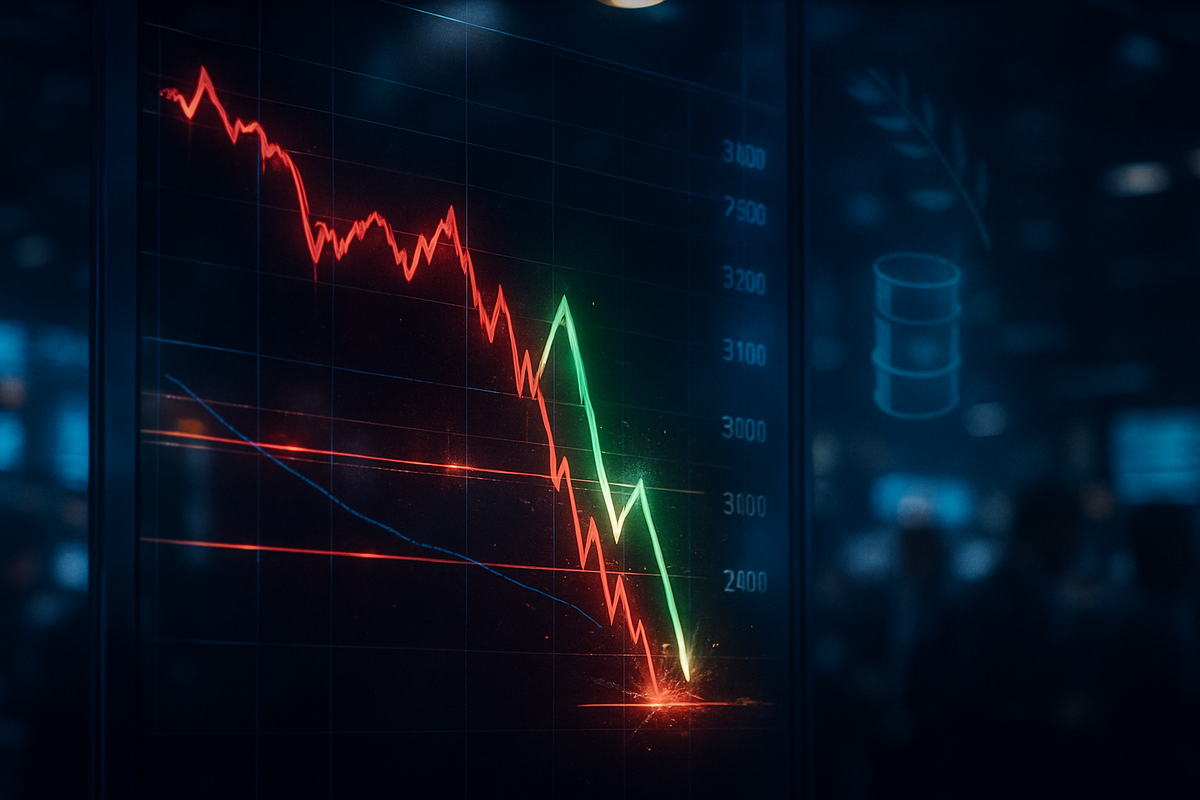
The selling pressure accelerated throughout March as secondary headwinds emerged, including the implementation of new U.S. tariffs averaging 12–14% and a sudden contraction in domestic manufacturing activity. On March 30, 2026, the index officially entered correction territory, dipping toward the 6,310–6,350 range—a drop of roughly 10% from its January peak. The decline was swift and broad-based, wiping out billions in market capitalization in just a few weeks. However, the gloom was momentarily lifted on March 31, when the market staged a dramatic 2.91% surge—its best single-day performance in nearly a year—on reports from the administration suggesting that Iran was open to ceasefire negotiations.
Sector Divergence: Winners and Losers of the Volatility
In the wake of this correction, the market has seen a sharp divide between sectors. The primary "losers" during the March slide were high-multiple growth stocks, particularly in the semiconductor and technology sectors. Nvidia (NASDAQ: NVDA) and Apple (NASDAQ: AAPL), which had been the primary drivers of the 2025 rally, bore the brunt of the selling as rising bond yields and geopolitical uncertainty prompted a massive de-risking phase. Conversely, the "relief rally" of late March saw these same names bounce aggressively, as investors speculated that a ceasefire would lower energy costs and allow the Federal Reserve to pivot back toward a more accommodative stance.
On the other side of the ledger, Energy and Defense companies have acted as the market's primary hedges. ExxonMobil (NYSE: XOM) saw its shares climb to multi-year highs in early March as oil prices spiked, while defense contractors like Lockheed Martin (NYSE: LMT) and Northrop Grumman (NYSE: NOC) benefited from the surge in military spending associated with global conflicts. However, these sectors faced a sharp reversal during the ceasefire relief rally, as the prospect of peace led to a rapid "unwinding" of the geopolitical risk premium. This "seesaw" effect between growth and value stocks has made sector rotation a perilous game for retail investors in the current environment.
Wider Significance: Tariffs, Inflation, and the Ghost of the Past
The current market environment is more than just a reaction to headlines; it represents a significant shift in the broader economic regime of 2026. The confluence of high oil prices and 12–14% tariffs has created a "supply-side shock" that mirrors the inflationary periods of the 1970s. This has placed the Federal Reserve in a difficult position, as it must choose between fighting resurgent inflation or supporting an economy that is clearly showing signs of a slowdown. The 10% correction is a technical signal that the "Goldilocks" scenario of 2025—steady growth and falling inflation—has been effectively priced out of the market.
Historically, geopolitical corrections are often short-lived if the underlying economy remains sound. For example, during the early stages of the Russia-Ukraine conflict in 2022, the market experienced similar 10% pullbacks that were eventually recovered. However, the added layer of trade protectionism and the fragility of the global supply chain in 2026 make this comparison more complicated. Analysts are closely watching to see if this correction will lead to a "reflexive" downturn, where falling stock prices lead to reduced consumer spending, ultimately triggering the very recession the market fears.
What Comes Next: The Technical Roadmap for April
As we move deeper into April, the technical landscape for the S&P 500 is incredibly well-defined. The immediate goal for the bulls is to reclaim and hold the 6,600 tactical resistance level, which represents a significant "positive gamma" zone where options dealers typically become buyers of the underlying index. Above that lies the "line in the sand" at 6,660—the 200-day moving average. A daily close above this level would signal that the relief rally has the legs to become a full-fledged recovery. If the index can clear 6,700, the path back toward the 7,000 record high becomes much clearer.
Conversely, the downside risks remain potent. The immediate support level to watch is 6,438, which was the high reached during the initial bounce on Monday. If the S&P 500 falls back below this level, it would suggest the relief rally was merely a "dead cat bounce." A breach of the key 6,350 support level, which saw a "Morning Star" reversal pattern form in late March, would likely lead to a retest of the correction lows at 6,310. Should that floor give way, the next major target for the bears is 6,148, which served as the all-time high back in February 2025 and represents a major long-term support zone.
Summary and Investor Outlook
The S&P 500 is currently at a crossroads, with its 10% correction serving as a wake-up call for an overextended market. The relief rally seen at the end of March provided much-needed breathing room, but the lack of official confirmation regarding a ceasefire in the Middle East suggests that the gains are built on a foundation of rumors rather than reality. Investors should brace for continued "headline risk," where a single tweet or government statement can swing the index by 1-2% in either direction within minutes.
Moving forward, the key takeaway is that the "easy money" phase of the 2025-2026 cycle is likely over. For the market to regain its footing, it will need more than just hope; it will need a cooling of geopolitical tensions and a stabilization of the inflationary pressures caused by the new tariff regime. In the coming months, investors should keep a close eye on the 6,660 level. Until the S&P 500 can decisively move back above its 200-day moving average, the trend remains "guilty until proven innocent," and defensive positioning may still be the most prudent course of action.
This content is intended for informational purposes only and is not financial advice.